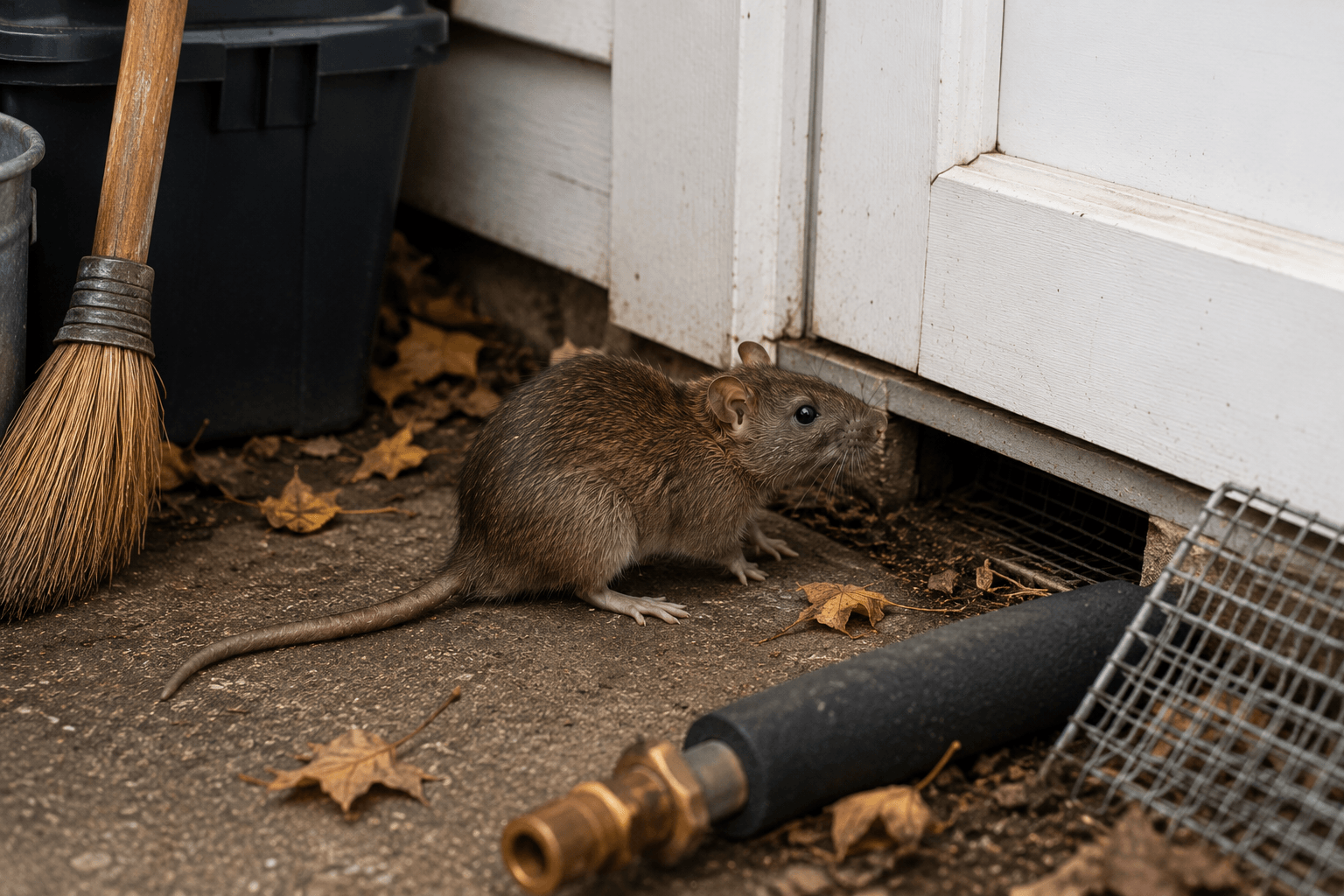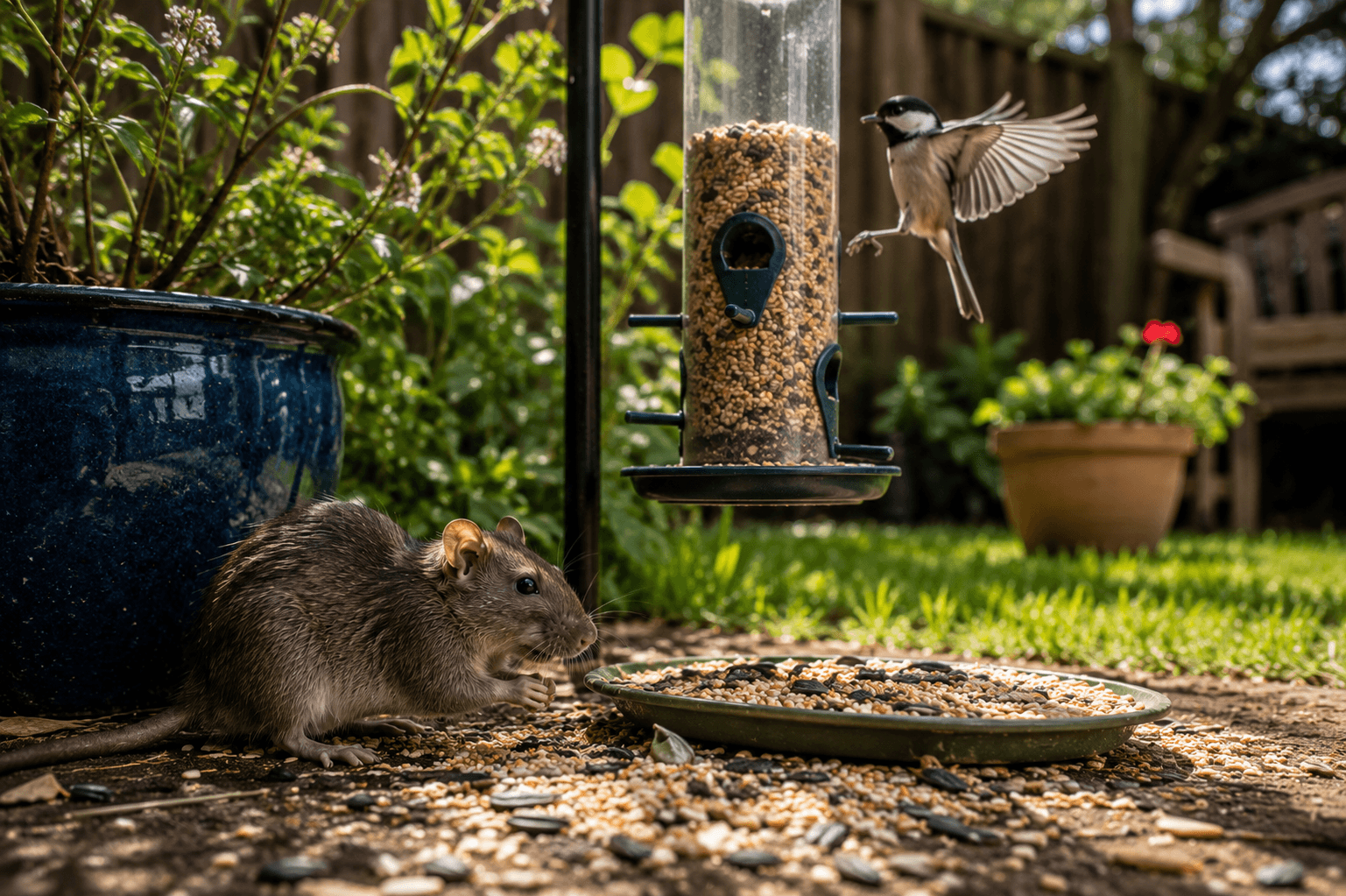
Rats are opportunistic. Give them an easy feed, a bit of water and somewhere quiet to shelter, and they’ll take it every time. Unfortunately, the average household rubbish bin ticks all three boxes, which is exactly why bins are one of the most common reasons we get called out to properties across the Mid North Coast.
If you live in Port Macquarie, Kempsey, Wauchope, Laurieton or anywhere else in the region, a few simple changes to how you store and manage your household waste can make a real difference to how attractive your property is to rodents. This guide covers why rubbish bins appeal to rats, how to make them less inviting, and when it’s time to bring in a professional.
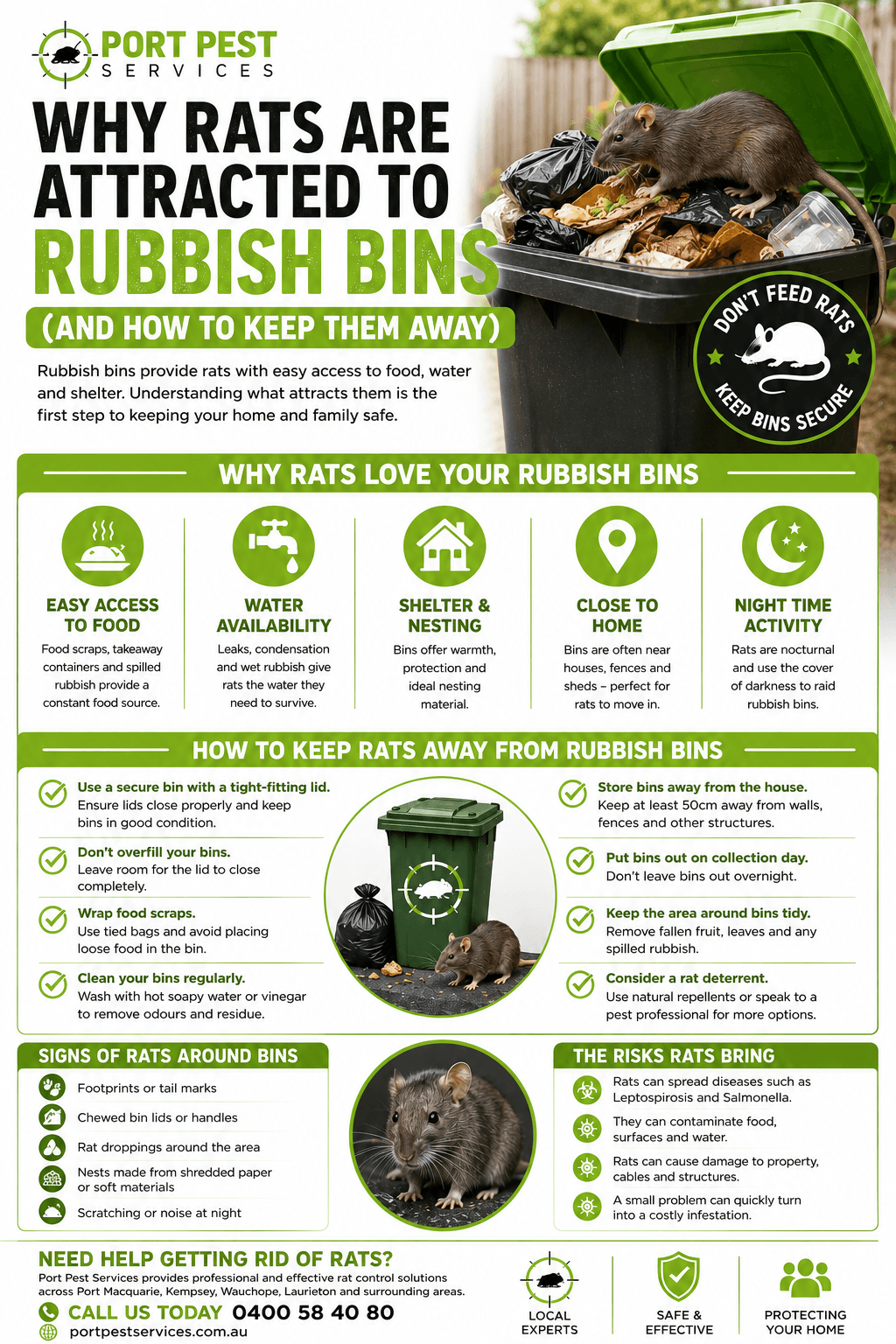
Why Do Rubbish Bins Attract Rats?
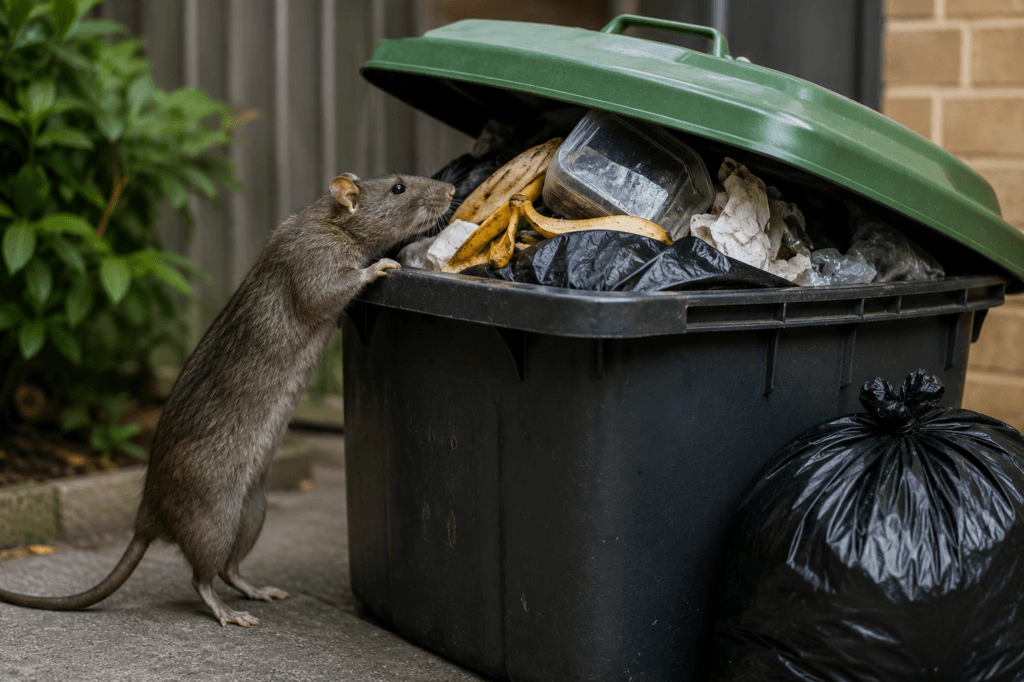
Bins are attractive to rats because they offer a reliable feed for very little effort. Once a rat finds a bin that regularly has something edible in it, that bin becomes part of its regular route, and it will keep coming back.
Rats Are Always Searching for Food
Rats are active mostly at night, and they spend a good chunk of that time looking for something to eat. They’re not fussy — leftovers, fruit, vegetables, meat scraps, bread, pet food and even food-soiled packaging are all fair game.
Unlike a lot of native wildlife that relies on seasonal food, rats adapt fast to whatever’s on offer in a suburban backyard. A household bin gives them a consistent food source all year round, which is exactly what makes it such a reliable target.
Food Waste Creates a Reliable Food Source
A bin that regularly has kitchen scraps in it quickly becomes part of a rat’s feeding territory. If there’s something worth eating in there most weeks, the rat learns the location is worth the trip.
Even containers that look empty can still carry enough residue to draw rats in — takeaway containers, seafood scraps, fruit peelings and general food packaging often still smell like a meal long after the food itself is gone.
Bin Odours Travel Further Than You Think
Rats navigate largely by smell, and they’re good at it. A bin might look clean on the outside, but odours escaping through small gaps in the lid or around the seal can carry a fair distance and pull rats in from other parts of the yard or even neighbouring properties.
During the warmer months on the Mid North Coast, food waste breaks down faster and the smell gets stronger, which is part of the reason we tend to see a spike in rat activity around bin areas over summer.
Which Types of Rubbish Bins Are Most Attractive to Rats?
Not every bin carries the same level of risk, but any bin holding food residue has the potential to draw rats in. Knowing which bins need extra attention helps you focus your efforts where they’ll actually count.
Outdoor Wheelie Bins
Council wheelie bins are far and away the most common source of attraction we see on inspections.
Overflowing bins, damaged lids, or bins that won’t close properly all give rats easy access. Even if they can’t physically get inside the bin, they’ll happily chew through a rubbish bag that’s poking out from under the lid.
Recycling Bins
A lot of homeowners assume recycling bins are low risk because they’re mostly bottles and containers.
In our experience, that’s not quite right. Drink bottles, food cans, takeaway containers and pizza boxes often still carry leftover food or sugary residue. If these aren’t rinsed before they go in the bin, they can produce just as strong an odour as a food scraps bin.
Compost Bins
Compost bins can attract rodents too, particularly when they’re not managed correctly.
Cooked food, meat, dairy and oily foods should never go into a backyard compost system. These items break down and smell strongly, and that smell is exactly what brings rats over to investigate.
Related article: Can Vegetable Gardens Attract Rats? What Every Gardener Should Know
Why Do Rats Keep Coming Back?
Once a rat finds an easy feed, it doesn’t stop at one visit. Rats have excellent memory for locations, and they’ll establish a regular route that they follow night after night.
Rats Remember Reliable Food Sources
Rats are sharp animals with strong spatial memory. If your bin consistently gives them something to eat, they’ll remember exactly where it is and keep coming back until that food source disappears.
They Often Live Nearby
The bin itself usually isn’t where the rats are actually living — it’s just the feeding stop on their nightly circuit.
In many homes we inspect, the nest turns up somewhere close by: under a shed, beneath decking, inside a retaining wall, up in the roof space, or tucked into thick garden vegetation. The rats travel from there to the bin and back most nights.
What Are the Signs That Rats Are Visiting Your Bins?
Picking up on early signs of activity means you can act before a small problem turns into a much bigger one. Most of these signs show up around the bin storage area well before rats make their way into the house itself.
Droppings Around the Bin Area
Droppings are usually the first giveaway. Have a look around wheelie bins, side paths, garage floors and storage areas for small, dark droppings — especially if they keep reappearing after you’ve cleaned up.
Chewed Bin Lids or Garbage Bags
Rats’ teeth grow continuously throughout their life, so they need to gnaw to keep them worn down. Bin lids, garbage bags and food packaging are all common targets while they’re hunting for a feed.
Rubbish Scattered Around the Yard
Scraps scattered around the yard after a night can be a sign rats have been through your rubbish. Birds and possums can make a similar mess, so it’s not a dead giveaway on its own, but repeated overnight damage points more toward rodents.
Grease Marks Along Walls
Rats tend to run the same route night after night, and the natural oils in their fur leave dark smudge marks along the surfaces they brush past — fences, walls, pipes. These marks often show up alongside other signs of activity, and once you know what to look for, they’re pretty easy to spot.
How Can You Make Your Rubbish Bins Less Attractive to Rats?
Cutting off access to food is one of the most effective things you can do to discourage rats from sticking around. A few small changes to how you manage your waste can make a genuine difference over time.
Keep Bin Lids Closed Properly
Make sure your wheelie bin lid closes fully, every time. Replace damaged lids or hinges as soon as you notice them, and don’t overfill the bin to the point the lid can’t seal.
Bag Food Waste Securely
Put food scraps into sealed garbage bags before they go into the outdoor bin. For particularly smelly waste — seafood or meat scraps especially — double-bagging cuts down the odour considerably.
Clean Your Bins Regularly
Food residue builds up fast inside a bin. Give it a wash with warm water and detergent on a regular basis to clear the build-up and keep the smell down.
Rinse Recyclables Before Disposal
Take the extra few seconds to rinse bottles, cans and takeaway containers before they go into the recycling bin. Removing the food residue goes a long way toward cutting the odour that draws rats in.
Don’t Leave Bags Beside the Bin
Overflow bags sitting beside a wheelie bin are basically an open invitation. If your bin’s full, hold onto the extra rubbish until collection day or find another secure bin rather than leaving it exposed overnight.
Store Bins Away From Shelter
Where you can, keep bins on a paved surface, away from thick vegetation, wood piles or dense shrubs. Open, well-kept areas make rats feel exposed and less inclined to hang around.
What Other Things Around Your Home Can Attract Rats?
Bins are only part of the story. If there’s still food, water or shelter elsewhere on the property, rats may keep visiting even after you’ve sorted out your waste management.
Repair Leaking Garden Taps
Water matters just as much as food to a rat. Fix leaking taps, irrigation lines and outdoor pipes to remove an easy drinking source.
Related article: Can Leaking Garden Taps Attract Rats to Your Property?
Store Pet Food Correctly
Pet food is another common drawcard. Keep dry food in sealed plastic or metal containers rather than leaving open bags sitting in the garage or shed.
Related article: Why Storing Pet Food in the Garage Can Lead to a Rat Problem
Maintain Your Garden
Dense gardens give rodents excellent cover. Trim shrubs regularly, keep the lawn mowed, and clear away fallen fruit to make the property less appealing. Older homes and leafy properties can often provide ideal conditions for rodents, particularly where gardens have had years to establish and thicken up.
Related article: Are Palm Trees and Dense Gardens Giving Rats a Place to Hide?
Keep Gutters Clean
Blocked gutters hold moisture and encourage extra vegetation growth around the roofline. Keeping them clear removes another factor that can support rodent activity up high.
Related article: How Blocked Gutters Can Encourage Rats Around Your Home
When Should You Call a Professional Pest Controller?
Sometimes tightening up your rubbish management is all it takes. Other times, rats have already established themselves nearby, and professional treatment is the fastest, most reliable way to deal with it.
Rats Keep Returning Despite Your Efforts
If you’ve secured the bins, removed food sources and cleaned up the area but you’re still finding fresh droppings or damage, there’s likely an established population living close by.
You Hear Activity Inside Your Home
Scratching in the ceiling or walls usually means rats have moved on from the bins and found their way into the building itself. Getting onto this early makes a real difference to how much damage they end up causing.
Signs of Activity Are Increasing
If droppings, gnaw marks or sightings are becoming more frequent, the population is probably growing. Acting early is almost always easier and more effective than waiting until it’s a bigger job.
Practical Rat Prevention Checklist
Preventing rats is a lot easier than dealing with an infestation once it’s established. Run through this checklist to help keep your property unattractive to rodents year-round.
- Keep wheelie bin lids fully closed.
- Bag food waste securely.
- Wash rubbish bins regularly.
- Rinse recyclable containers before disposal.
- Avoid leaving rubbish bags beside bins.
- Repair leaking garden taps.
- Store pet food in sealed containers.
- Remove fallen fruit from the yard.
- Trim overgrown vegetation near the house.
- Keep gutters clean.
- Inspect regularly for signs of rat activity.
- Contact a professional if rats continue returning.
Trusted Sources for Further Information
For additional guidance on rodent prevention and household hygiene, these Australian resources are worth a look:
- NSW Health – Advice on rodents, disease prevention and safe cleaning practices.
- CSIRO – Information on rodent behaviour and pest management.
- NSW Environment Protection Authority (EPA) – Waste management and recycling guidance.
- Your local Mid North Coast council for rubbish collection and waste disposal information.
Keep Rats Away With Good Waste Management
Good rubbish management is one of the simplest, most effective things you can do to keep rats away from your property. Cut off the food source, keep bins clean, and reduce shelter nearby, and you’ll significantly lower the odds of a rat problem taking hold.
A situation we frequently encounter is homeowners who’ve done everything right with their bins but are still seeing activity — usually because the rats have already set up somewhere nearby. If that sounds like your place, Port Pest Services provides professional Rat Control and comprehensive Pest Control services throughout Port Macquarie, Kempsey, Wauchope, Laurieton and the wider Mid North Coast. Our team can track down the source, treat it properly, and give you practical, honest advice on keeping it from coming back.