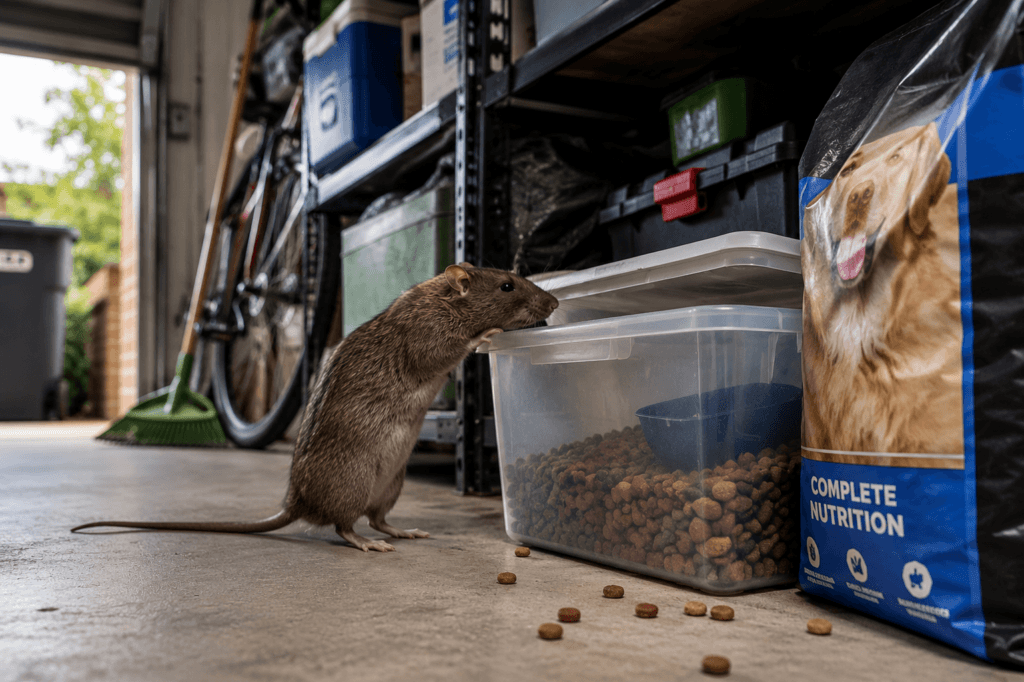
Plenty of homeowners keep bags of pet food in the garage — it’s convenient, and it keeps the kitchen free of clutter. Fair enough in theory, but in our experience, improperly stored pet food is one of the biggest rat attractants we come across on garage inspections.
Whether you’re in Port Macquarie, Kempsey, Wauchope, Laurieton or elsewhere on the Mid North Coast, understanding why pet food draws rodents in can help you head off a problem before it starts. This guide covers why garages appeal to rats, how to store pet food properly, and when it’s worth calling in a professional.
Why Does Pet Food Attract Rats?
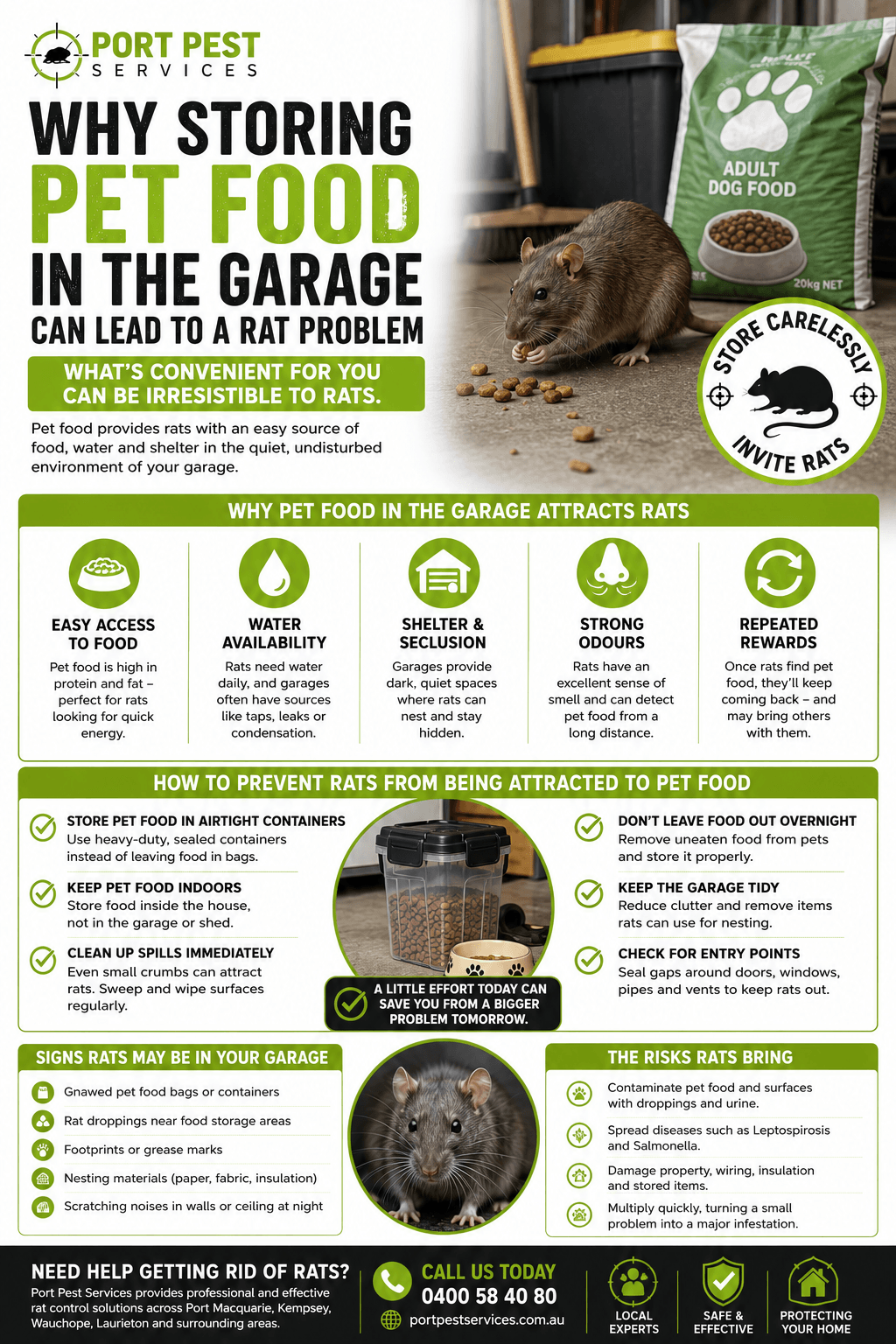
Pet food is packed with protein, fats, and grains — great for your dog or cat, and just as appealing to a rat. If rodents can get to it easily, they’ll keep coming back for it night after night.
Pet Food Is an Easy Food Source
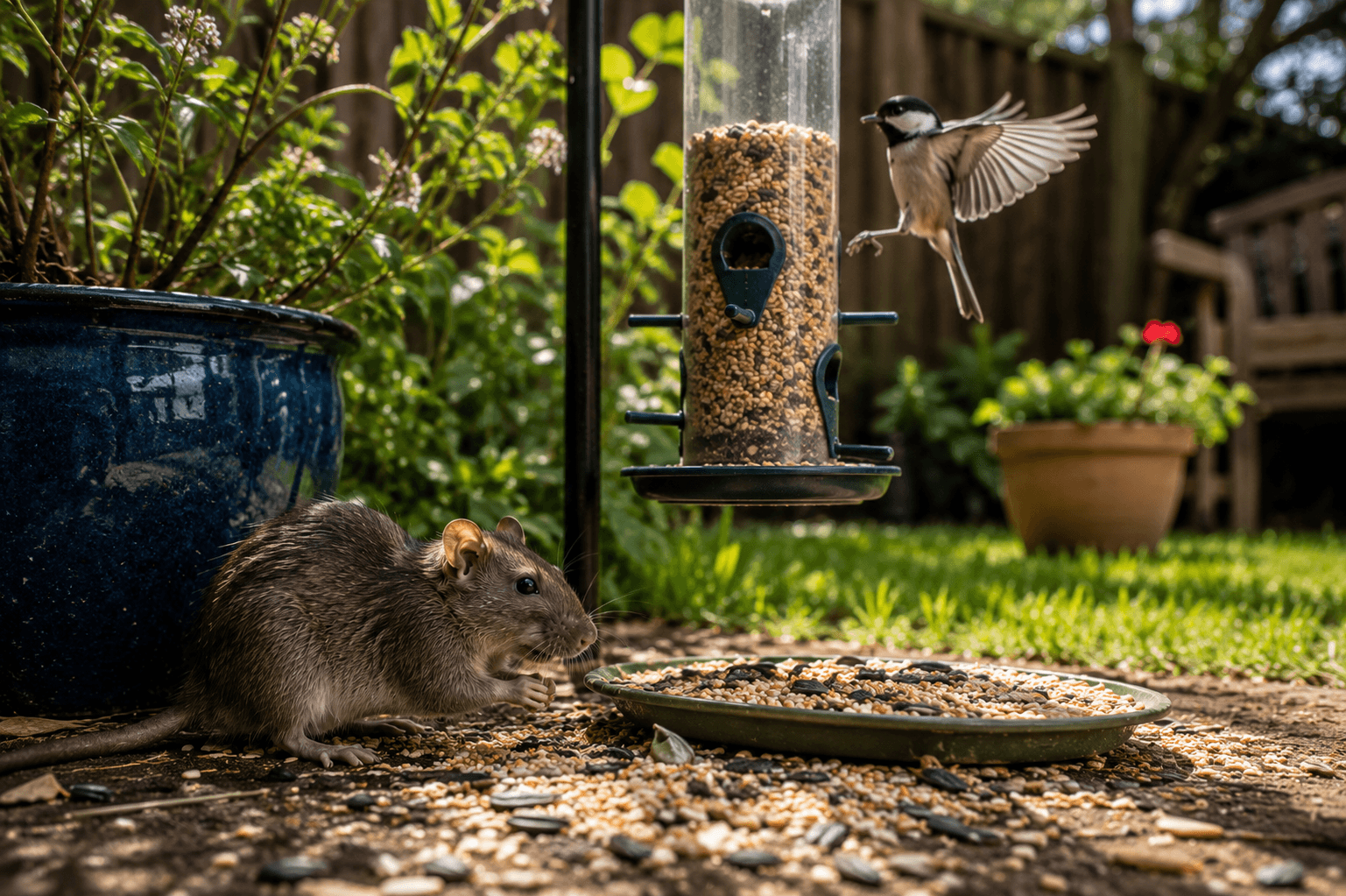
Rats are opportunistic feeders that’ll eat almost anything going. Dry dog food, cat food, bird seed, and other pet feeds all contain exactly the kind of energy-dense ingredients rats need to survive. Even a small spill is enough to encourage regular visits.
Strong Food Odours Attract Rodents
Pet food gives off a strong smell that rats can pick up from a fair distance. An open bag of kibble or bird seed sitting in the garage puts out food scent that rats searching for their next meal will happily follow.
Food Is Available All Year Round
Unlike a lot of food sources that come and go with the seasons, pet food is there every single day. That consistency is exactly what makes garages so attractive — rats learn quickly that there’s a reliable feed on offer year-round.
Why Are Garages a Common Place for Rat Activity?
Garages offer a lot more than food. They also give rats shelter, warmth and a quiet spot where they can move around undisturbed.
Garages Offer Protection
Garages tend to be quieter than the rest of the house, especially overnight. Boxes, shelving and stored gear create plenty of hiding spots where rats can come and go without being noticed.
Easy Access Through Small Gaps
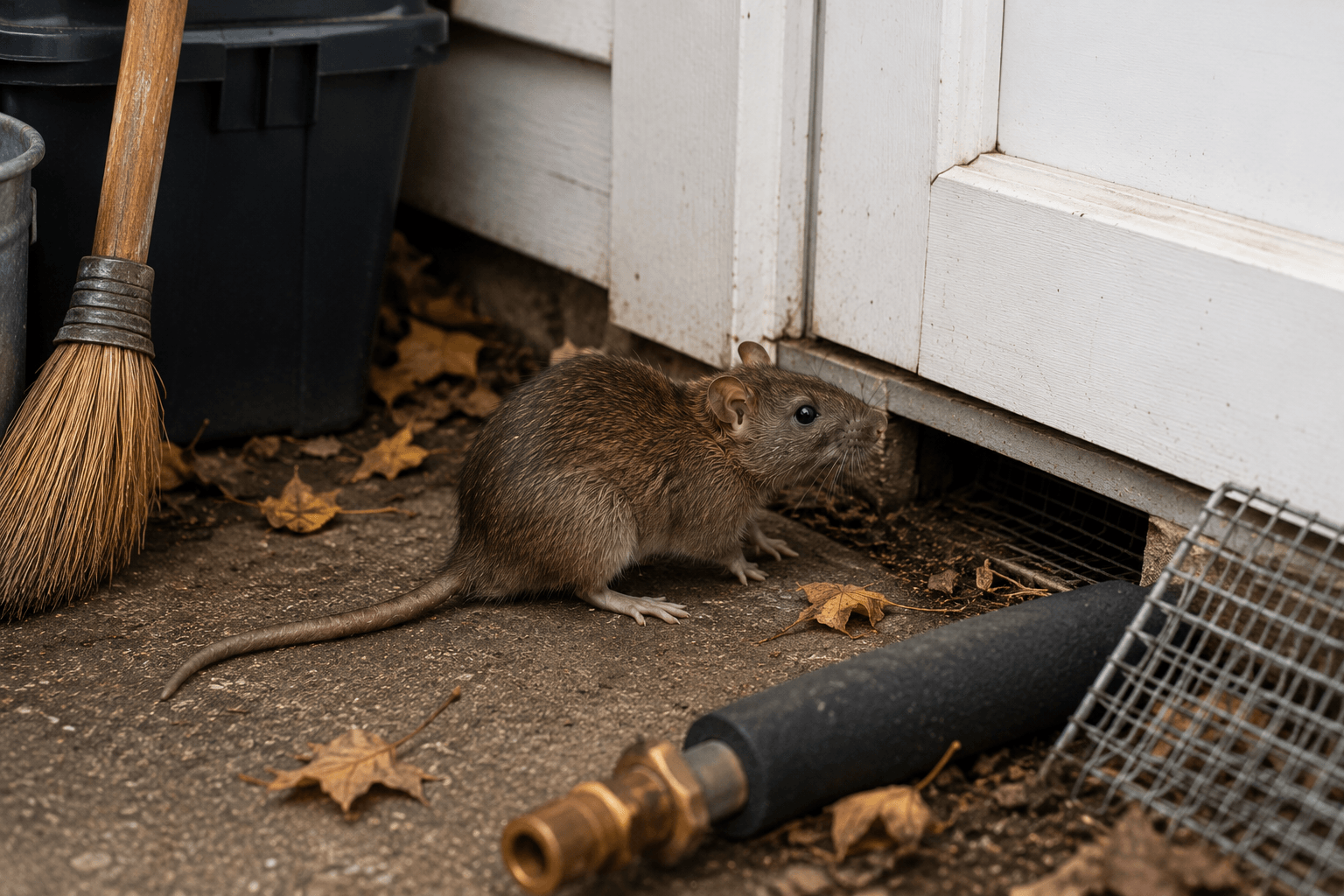
Most garages have small gaps somewhere — around roller doors, side doors, vents or utility pipe penetrations. Rats only need a gap the size of a coin to get in, which is part of why garages are one of the first places we check on an inspection.
Less Human Activity at Night
Most garages sit undisturbed once it gets dark. That gives rats plenty of time to explore, feed, and get back to their nest well before anyone in the house notices anything’s going on.
How Do Rats Access Pet Food?
Rats are strong climbers and persistent chewers. Even if pet food looks secure, they’ll often find a way to it.
They Chew Through Packaging
Plastic bags, paper sacks, and cardboard boxes don’t offer much resistance at all. Rats can chew through these in no time to get to the food underneath.
They Climb Shelves
Putting pet food up on a shelf doesn’t necessarily solve the problem. Rats are capable climbers, and if there’s anything nearby to climb — boxes, shelving brackets, stacked items — they’ll use it to get to elevated storage.
Spilled Food Makes the Problem Worse
Scattered kibble around the storage area is often enough on its own to keep rats interested, even if the main bag is properly sealed. In many homes we inspect, it’s the spillage on the floor, not the bag itself, that’s been keeping the rats coming back.
What Are the Signs Rats Are Feeding on Pet Food?
Catching it early gives you the best shot at stopping a small problem from becoming a bigger one. Checking your garage regularly helps you spot activity before it spreads.
Chewed Pet Food Bags
Small holes, shredded packaging, or torn corners are a common sign rats have already been into stored food. Worth checking bags regularly, especially ones that have been sitting for a few weeks.
Rat Droppings
Droppings near pet food storage usually point to regular feeding activity. You might also find them along garage walls or tucked behind stored boxes.
Gnaw Marks
Rats chew constantly to keep their teeth in check. Have a look for chew marks on shelving, storage containers, timber or plastic items near the pet food.
Scratching Noises
Scratching in the garage after dark can mean rats are hunting for food or building a nest nearby.
How Should You Store Pet Food to Prevent Rats?
Getting your storage right is one of the easiest ways to remove a major food source altogether. A few simple changes can make your garage a lot less appealing.
Use Airtight Containers
Transfer pet food into heavy-duty plastic or metal containers with a tight-fitting lid. This helps contain the food smell and makes it far harder for rats to get in.
Clean Up Spills Immediately
Sweep or vacuum spilled kibble as soon as you spot it. Food left on the floor is an easy meal for a rat, even if the main container’s sealed up properly.
Avoid Keeping Open Bags
Where you can, don’t leave partially opened bags sitting on the garage floor or shelf. Once a bag’s open, tip the rest straight into a sealed container.
Keep Storage Areas Clean
Give the area around your pet food storage a regular clean to clear out crumbs, dust and residue. A tidy garage is a lot less inviting to rodents than a cluttered one.
What Else Around the Garage Can Attract Rats?
Pet food’s only part of the picture. Other food, water, and shelter sources around the garage can keep rats coming back too.
Store Rubbish Securely
Garages often end up holding household rubbish before collection day. Keep bags inside a wheelie bin with a secure lid rather than leaving them sitting exposed.
Related article: Why Rats Are Attracted to Rubbish Bins (And How to Keep Them Away)
Repair Water Leaks
Leaking outdoor taps or pipes near the garage give rats a handy water source. Fixing these removes another essential resource they rely on.
Related article: Can Leaking Garden Taps Attract Rats to Your Property?
Reduce Clutter
Big stacks of boxes, unused furniture and building materials all create ideal hiding places. A well-organised garage makes it a lot easier to spot early signs of activity before things get out of hand.
Seal Entry Points
Check around garage doors, vents and pipe penetrations for gaps. Sealing these off can stop rats getting inside in the first place — one of the more effective, low-cost jobs a homeowner can do themselves.
When Should You Contact a Professional Pest Controller?
Good storage habits often prevent the problem before it starts. But if rats have already set up nearby, professional treatment is usually needed to sort it properly.
Rats Keep Returning
If you’ve secured your pet food but you’re still finding droppings or chew marks, there’s likely already a nest established close by. A professional inspection can pinpoint exactly where that is.
You Notice Activity Inside the House
Rats that start out in the garage can end up moving into roof spaces, wall cavities or other parts of the house over time. Dealing with it early keeps the damage from spreading.
Damage Is Becoming More Frequent
More chew marks, more sightings, more scratching at night — all signs the population’s growing. A professional treatment plan is usually the quickest way to bring things under control before it becomes a bigger job.
Practical Rat Prevention Checklist
Cutting off food, water and shelter is the key to making your property unattractive to rodents. Run through this checklist to help keep rats out of your garage.
- Store pet food in airtight containers.
- Clean up food spills immediately.
- Avoid leaving open pet food bags in the garage.
- Keep storage areas clean and organised.
- Secure household rubbish bins.
- Repair leaking taps or pipes.
- Seal gaps around garage doors and walls.
- Reduce clutter where rats could hide.
- Inspect regularly for droppings and chew marks.
- Contact a professional if rat activity continues.
Trusted Sources for Further Information
For further information on preventing rodent problems around the home, these Australian resources are worth a look:
- NSW Health – Information on rodents and public health.
- CSIRO – Research into rodent behaviour and pest management.
- NSW Environment Protection Authority (EPA) – Advice on waste management and household hygiene.
- Your local Mid North Coast council for information on waste and environmental management.
Protect Your Pet Food and Keep Rats Away
Storing pet food properly is a simple, effective way to cut off one of the biggest rat attractants around a home. Pair that with good housekeeping, regular maintenance and removing other food and water sources, and you’ll make a genuine difference to how attractive your property is to rodents.
A situation we frequently encounter is a garage where the pet food’s been sorted out but chew marks and droppings are still turning up — usually a sign there’s already a nest somewhere close by. If that sounds familiar, Port Pest Services provides professional Rat Control and comprehensive Pest Control services throughout Port Macquarie, Kempsey, Wauchope, Laurieton and the wider Mid North Coast. Our team can find the source, clear the existing infestation, and give you practical advice to help keep your home rodent-free going forward.