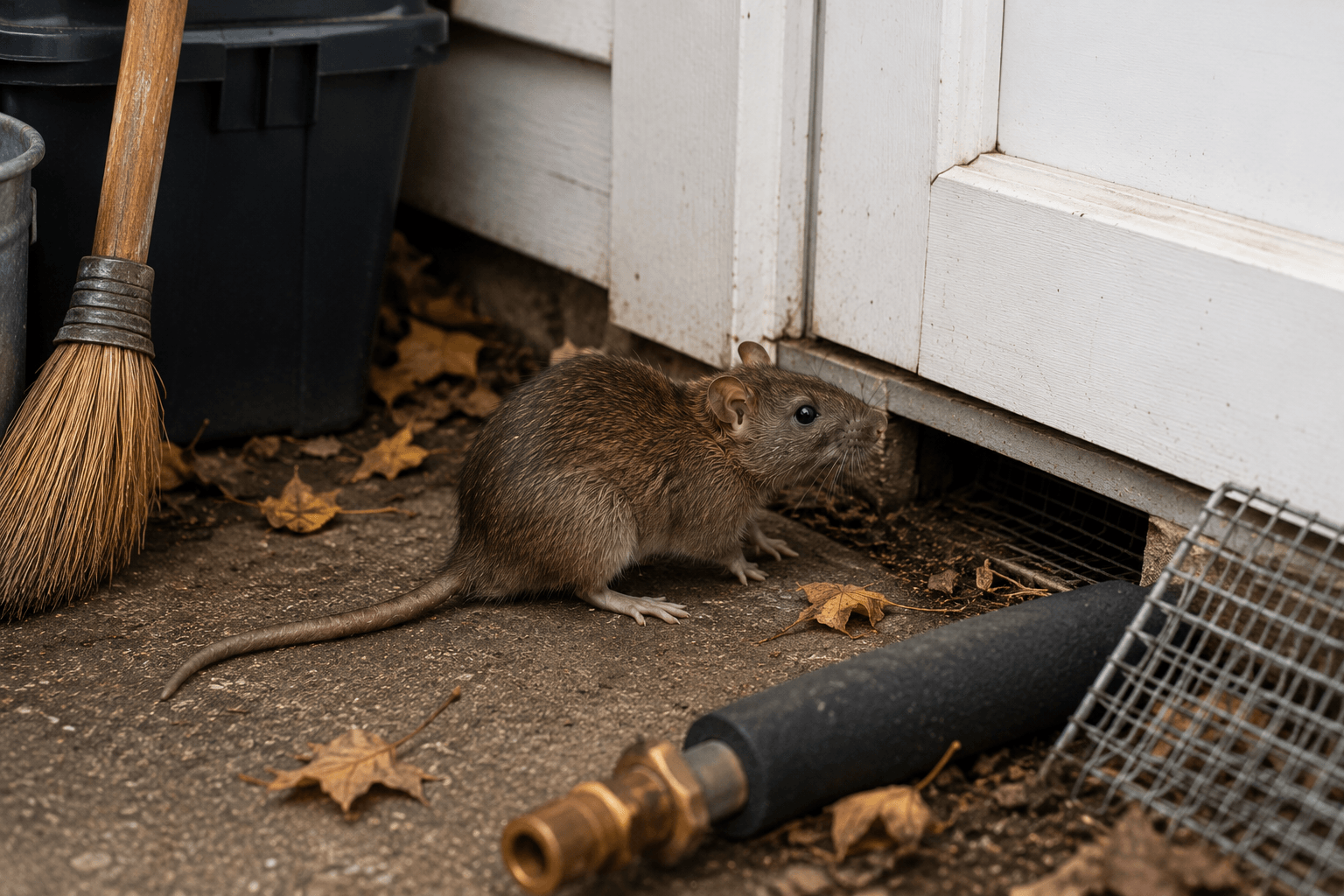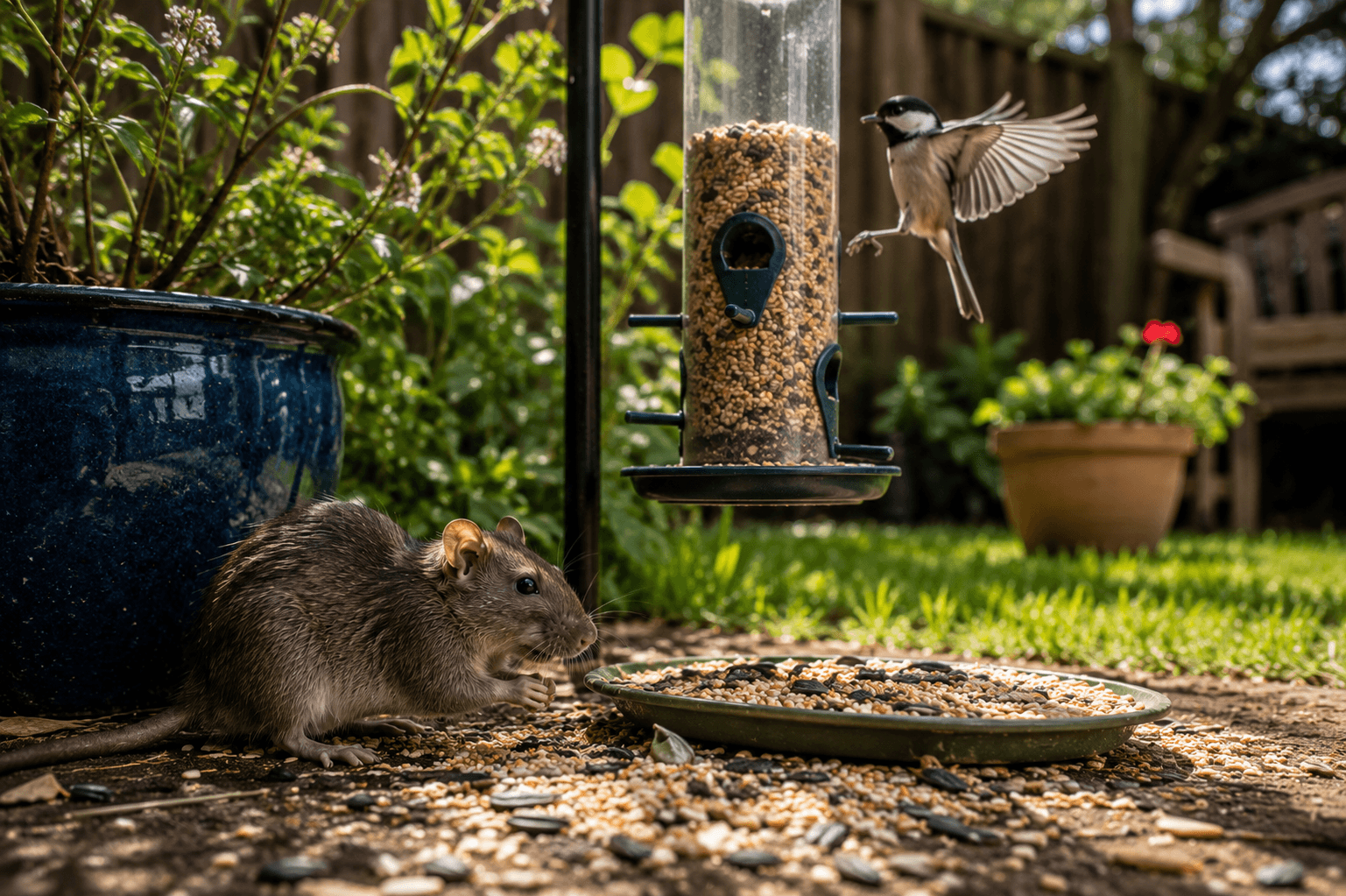
Feeding native birds is a nice way to bring a bit of wildlife into the backyard, but if it’s not managed carefully, it can also hand rats an easy feed and give them a reason to keep visiting.
For homeowners in Port Macquarie, Kempsey, Wauchope, Laurieton and across the Mid North Coast, understanding the link between bird feeding and rodent activity can help you avoid an infestation you didn’t see coming. This guide covers why bird feeders attract rats, the signs to watch for, and how you can keep enjoying backyard birds while keeping rodents away.
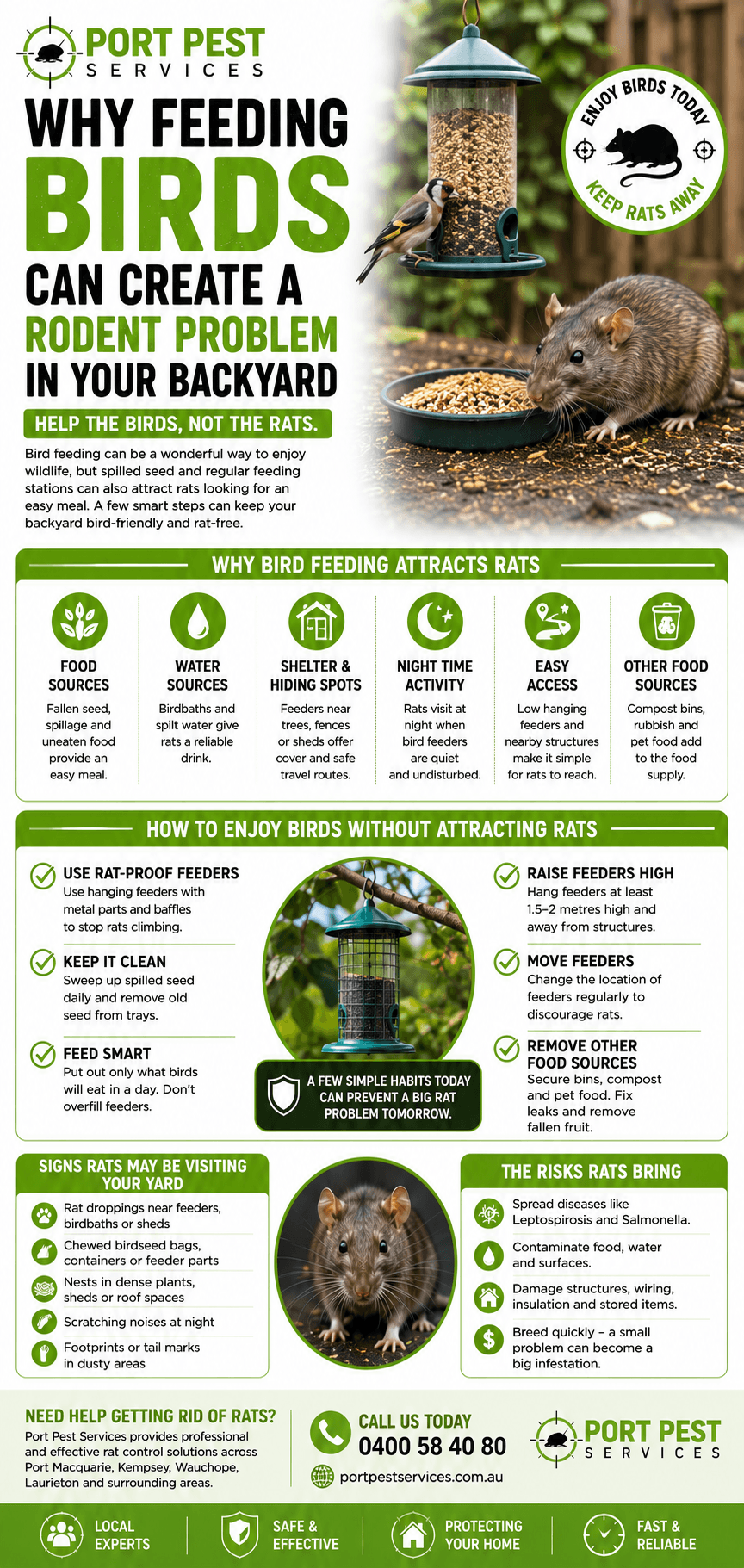
Why Can Bird Feeders Attract Rats?
Bird feeders are built to provide a reliable feed, but birds aren’t always the only ones taking advantage of it. Rats are opportunistic and will happily help themselves to whatever’s on offer.
Spilled Bird Seed Becomes Easy Food
Birds rarely clean up every seed in a feeder. A fair bit ends up on the ground, where rats can find it easily once it gets dark. Even a small amount of spilled seed is enough to bring them back regularly.
Feeders Provide a Consistent Food Supply
A lot of homeowners top up the feeder daily or every few days without thinking twice. That regularity creates a predictable food source, and rats work this out fast — your backyard becomes part of their nightly circuit.
Some Bird Foods Are Highly Attractive
Mixed bird seed, sunflower seeds, cracked corn and other grain-based feeds are particularly appealing to rodents. Left out overnight, these are still there long after the birds have gone quiet for the day.
Food Is Often Close to Shelter
Feeders are usually placed near trees, shrubs or garden beds to make birds feel safe. Unfortunately, that same vegetation gives rats excellent cover to move through undetected.
Which Backyard Features Make the Problem Worse?
A bird feeder on its own doesn’t always cause a rat problem. Combined with a few other attractants, though, it can make a backyard a lot more appealing than it should be.
Dense Gardens Provide Cover
Overgrown shrubs, palm trees and thick ground cover let rats move between food sources while staying hidden. Regular pruning cuts off these safe travel routes.
Related article: Are Palm Trees and Dense Gardens Giving Rats a Place to Hide?
Nearby Water Sources
Bird baths, leaking taps and irrigation systems all provide reliable drinking water. Where food and water are both available in the same spot, rats are far more likely to settle in nearby.
Related article: Can Leaking Garden Taps Attract Rats to Your Property?
Compost and Vegetable Gardens
A lot of bird feeders end up positioned near a productive vege patch. Vegetable gardens and compost bins add another food source that only adds to the appeal.
Related article: Can Vegetable Gardens Attract Rats? What Every Gardener Should Know
Household Rubbish
An overflowing bin near the feeding area gives rats yet another reliable food source. The more food on offer overall, the more attractive the whole property becomes.
Related article: Why Rats Are Attracted to Rubbish Bins (And How to Keep Them Away)
How Do Rats Find Bird Feeders?
Rats rely on sharp senses and predictable habits to track down food. Once they’ve found a reliable feeding spot, they’ll keep coming back.
Their Sense of Smell Is Excellent
Rats have a very well-developed sense of smell and can pick up bird seed from a surprising distance, especially where the feeder’s topped up regularly.
They Follow Established Routes
Rather than wandering at random, rats stick to familiar paths. Fence lines, garden beds and dense vegetation often become their regular route straight to the feeding area.
They Are Mostly Active at Night
Most homeowners only see birds using the feeder during the day. Rats generally turn up after dark, once things have gone quiet and there’s less risk of being disturbed.
They Learn Where Food Is Available
Rats are sharp animals with good memories. Once they’ve clocked a dependable food source, they’ll keep returning to it until it’s no longer there.
What Are the Signs Rats Are Visiting Your Bird Feeding Area?
Rodents are usually out and about while everyone’s asleep, but they leave clear evidence behind. Picking up on these signs early lets you act before things get worse.
Bird Seed Disappears Quickly
If a decent chunk of seed vanishes overnight, rats may well be feeding after dark — particularly noticeable if the feeder’s topped up often.
Rat Droppings Around Feeders
Fresh droppings under feeders, near garden beds or along pathways usually point to regular activity. Always clean these up with proper hygiene precautions.
Burrows Nearby
Some rats will burrow beneath shrubs, retaining walls or garden structures close to the feeding area. Small holes with smooth entrances can indicate active nesting.
Night-Time Sightings
Spotting rats around the feeder after dark is about as clear a sign as you’ll get that the area’s become attractive to rodents.
How Can You Feed Birds Without Attracting Rats?
You don’t need to stop feeding birds altogether. A few simple changes let native birds keep enjoying your backyard while making it a lot less appealing to rats.
Use Feeders That Reduce Waste
Choose a feeder designed to minimise seed spillage. Less food hitting the ground means less food available for rats overnight.
Clean Up Spilled Seed Daily
Sweep or rake underneath the feeder regularly. Clearing fallen seed stops it becoming an overnight food source.
Feed Smaller Amounts
Rather than filling the feeder to the brim, put out only enough for the birds to get through during the day. Less left over means less on offer once the sun goes down.
Position Feeders Carefully
Keep the feeder away from dense shrubs, wood piles and thick vegetation where rats can hide. Open ground makes them feel exposed and a lot less likely to stick around.
What Else Can You Do to Reduce Rat Activity?
Bird feeders are only one part of the picture. Cutting down other food, water and shelter sources around the property gives rats fewer reasons to stay.
Store Pet Food Properly
Pet food and bird seed both need to go in airtight containers, not left in open bags in the garage, shed or outdoor storage.
Related article: Why Storing Pet Food in the Garage Can Lead to a Rat Problem
Maintain Your Garden
Trim back dense vegetation and clear unnecessary clutter from the garden. Fewer hiding places makes the whole property less attractive to rodents. Older homes and leafy properties can often provide ideal conditions for rodents, particularly where bird feeders sit close to well-established, overgrown garden beds.
Related article: Are Palm Trees and Dense Gardens Giving Rats a Place to Hide?
Keep Gutters Clean
Blocked gutters create moisture and an easier route up onto the roof. Routine maintenance removes another factor supporting rodent activity.
Related article: How Blocked Gutters Can Encourage Rats Around Your Home
Inspect Garden Sheds
Sheds are often an ideal nesting spot. Keep them tidy, seal up entry points, and store supplies correctly.
Related article: Why Rats Love Garden Sheds (And How to Keep Them Out)
When Should You Contact a Professional Pest Controller?
Adjusting your bird feeding routine often helps cut down rodent activity, but it won’t always shift an infestation that’s already taken hold. Professional treatment may be needed if rats have settled on the property.
Rats Continue Returning
If you’ve reduced seed spillage but you’re still seeing fresh droppings or sightings, there may already be an established nest nearby. A professional inspection can find the source.
Rats Have Moved Into the House
Outdoor activity can, over time, turn into an infestation in the roof space, garage or wall cavities. Dealing with it early helps prevent that damage.
You Notice Increasing Signs of Activity
If scratching, droppings or sightings are becoming more frequent, the population may be growing. Professional treatment helps get on top of it before it becomes harder to manage.
Practical Rat Prevention Checklist
Feeding birds responsibly and keeping the backyard maintained can significantly reduce the risk of attracting rats. Use this checklist to help protect your property.
- Use bird feeders that minimise seed waste.
- Clean up spilled seed every day.
- Feed smaller amounts more frequently.
- Store bird seed in airtight containers.
- Keep feeders away from dense vegetation.
- Repair leaking outdoor taps.
- Keep rubbish bins securely closed.
- Maintain compost bins correctly.
- Trim shrubs and remove garden clutter.
- Inspect regularly for droppings or burrows.
- Seal potential entry points into sheds and your home.
- Contact a professional if rodent activity continues.
Trusted Sources for Further Information
Learning from trusted Australian organisations can help you enjoy backyard wildlife while keeping your property protected from pests. These resources offer reliable information for homeowners:
- NSW Health – Information on rodents, public health and safe cleaning practices.
- CSIRO – Research on rodent behaviour and integrated pest management.
- BirdLife Australia – Advice on responsible bird feeding and supporting native birds.
- Your local Mid North Coast council for environmental management and waste disposal information.
Enjoy Feeding Birds Without Inviting Rats
A bird feeder can be a great addition to the backyard, but it needs to be managed carefully so it doesn’t end up feeding more than just birds. Cut down seed waste, store bird food properly, and keep the surrounding area maintained, and you can keep enjoying native birds without turning your property into a rat magnet.
A situation we frequently encounter is a backyard with a well-loved bird feeder that’s inadvertently been feeding rats for months before anyone notices the droppings underneath. If that sounds like your place, Port Pest Services provides professional Rat Control and comprehensive Pest Control services throughout Port Macquarie, Kempsey, Wauchope, Laurieton and the wider Mid North Coast. Our team can identify nesting areas, locate entry points, and put together an effective long-term solution to keep your backyard and home rodent-free.