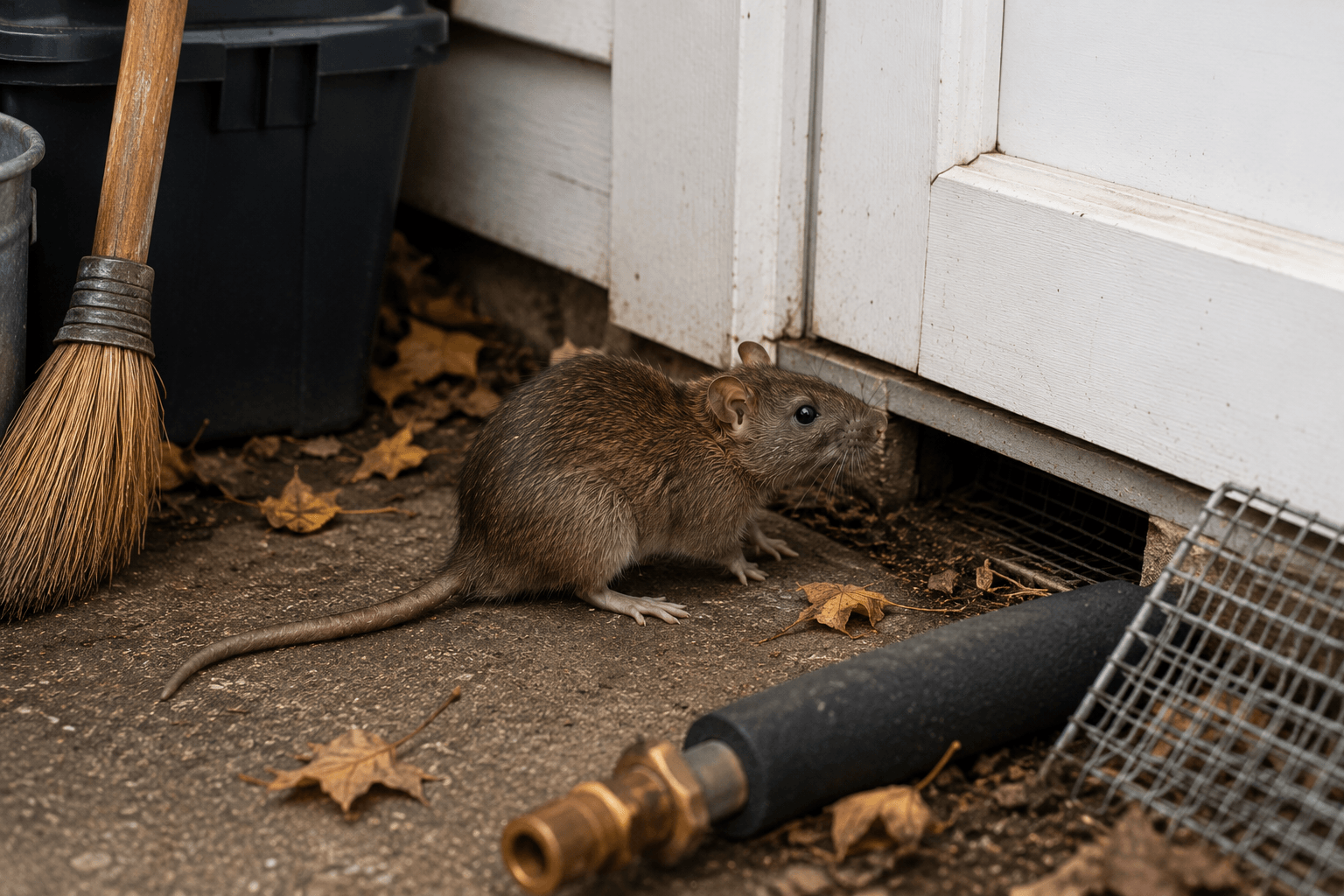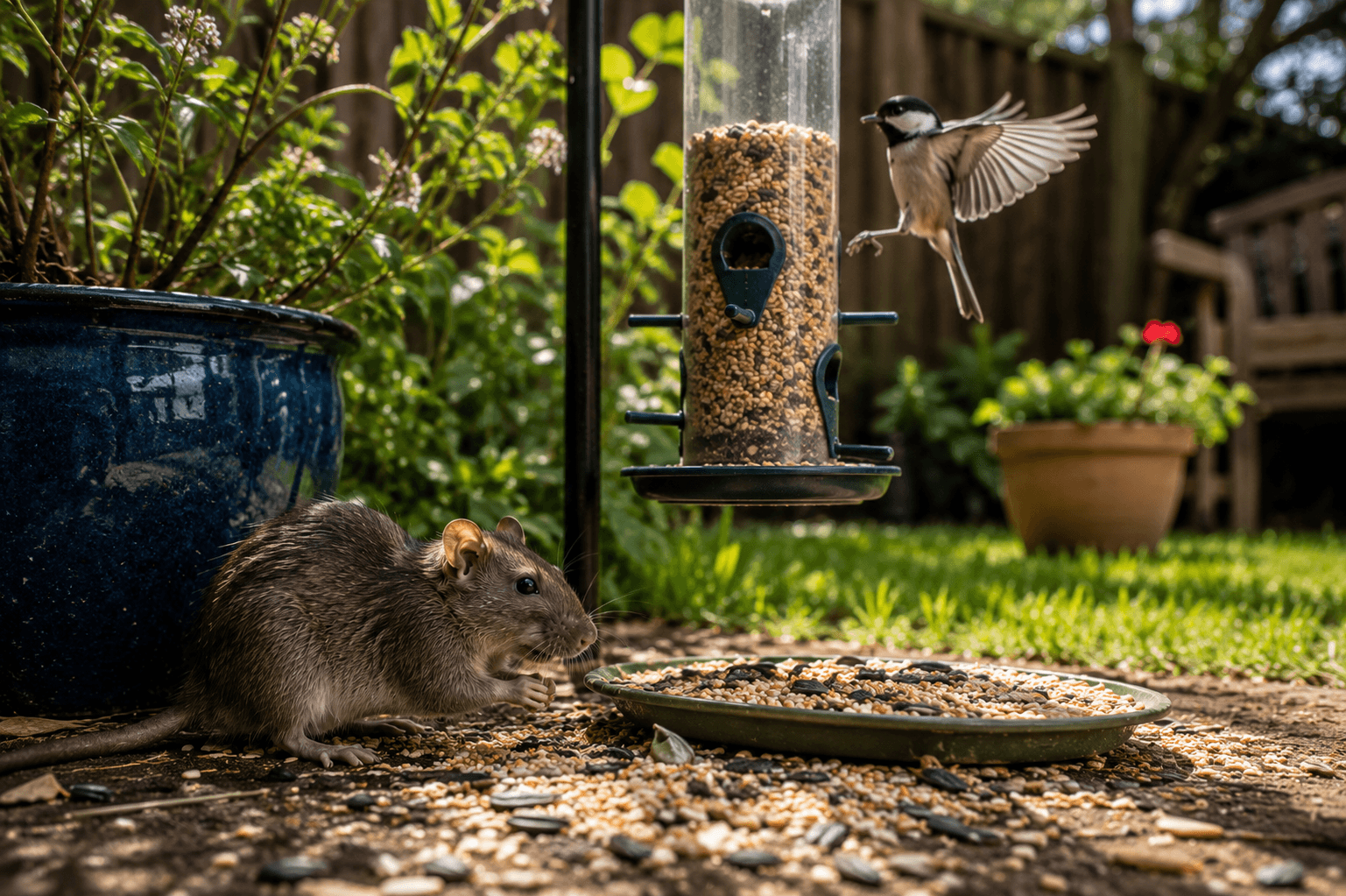
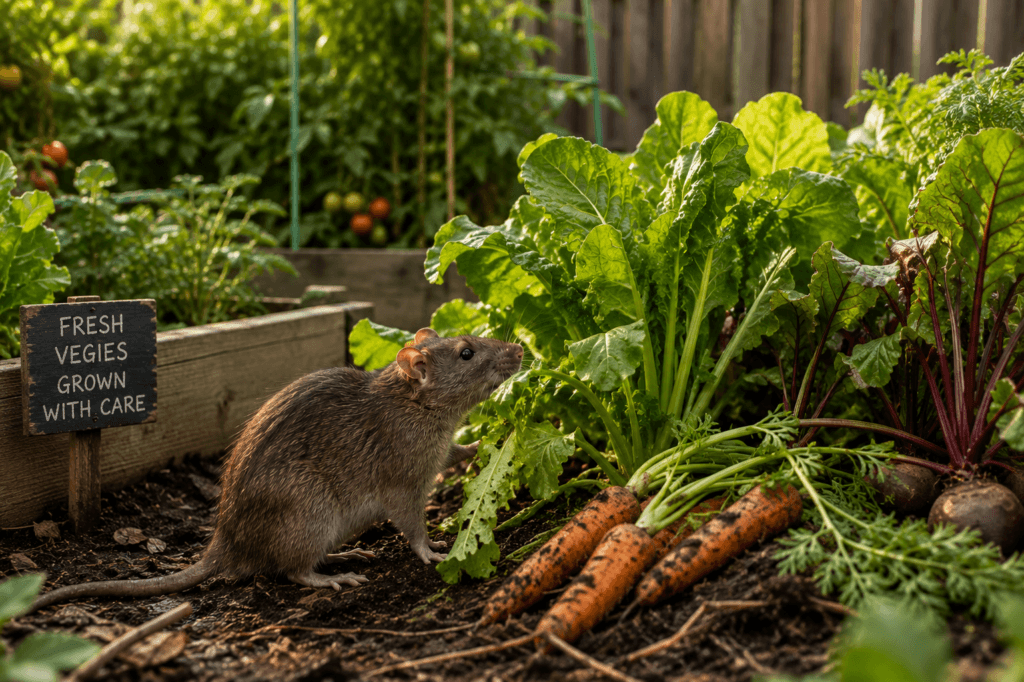
Growing your own vegetables is one of the more satisfying uses of a backyard, but a productive vege patch can also bring in visitors you didn’t sign up for if it’s not kept on top of.
For homeowners in Port Macquarie, Kempsey, Wauchope, Laurieton and across the Mid North Coast, understanding what draws rats into a vegetable garden is a useful first step in keeping rodents away. This guide covers why rats are attracted to vegetable gardens, the signs to look for, and the practical steps you can take to protect both your crops and your home.
Why Are Vegetable Gardens Attractive to Rats?
A vegetable garden offers a lot of what a rat needs to survive — food, water and shelter, often all in the one spot. When those three things line up in one location, rodents are far more likely to take an interest in your property.
Fresh Fruit and Vegetables Provide Food
Rats are opportunistic feeders and aren’t fussy about what’s on the menu. Ripening tomatoes, strawberries, pumpkins, sweet corn, beans and leafy vegetables are all fair game, and fallen produce left lying on the ground is just as appealing.
Gardens Often Have Reliable Water Sources
Most vegetable gardens need regular watering, and that’s exactly the kind of reliable water source a rat looks for. Drippers, sprinklers, leaking hoses and damp soil all help rats get by, particularly through the warmer months.
Mulch Creates Shelter
A lot of gardeners rely on mulch to hold moisture and keep weeds down, which is good practice for the plants. The downside is that a thick layer of mulch also gives rats a cool, sheltered spot to hide during the day.
Compost Can Attract Rodents
A compost bin sitting near the vege patch can draw rats in if it’s holding the wrong materials. Cooked food, meat, dairy and oily leftovers should never go into compost — they produce strong smells that rats will happily investigate.
Which Vegetables Do Rats Commonly Eat?
Not every crop is equally attractive. Rats will eat almost anything if they need to, but they tend to go for the sweeter, softer produce first.
Tomatoes
Ripening tomatoes are one of the most common targets we hear about from gardeners. Rats will typically chew a small hole in one before moving on to the next.
Sweet Corn
Corn offers both moisture and nutrition, and rats will climb the stalks to get at developing cobs well before they’re ready to harvest.
Strawberries and Berries
Soft fruit is easy pickings for a rat, and if it’s left to over-ripen on the plant, it becomes even more attractive.
Root Vegetables
Carrots, potatoes and sweet potatoes aren’t immune either — rats will chew exposed sections or dig around developing vegetables under the soil.
How Do Rats Get Into Vegetable Gardens?
Rats are strong climbers, diggers and even swimmers, which makes it surprisingly easy for them to get into a backyard garden. Knowing how they get in helps you close off the routes.
They Travel Along Fences
Fence lines give rats a protected route between neighbouring properties. They’ll often use these before dropping into a garden after dark.
Dense Vegetation Provides Cover
Overgrown shrubs and nearby garden beds let rats move around without being exposed. The more cover there is, the more confident they feel moving through it.
They Climb Raised Garden Beds
Raised beds don’t stop rats getting in — they’ll climb timber, brick or metal edging just as easily as they’ll cross open ground.
They Move Between Neighbouring Yards
Rats don’t recognise a fence line as a property boundary. Where several neighbouring gardens all offer food and shelter, rats will often move between them on a nightly circuit.
What Are the Signs Rats Are Visiting Your Vegetable Garden?
Early signs of activity often show up well before you actually spot a rat. Picking up on these clues gives you a chance to deal with things before they get worse.
Half-Eaten Vegetables
Vegetables with bite marks or partially eaten fruit usually point to overnight feeding. The damage tends to look irregular rather than neatly cut, which helps rule out garden tools or clean pest damage.
Fresh Droppings
Droppings can turn up along pathways, beside garden beds or near the compost bin. Fresh droppings are dark, smooth and slightly shiny.
Burrows Near Garden Beds
Rats will sometimes dig burrows beneath raised beds, retaining walls or nearby structures. Small holes with smooth entrances can indicate active nesting.
Missing Seedlings
Young seedlings occasionally vanish overnight. Insects and other animals can be responsible too, but repeated losses often point toward rodents.
How Can You Protect Your Vegetable Garden From Rats?
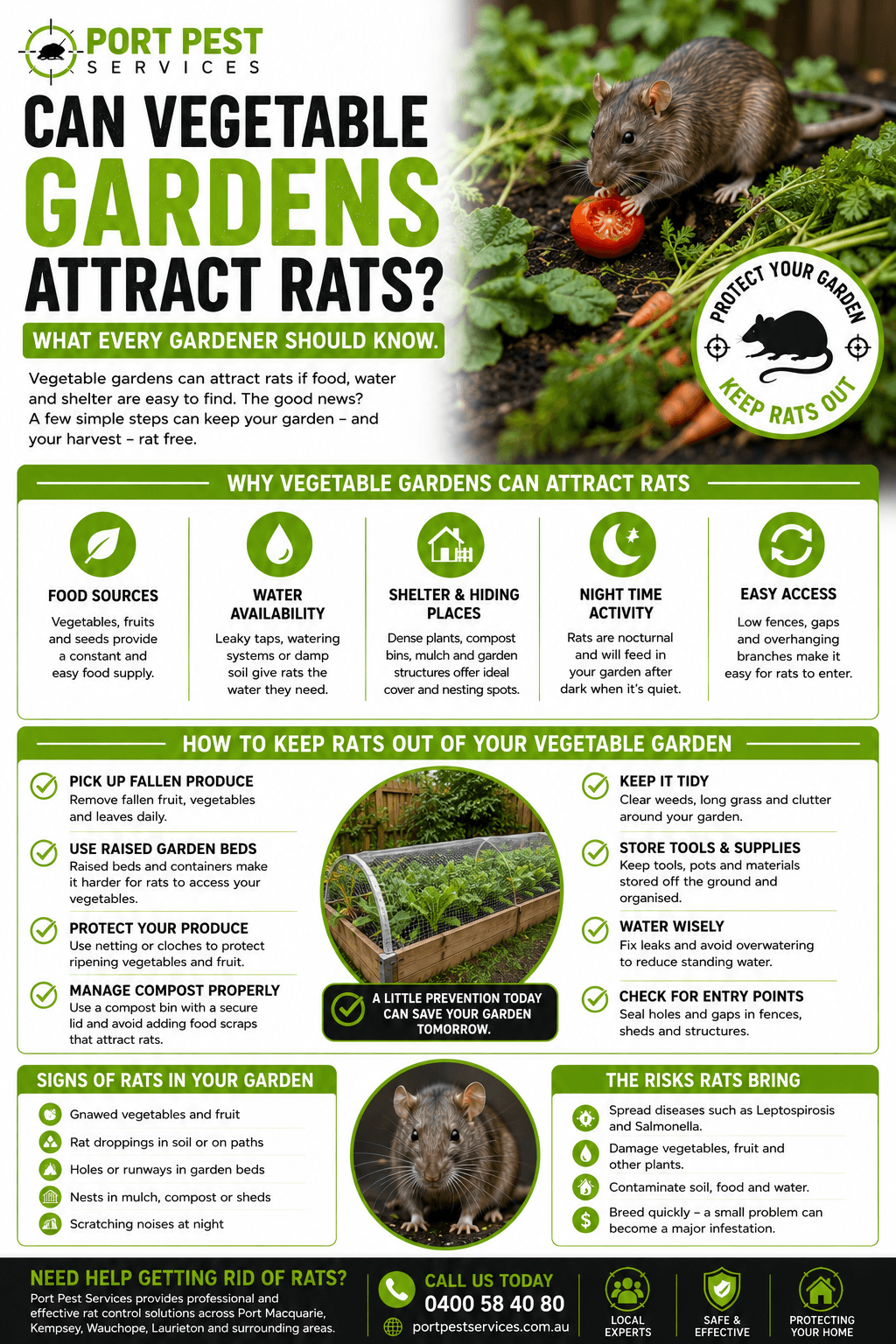
You don’t need to give up growing vegetables to keep rats away. A few simple habits make the garden a lot less attractive while still giving your plants what they need to thrive.
Harvest Produce Promptly
Pick fruit and vegetables as soon as they’re ripe. Leaving them on the plant too long just gives rats more of a window to get to them first.
Remove Fallen Produce
Collect damaged or fallen fruit and vegetables daily where you can. Rotting produce sitting on the ground is an easy, reliable food source that keeps rats coming back.
Manage Compost Correctly
Stick to suitable garden waste and vegetable scraps in the compost. Keep cooked food, meat, dairy and oily leftovers out of it altogether.
Reduce Garden Clutter
Clear out unused pots, timber, weeds and piles of organic material. A tidy garden simply has fewer places for rats to hide.
What Else Around Your Property Can Attract Rats?
Even a well-kept vegetable garden won’t stop rats visiting if there’s still food, water or shelter elsewhere on the property.
Keep Rubbish Bins Secure
Household rubbish is still one of the biggest attractants going. Keep wheelie bin lids tightly closed and wash bins out regularly.
Related article: Why Rats Are Attracted to Rubbish Bins (And How to Keep Them Away)
Repair Leaking Outdoor Taps
A dependable water source keeps rats settling nearby. Fix leaking taps, hoses and irrigation systems as soon as they show up.
Related article: Can Leaking Garden Taps Attract Rats to Your Property?
Maintain Surrounding Gardens
Dense shrubs, overgrown hedges and palm trees all offer excellent shelter. Regular pruning removes hiding places and cuts off safe travel routes. In our experience, a well-established garden with mature palms and thick hedging is often exactly where a nest turns up once we start looking.
Related article: Are Palm Trees and Dense Gardens Giving Rats a Place to Hide?
Store Pet Food Correctly
Pet food kept in a garage or shed should always be in an airtight container. Removing this extra food source helps discourage rats from sticking around.
Related article: Why Storing Pet Food in the Garage Can Lead to a Rat Problem
When Should You Contact a Professional Pest Controller?
Good garden maintenance often keeps rats from settling in the first place, but it won’t necessarily clear an infestation that’s already established. If activity continues despite your efforts, it’s worth bringing in professional help.
Garden Damage Keeps Increasing
If vegetables keep disappearing or there’s fresh damage every morning, there’s a good chance rats are already living close by. Professional treatment can help track down the source.
You Notice Activity Around the House
If rats start turning up near sheds, garages or the roofline, they may be expanding beyond the garden itself. Getting onto this early helps stop them making it into the house.
You Continue Finding Fresh Droppings
Fresh droppings mean the activity’s ongoing, not old news. Professional treatment helps clear the infestation and lowers the risk of it coming back.
Practical Rat Prevention Checklist
Protecting your vegetable garden is a lot easier than dealing with an established rat infestation. Use this checklist to reduce the risk through the growing season.
- Harvest vegetables as they ripen.
- Remove fallen fruit and vegetables daily.
- Compost correctly and avoid food scraps that attract rodents.
- Keep garden beds free of weeds and clutter.
- Repair leaking taps and irrigation systems.
- Secure household rubbish bins.
- Store pet food in airtight containers.
- Trim dense vegetation around the garden.
- Inspect regularly for droppings and burrows.
- Seal potential entry points into sheds and garages.
- Monitor crops for chewing damage.
- Contact a professional if rat activity continues.
Trusted Sources for Further Information
Learning from trusted Australian organisations can help you make informed decisions about rodent prevention and garden management. The following resources offer reliable guidance for homeowners:
- NSW Health – Information on rodents, public health and safe cleaning practices.
- CSIRO – Research on rodent behaviour and integrated pest management.
- NSW Environment Protection Authority (EPA) – Guidance on composting and environmental management.
- Your local Mid North Coast council for composting and waste management advice.
Enjoy Your Vegetable Garden Without Attracting Rats
A healthy vegetable garden doesn’t have to turn into a food source for rodents. Harvest produce promptly, keep on top of garden maintenance, manage compost properly, and remove other food and water sources, and you’ll cut the odds of attracting rats significantly — while still enjoying what you’ve grown.
A situation we frequently encounter is a tidy, well-tended vege patch that’s still getting hit overnight, usually because the rats are actually nesting elsewhere on the property and just visiting the garden to feed. If you’ve noticed signs of rats in your vegetable garden or anywhere else around the property, Port Pest Services provides professional Rat Control and comprehensive Pest Control services throughout Port Macquarie, Kempsey, Wauchope, Laurieton and the wider Mid North Coast. Our team can locate nesting areas, work out how rodents are getting in, and put together an effective long-term solution to keep your home and garden rodent-free.