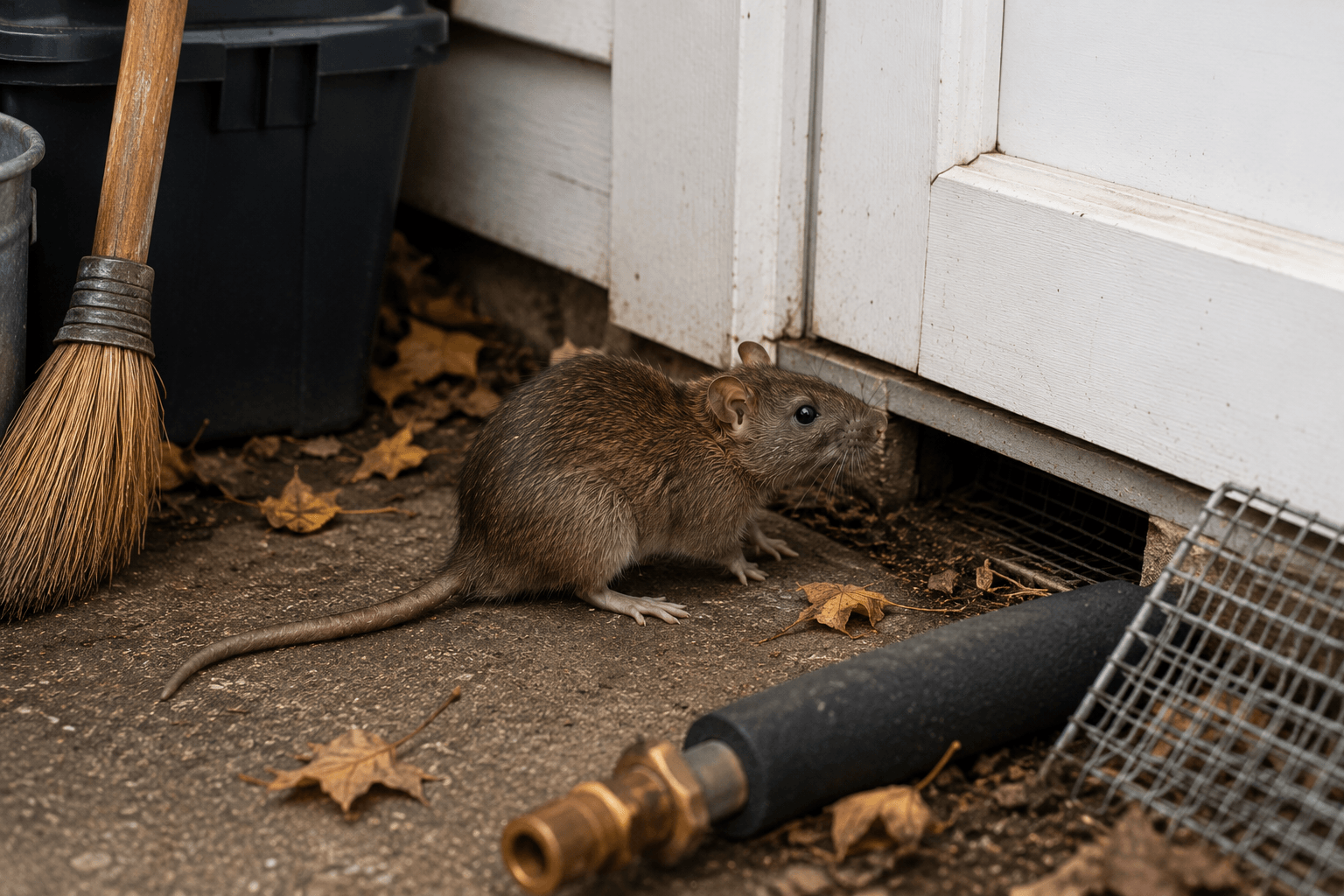
A well-kept garden adds beauty, privacy and shade to a property, but some landscaping features can double as the perfect hideout for rats. Dense vegetation, overgrown shrubs and certain trees create safe pathways and nesting spots that let rodents live close to the house without anyone noticing.
For homeowners in Port Macquarie, Kempsey, Wauchope, Laurieton and across the Mid North Coast, understanding how your garden influences rodent activity is a genuinely useful part of preventing an infestation before it starts. This guide covers why rats are drawn to dense gardens, what to look out for, and how a few landscaping changes can help keep them away.
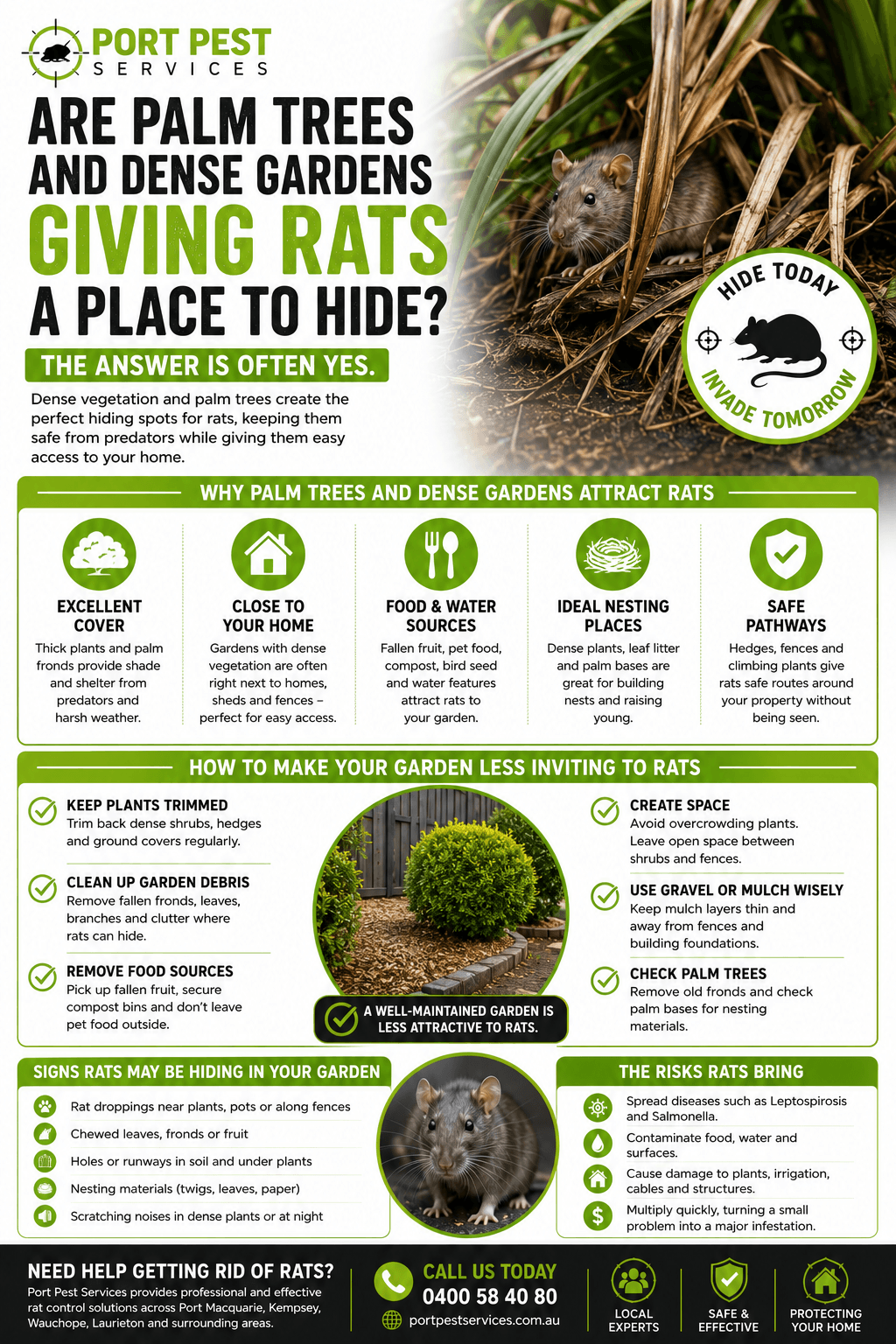
Why Do Palm Trees and Dense Gardens Attract Rats?
Rats aren’t just after food — they need places to hide, move around safely, and build a nest. Gardens with thick vegetation give them protection from predators while letting them travel across your property without being seen.
Dense Foliage Provides Excellent Cover
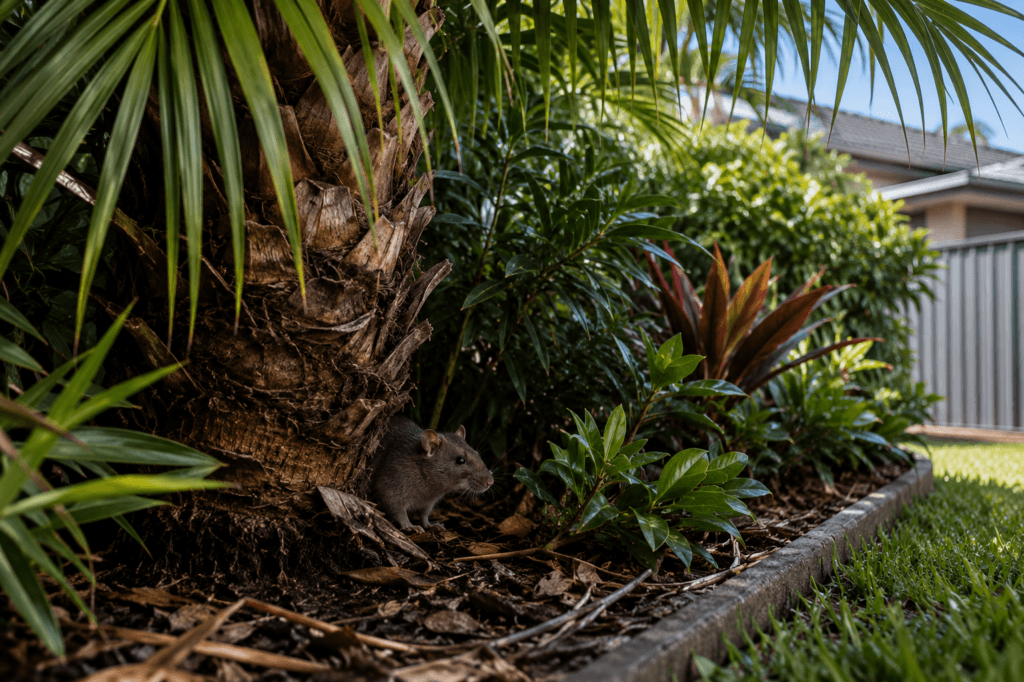
Rats prefer to stay out of sight wherever possible. Large shrubs, thick hedges and densely planted garden beds give them plenty of daytime cover, making it easier to avoid predators and human activity alike.
Palm Trees Offer Natural Shelter
Palm trees are particularly appealing because their dead fronds and thick canopies create sheltered pockets. If old fronds are left hanging under the crown, they make an ideal nesting spot for rats that want to stay up high and out of reach.
Gardens Create Safe Travel Routes
Rather than cross open ground, rats generally move beneath vegetation where they feel secure. Overgrown gardens often link up into connected pathways, letting rodents travel between neighbouring properties without ever being exposed.
Why Are Palm Trees a Favourite Hiding Place?
Not every tree is equally attractive to rats. Palms have a few particular features that make them especially appealing when they’re not kept trimmed back.
Dead Fronds Create Nesting Areas
Old fronds left attached to the tree create warm, sheltered pockets. Rats will build nests beneath these layers, protected from both weather and predators.
Fruit From Some Palm Species Provides Food
Certain palm varieties drop fruit that rats are happy to eat. Fallen fruit left sitting on the ground becomes another reliable food source that keeps them coming back.
Palms Can Provide Easy Roof Access
Tall palms growing close to the house can give rats a direct route up onto the roof. From there, they can get into the roof void through gaps around eaves, vents or damaged roofing.
How Do Dense Gardens Help Rats Move Around?
Gardens often do more than just provide a hiding spot — they can become a kind of highway, letting rats move safely between food, water and nesting sites.
Thick Shrubs Hide Movement
Dense shrubs let rats travel while staying concealed. Because they avoid open ground, a heavily planted garden gives rodents the confidence to move around even in the early evening, when there’s still some daylight.
Ground Covers Offer Protection
Ground-cover plants create shaded pockets beneath the foliage. These cool, protected spots make good daytime resting spots for rats between feeding runs.
Climbing Plants Connect Structures
Vines growing over fences, sheds or walls can form a pathway straight up to a roofline or upper level. Keeping climbing plants trimmed back cuts off this route.
What Other Garden Features Can Encourage Rats?
Palm trees are only one part of the picture. A few other landscaping features can make a yard more attractive to rats if they’re left unmanaged.
Wood Piles
Firewood stacked directly on the ground creates a warm, protected hiding spot. Raising wood piles off the ground and keeping them away from the house makes them a lot less appealing.
Related article: Why Rats Love Garden Sheds (And How to Keep Them Out)
Fallen Fruit
Fruit left lying under trees is an easy food source. Collecting it regularly removes one of the biggest outdoor attractions for rodents.
Compost Bins
A poorly managed compost bin with cooked food or meat scraps in it will draw rats in. Stick to suitable organic materials and keep the bin properly maintained.
Related article: Can Vegetable Gardens Attract Rats? What Every Gardener Should Know
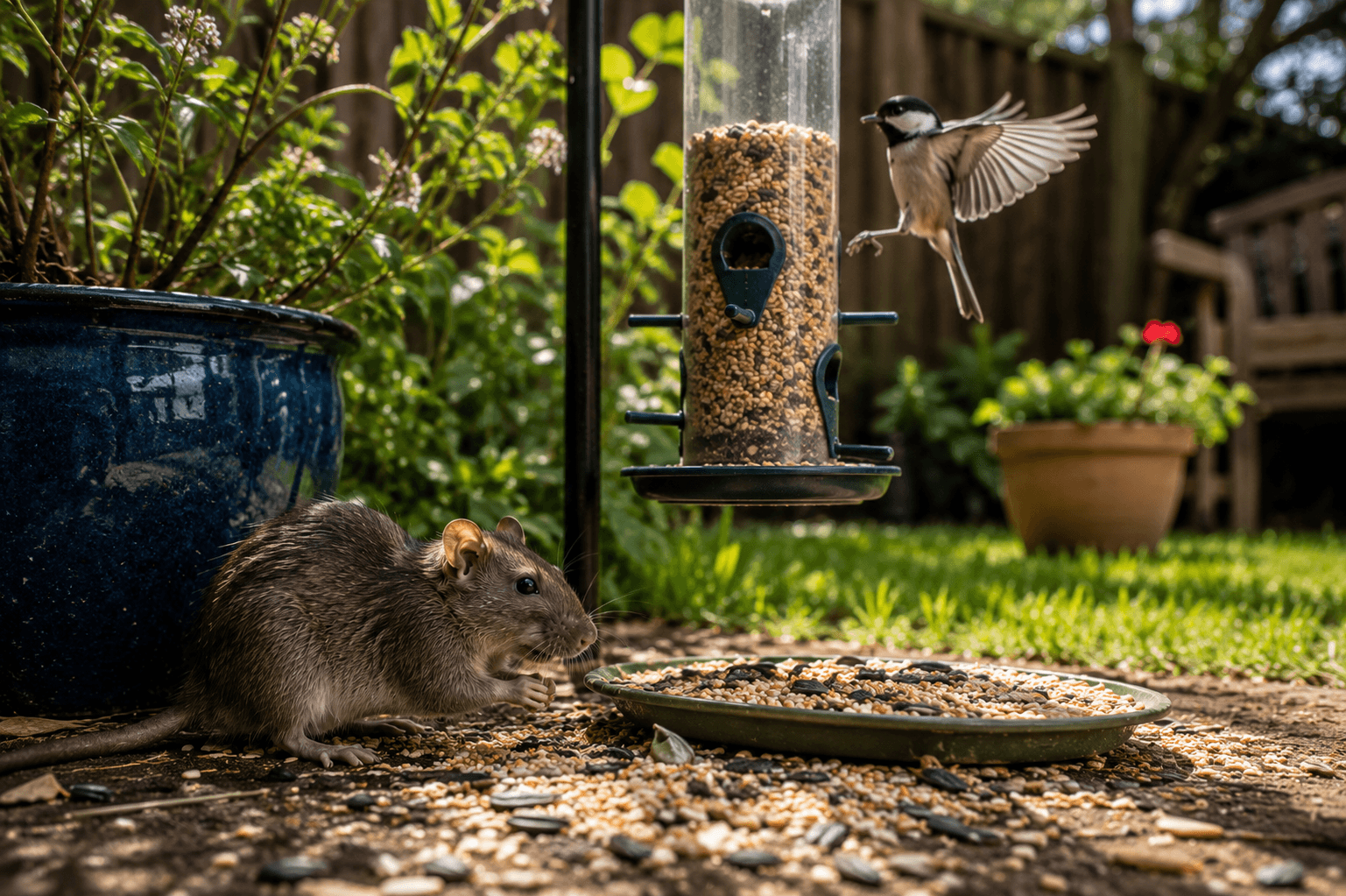
Bird Feeders
Seed scattered underneath bird feeders is a common attractant. Cleaning up spilled seed regularly and using a well-designed feeder helps cut this down.
Related article: Why Feeding Birds Can Create a Rodent Problem in Your Backyard
What Are the Signs Rats May Be Living in Your Garden?
Rats tend to stay hidden for long stretches, but they usually leave a few clues behind. Picking up on these early gives you a chance to act before they move into the house itself.
Droppings Around Garden Beds
Droppings can turn up beneath shrubs, around retaining walls or near compost bins. Fresh droppings are dark, smooth, and usually a sign of recent activity.
Burrows Near Vegetation
Some rats will burrow beneath thick vegetation or around garden structures. Small holes with smooth edges can indicate an active nest.
Chewed Fruit and Plants
Gnaw marks on fallen fruit, vegetables or irrigation fittings can point to rats feeding in the garden. Other animals can cause similar damage, but repeated chewing alongside droppings usually points to rodents.
Scratching or Movement at Night
Hearing movement under shrubs, or spotting rats moving through garden beds after dark, is a fairly clear sign your property’s providing shelter somewhere.
How Can You Make Your Garden Less Attractive to Rats?
Removing hiding places doesn’t mean ripping out your entire garden. Regular maintenance goes a long way toward keeping rodents from settling in, while still leaving you with a healthy, good-looking garden.
Trim Palm Trees Regularly
Clear away dead fronds before they build up beneath the crown. Regular trimming cuts down nesting opportunities and keeps the tree looking better besides.
Prune Dense Shrubs
Thin out heavily overgrown shrubs to improve airflow and visibility through the garden. Less cover means rats feel more exposed and less inclined to stick around.
Remove Fallen Fruit Promptly
Collect fruit from under trees as soon as you can. Left to rot on the ground, it becomes a steady food source for rats and other pests.
Keep Gardens Well Maintained
Regular mowing, pruning and weeding all help remove potential hiding places. A well-kept garden is, generally speaking, far less appealing to rodents than an overgrown one.
What Else Can You Do to Prevent Rats Around Your Property?
Garden maintenance works best alongside other preventative steps. Cutting down food and water sources makes it a lot harder for rats to survive close to the house.
Secure Household Rubbish
Keep bin lids tightly closed and wash bins out regularly. Food waste is still one of the biggest reasons rodents turn up at residential properties in the first place.
Related article: Why Rats Are Attracted to Rubbish Bins (And How to Keep Them Away)
Fix Leaking Garden Taps
A dependable water source is enough to keep rats hanging around. Repair leaking taps and irrigation systems as soon as they turn up.
Related article: Can Leaking Garden Taps Attract Rats to Your Property?
Store Pet Food Correctly
Pet food needs to stay in sealed containers, not left in open bags in the garage or shed.
Related article: Why Storing Pet Food in the Garage Can Lead to a Rat Problem
Keep Gutters Clean
Blocked gutters encourage extra vegetation growth and create damp conditions around the house. Regular maintenance removes another factor that supports rodent activity.
Related article: How Blocked Gutters Can Encourage Rats Around Your Home
When Should You Contact a Professional Pest Controller?
Good garden maintenance can discourage rats from settling in, but it won’t always shift an infestation that’s already established. In that case, professional treatment is usually the most effective route.
You Continue Seeing Rats
If rats are still active despite improving the garden, there may be nesting sites that are genuinely difficult to find on your own. A professional inspection can track down exactly where they’re living.
Rats Have Entered Your Home
Gardens often serve as the starting point before rats move into a roof space or wall cavity. Dealing with it early helps prevent more serious damage down the track.
Signs of Activity Keep Increasing
More sightings, fresh droppings and new chew marks usually mean the population is growing. Professional treatment can stop things before the infestation gets more widespread.
Practical Rat Prevention Checklist
A handful of regular gardening habits can make a real difference to how appealing your property is to rodents. Use this checklist to help keep rats away from your home.
- Trim dead palm fronds regularly.
- Prune dense shrubs and hedges.
- Remove fallen fruit promptly.
- Keep lawns and garden beds tidy.
- Store firewood off the ground.
- Maintain compost bins correctly.
- Clean up spilled bird seed.
- Keep rubbish bins securely closed.
- Repair leaking outdoor taps.
- Inspect gardens regularly for droppings or burrows.
- Seal potential entry points into your home.
- Contact a professional if rat activity continues.
Trusted Sources for Further Information
For further information on rodent prevention and responsible property maintenance, these Australian resources are worth a look:
- NSW Health – Advice on rodents and public health.
- CSIRO – Research on rodent behaviour and integrated pest management.
- NSW Environment Protection Authority (EPA) – Household waste and environmental management guidance.
- Your local Mid North Coast council for vegetation and environmental management information.
A Well-Maintained Garden Is Less Attractive to Rats
Palm trees and lush gardens don’t have to end in a rodent problem, but regular maintenance is what makes the difference. Removing hiding places, cutting down food and water sources, and keeping vegetation under control all significantly reduce the odds of rats making themselves at home on your property.
Older homes and leafy properties can often provide ideal conditions for rodents, particularly where established palms and thick garden beds have had years to grow in undisturbed. If you’ve noticed signs of rats around your garden or suspect they’re already nesting somewhere on the property, Port Pest Services provides professional Rat Control and comprehensive Pest Control services throughout Port Macquarie, Kempsey, Wauchope, Laurieton and the wider Mid North Coast. Our team can pinpoint nesting areas, treat existing infestations, and give you practical advice to keep your home and garden rodent-free.