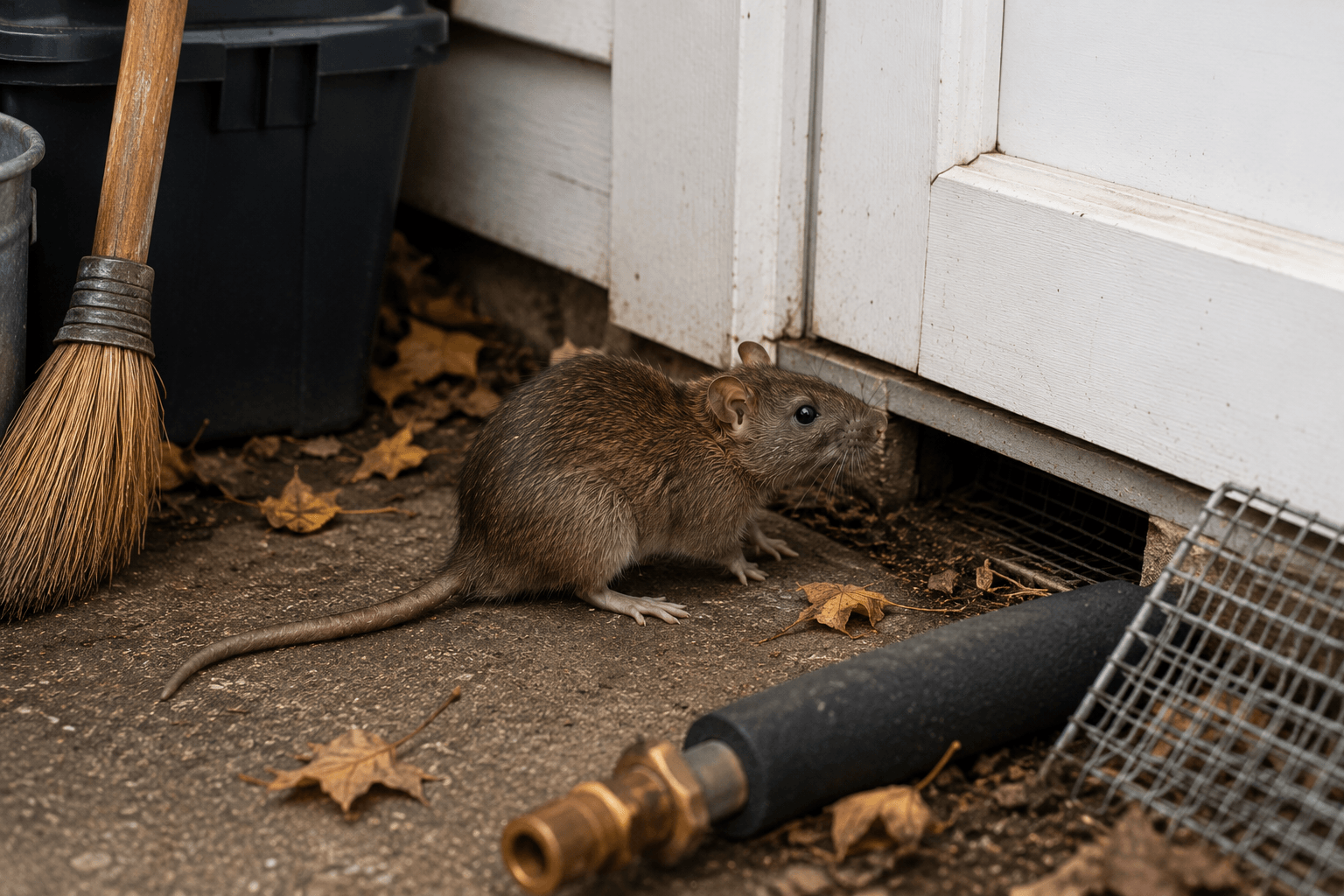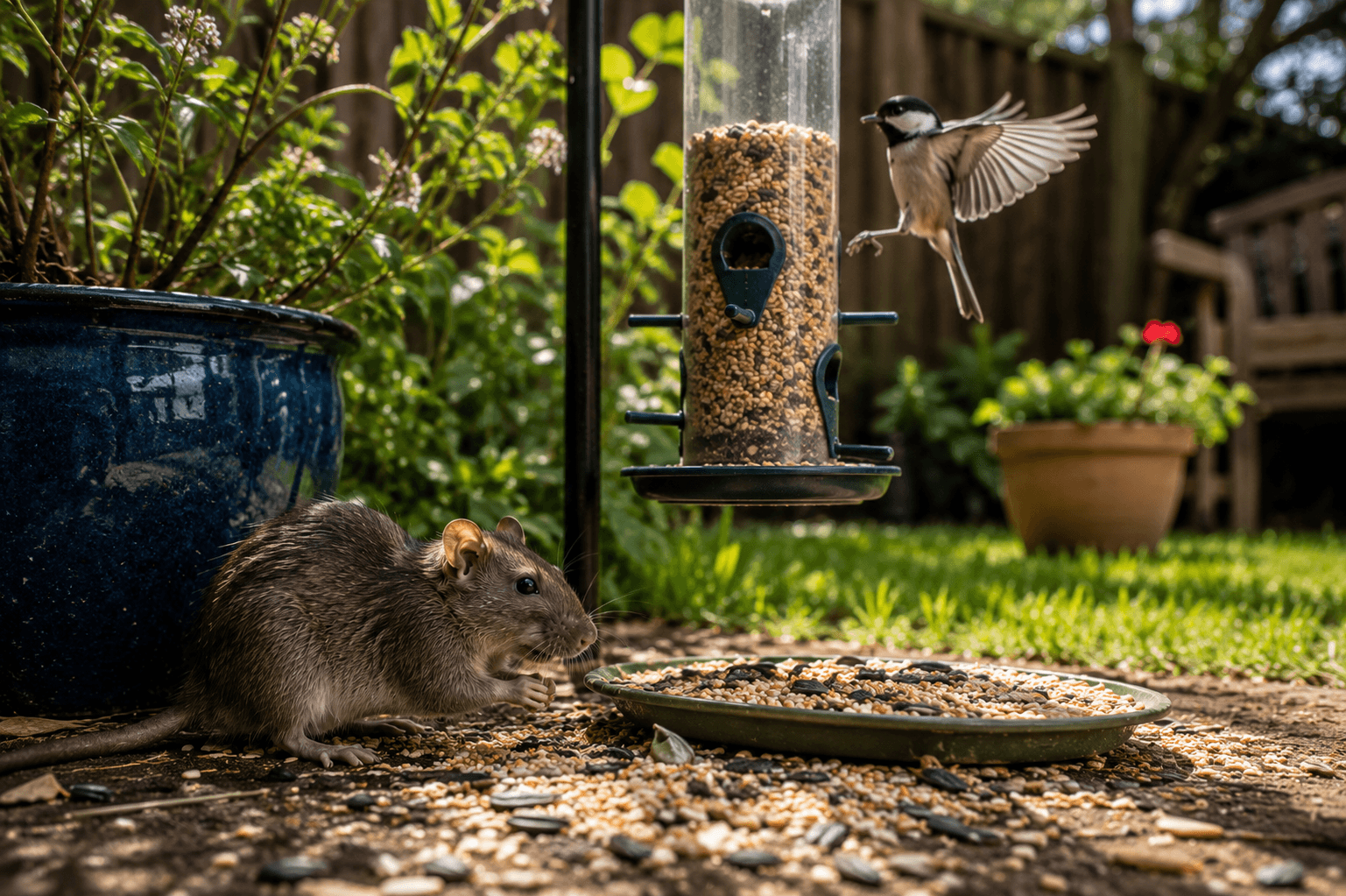
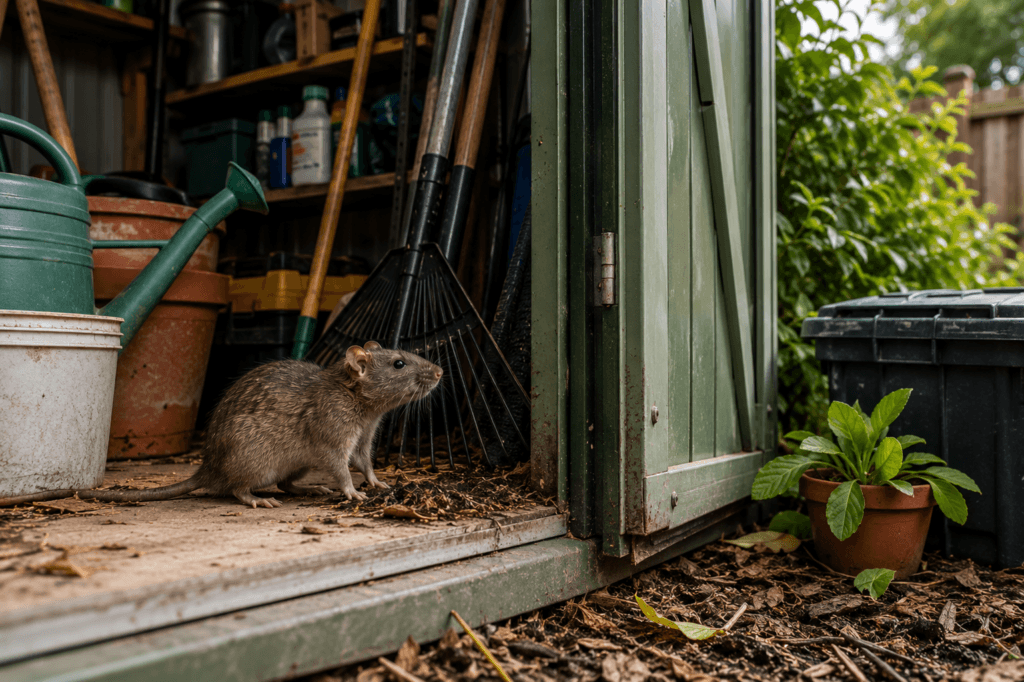
A garden shed is handy for storing tools, mower equipment, potting supplies and outdoor furniture. Unfortunately, in our experience it’s also one of the most common spots we find rats settling into around residential properties.
If you’re in Port Macquarie, Kempsey, Wauchope, Laurieton or elsewhere on the Mid North Coast, keeping your shed well maintained can significantly cut the risk of a rat problem taking hold. This guide covers why rats are drawn to garden sheds, what warning signs to look for, and the practical steps you can take to keep them out.
Why Do Rats Love Garden Sheds?
Sheds offer shelter, warmth and protection from predators all in one spot. Add food and water nearby, and a rat may well decide to make your shed home.
Sheds Provide Safe Shelter
Rats are always on the lookout for somewhere to hide during the day. A shed offers protection from rain, wind, extreme temperatures and predators, making it a good resting spot between nightly feeding runs.
They Are Usually Quiet
Unlike the main house, a shed usually gets very little daily activity. That lack of disturbance is exactly what lets rats move around, build nests and raise young without being noticed.
Plenty of Nesting Materials Are Available
Sheds often hold cardboard boxes, old newspapers, rags, potting mix bags and other soft material — all of it fair game for a rat looking to build a warm, protected nest.
Nearby Gardens Provide Food and Water
A lot of sheds sit close to a vegetable garden, compost bin, fruit tree or outdoor tap. Having shelter right next to food and water is exactly the combination that makes an area attractive to rodents.
How Do Rats Get Into Garden Sheds?
Rats are surprisingly agile and only need a small gap to get in. Most sheds have at least one opening the owner’s never noticed.
Small Gaps Around Doors
Even a small gap under or beside a shed door can be enough for a rat to squeeze through. Damaged door seals and uneven concrete slabs make it even easier.
Open Windows and Vents
Unscreened vents and windows let fresh air in, but they’ll let rodents in just as easily. Worth checking these regularly for damage.
Holes Around Pipes or Cables
Some sheds run electrical wiring or plumbing through them. Small gaps around these services can become a convenient way in if they’re not properly sealed.
Damaged Walls or Flooring
Older timber sheds tend to develop cracks, rotten boards or damaged cladding over time. These defects give rats another way in that’s often easy to miss.
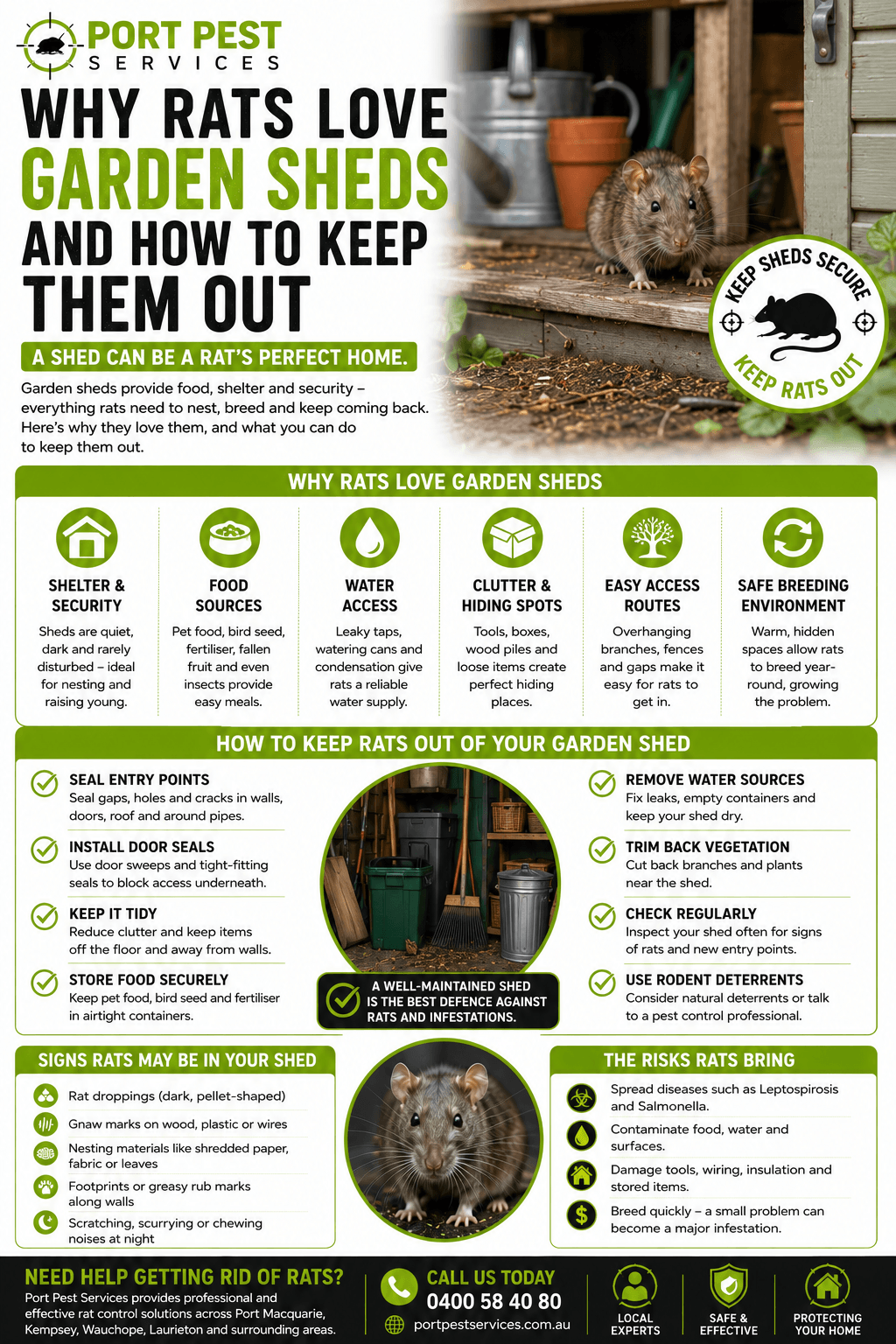
What Makes a Shed More Attractive to Rats?
Not every shed ends up with a rat problem. Certain storage habits and maintenance issues make one shed a lot more appealing than the one next door.
Clutter Creates Hiding Places
Boxes, unused equipment and stacked materials all give rats excellent cover. The more clutter, the easier it is for them to hide undetected.
Pet Food or Bird Seed Is Stored Inside
A lot of homeowners keep pet food, chicken feed or bird seed in the shed. Unless it’s in an airtight container, it’s a reliable food source for rats.
Related article: Why Storing Pet Food in the Garage Can Lead to a Rat Problem
Firewood Is Stored Nearby
Firewood stacked against the shed adds extra shelter. Rats will often hide in the woodpile before making their way inside.
Water Sources Are Close By
Leaking taps, irrigation systems or pet water bowls near the shed give rats the water they need to get by.
Related article: Can Leaking Garden Taps Attract Rats to Your Property?
What Are the Signs Rats Are Living in Your Shed?
Rats usually leave evidence of their presence well before anyone actually sees one. Picking up on these signs early lets you act before it turns into a bigger problem.
Rat Droppings
Fresh droppings are one of the clearest signs of activity. Check behind storage shelves, near walls and around anywhere food is kept.
Gnaw Marks
Rats chew constantly to keep their teeth from overgrowing. Look for chewing on timber, plastic containers, cardboard boxes or stored equipment.
Nesting Materials
Shredded paper, insulation, fabric or dried grass gathered into a small pile is usually a nest. These tend to turn up behind stored items or tucked into quiet corners.
Scratching Noises
Scratching or movement inside the shed, particularly after dark, usually means rats are already living there.
How Can You Keep Rats Out of Your Garden Shed?
Keeping rats out is a lot easier than clearing them once they’ve settled in. Regular maintenance and good storage habits make a real difference.
Seal Entry Points
Check the shed for gaps under doors, damaged cladding and holes around pipes. Seal these up with proper rodent-resistant materials to cut off access.
Store Items Off the Floor
Shelves or pallets keep boxes and equipment up off the ground, which improves airflow and removes a lot of the hiding spots rats prefer.
Use Airtight Storage Containers
Keep pet food, bird seed, lawn seed and animal feed in heavy-duty plastic or metal containers with a secure lid. This contains the smell and stops rodents getting to the contents.
Keep the Shed Clean and Organised
Clear out unnecessary clutter and give the floor a sweep regularly. A tidy shed makes it a lot easier to spot early signs of activity.
What Else Can You Do to Reduce Rat Activity?
Protecting the shed works best alongside good property maintenance overall. Cutting down food, water and shelter across the yard makes the whole property less attractive to rodents.
Secure Household Rubbish
Overflowing bins are an easy source of food. Keep wheelie bin lids closed and wash bins out regularly.
Related article: Why Rats Are Attracted to Rubbish Bins (And How to Keep Them Away)
Maintain Your Garden
Dense shrubs, overgrown vegetation and palm trees all offer safe hiding places. Regular pruning makes rats feel a lot more exposed as they move through the yard.
Related article: Are Palm Trees and Dense Gardens Giving Rats a Place to Hide?
Keep Gutters Clean
Blocked gutters create moisture and easier roof access. Routine gutter maintenance removes another common attraction.
Related article: How Blocked Gutters Can Encourage Rats Around Your Home
Harvest Fruit and Vegetables Promptly
Home-grown produce should be picked as soon as it ripens. Clearing fallen fruit and vegetables cuts down the food available around the shed.
Related article: Can Vegetable Gardens Attract Rats? What Every Gardener Should Know
When Should You Contact a Professional Pest Controller?
Better storage and maintenance can discourage rats, but it won’t always shift an infestation that’s already established. Professional treatment is often the most effective option once rodents have settled into a shed.
Rat Activity Continues
If you’re still finding fresh droppings, chew marks or nests despite improving the shed, there’s likely already an established population close by. A professional inspection can find the source.
Rats Are Moving Into the House
Rats often start out in a shed before working their way into garages, roof spaces or wall cavities. Dealing with it early prevents more extensive damage down the line.
You Notice Increasing Damage
If stored belongings, wiring or timber keep getting damaged, it’s worth arranging treatment before repair costs start adding up.
Practical Rat Prevention Checklist
Keeping your shed tidy and well maintained can significantly cut the risk of attracting rodents. Use this checklist to help protect your property year-round.
- Seal gaps around shed doors and walls.
- Repair damaged cladding or flooring.
- Store pet food and bird seed in airtight containers.
- Keep boxes and equipment off the floor.
- Remove unnecessary clutter.
- Sweep the shed regularly.
- Repair leaking outdoor taps.
- Keep rubbish bins securely closed.
- Trim vegetation around the shed.
- Store firewood away from the shed.
- Inspect regularly for droppings, nests or chew marks.
- Contact a professional if rat activity continues.
Trusted Sources for Further Information
Reliable advice from trusted Australian organisations can help you prevent rodent problems while maintaining a safe property. These resources offer useful information for homeowners:
- NSW Health – Information on rodents, public health and safe cleaning practices.
- CSIRO – Research on rodent behaviour and integrated pest management.
- NSW Environment Protection Authority (EPA) – Guidance on household waste and environmental management.
- Your local Mid North Coast council for waste disposal and property maintenance advice.
Keep Your Garden Shed Rat-Free
A well-maintained shed is a lot less attractive to rodents than one filled with clutter, food and easy hiding spots. Seal off entry points, store supplies correctly, and keep the surrounding area tidy, and you’ll significantly cut the chances of rats making your shed their home.
Around Port Macquarie and the Mid North Coast, we often see sheds that look tidy from the outside but still have a gap under the door or a bag of chook feed sitting open on the floor — small things, but enough to keep a rat interested. If you’ve noticed signs of rodents in your shed or elsewhere around the property, Port Pest Services provides professional Rat Control and comprehensive Pest Control services throughout Port Macquarie, Kempsey, Wauchope, Laurieton and the wider Mid North Coast. Our team can identify entry points, locate nesting areas and deliver an effective long-term solution to keep your shed and home rodent-free.