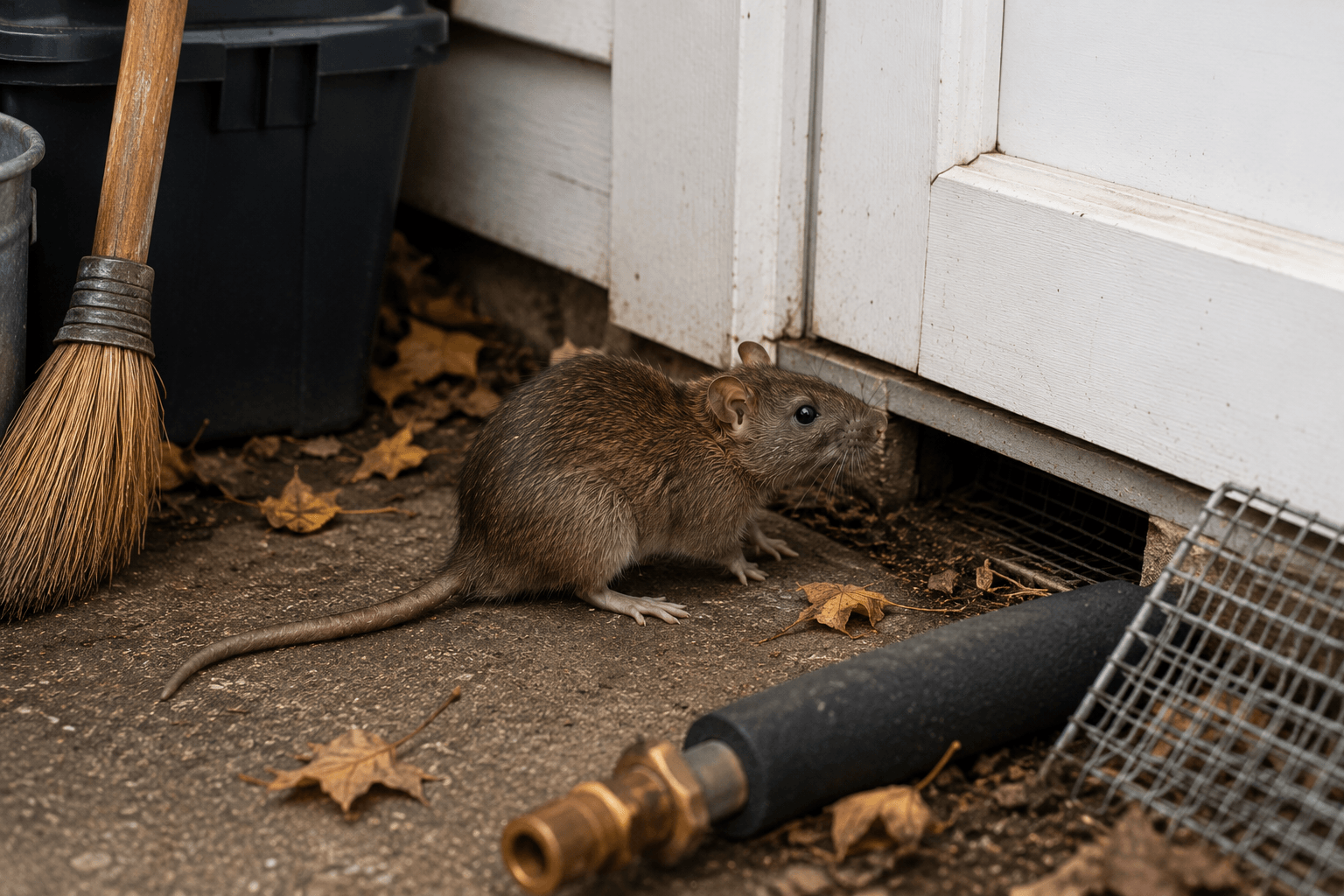
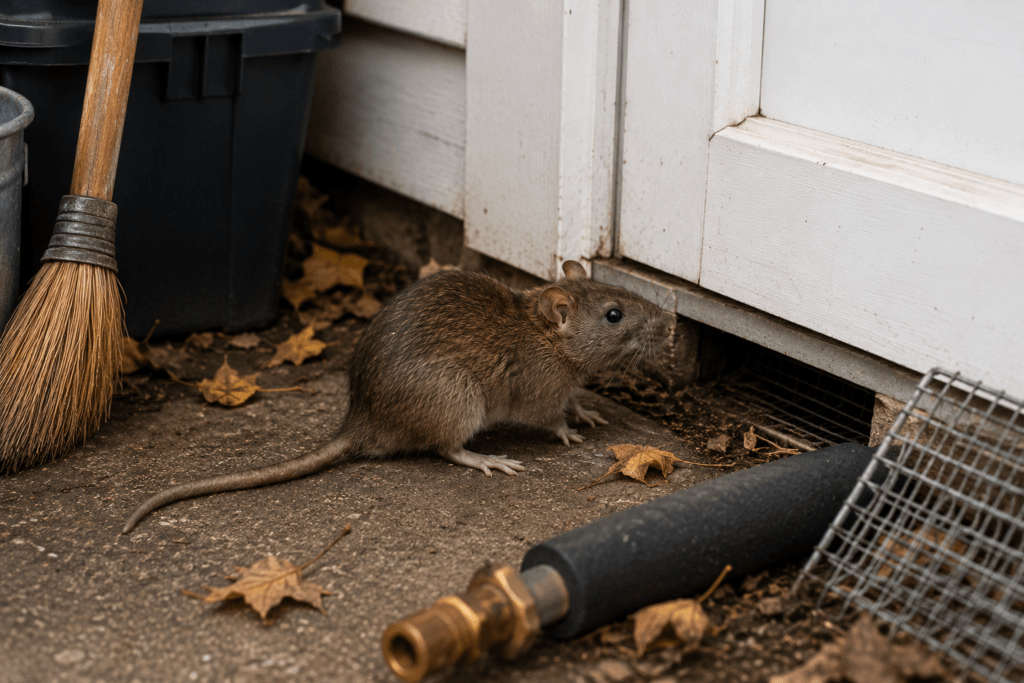
As the weather starts cooling down, rats begin hunting for somewhere warm and dry to shelter, along with a reliable feed. Homes tend to offer both, which is exactly why autumn and winter are some of our busiest months for rodent callouts.
If you’re in Port Macquarie, Kempsey, Wauchope, Laurieton or elsewhere on the Mid North Coast, getting your property sorted before winter can make a real difference to your risk of a rat problem. This guide covers why rats become more active as it cools down, and the practical steps you can take to keep them outside where they belong.
Why Are Rats More Active Around Homes Before Winter?
Winter doesn’t necessarily mean there are more rats around — it means the ones that are around start actively hunting for better shelter. Homes offering warmth, food and water become a lot more attractive as the temperature drops.
Rats Look for Warm Shelter
As overnight temperatures cool off, rats look for dry, protected spots to escape the weather. Roof spaces, wall cavities, garages, sheds and subfloors all make ideal shelter, provided rats can find a way in.
Food Becomes More Valuable
Natural food sources tend to thin out over the cooler months. As a result, rats lean more heavily on household rubbish, pet food, bird seed and gardens to get by.
They Prepare Safe Nesting Areas
Rats often set up a nest before winter really kicks in. Once they’ve found somewhere warm with food and water close by, they’ll often stay put for the whole season.
They Can Enter Through Small Openings
A lot of homeowners underestimate just how little space a rat needs. Small gaps around doors, vents, pipes and roofing materials are usually all it takes.
Where Are Rats Most Likely to Enter Your Home?
Finding and sealing entry points is one of the most effective things you can do to head off a winter infestation. Regular inspections help you find the weak spots before rats do.
Gaps Around Doors
Small gaps under external doors are an easy way in. Door seals or weather strips help close these off.
Roof and Eaves
Broken roof tiles, damaged eaves and loose flashing all give rats an opening into the roof space. Routine roof inspections catch these early, before rats find them.
Utility Pipes and Cables
Pipes, electrical conduits and air-conditioning lines often leave small gaps where they enter the building. These need sealing with proper rodent-resistant material.
Garage Doors
Garage doors can develop gaps along the bottom or sides as they age. Checking the seals regularly helps keep rodents from getting in this way.
What Food Sources Should You Remove Before Winter?
Cutting down available food is one of the simplest ways to make a property less attractive to rats. Even a small amount of food left around is enough to keep them coming back.
Secure Household Rubbish
Keep wheelie bin lids fully closed and wash bins out regularly. Don’t leave rubbish bags sitting beside the bin where rats can get to them easily.
Related article: Why Rats Are Attracted to Rubbish Bins (And How to Keep Them Away)
Store Pet Food Properly
Pet food needs to be in an airtight container. Open bags left in a garage or shed are a quick way to attract rodents.
Related article: Why Storing Pet Food in the Garage Can Lead to a Rat Problem
Harvest Fruit and Vegetables
Pick ripe produce from fruit trees and vegetable gardens promptly, and collect fallen fruit daily to remove an easy food source.
Related article: Can Vegetable Gardens Attract Rats? What Every Gardener Should Know
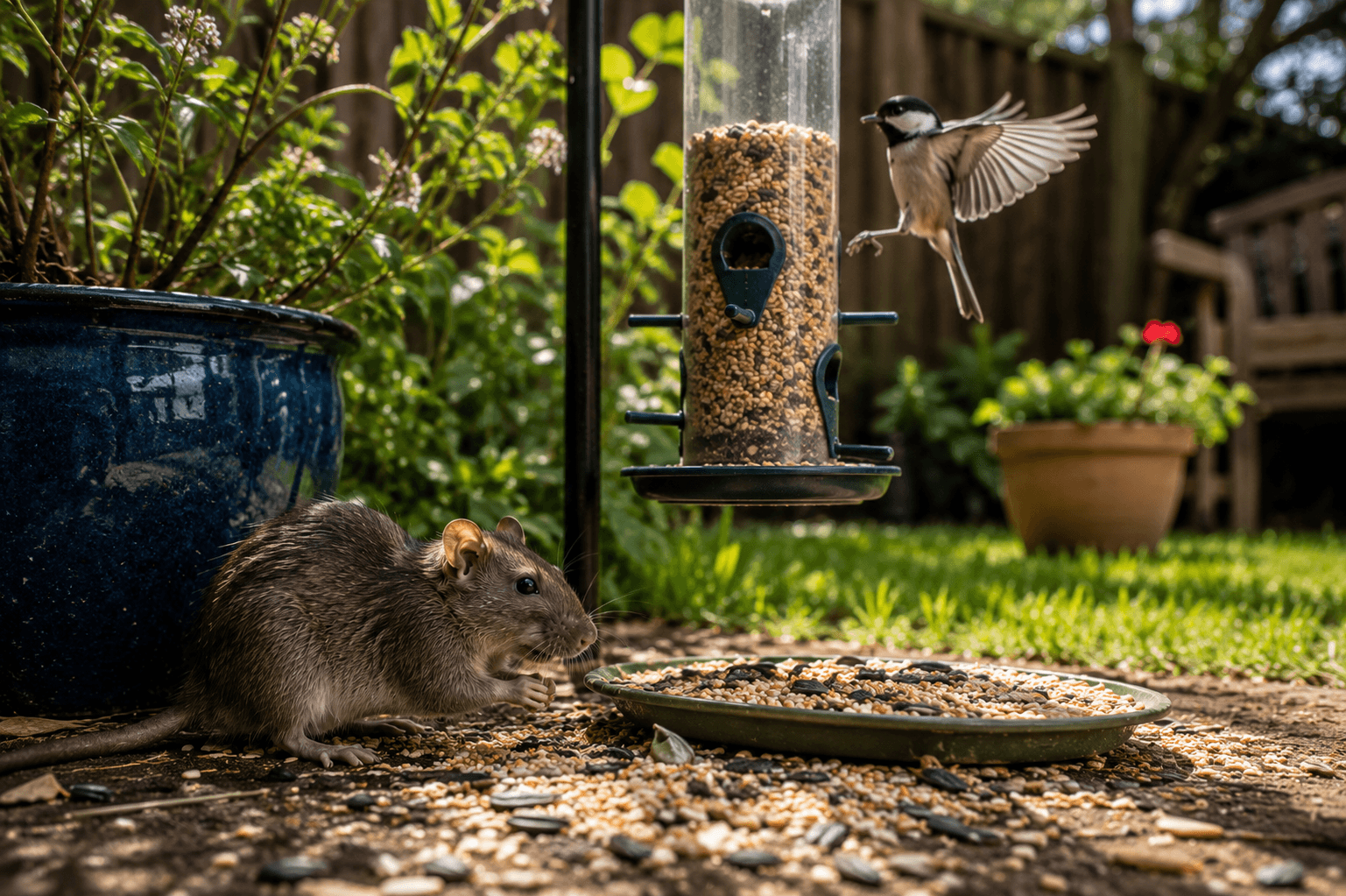
Clean Up Bird Seed
Seed scattered under feeders is a reliable meal for rodents. Sweep up excess regularly and avoid overfilling the feeder.
Related article: Why Feeding Birds Can Create a Rodent Problem in Your Backyard
How Can You Remove Water Sources?
Food alone won’t keep a rat population going. A reliable water source matters just as much, particularly heading into winter while rats are settling into nesting areas.
Repair Leaking Garden Taps
Even a slow drip is enough water for a rat. Fix leaking taps, irrigation systems and outdoor plumbing as soon as leaks show up.
Related article: Can Leaking Garden Taps Attract Rats to Your Property?
Eliminate Standing Water
Check for water sitting in buckets, pots, wheelbarrows or poorly drained sections of the yard. Clearing standing water removes another resource they rely on.
Maintain Bird Baths
Clean bird baths regularly and don’t let the water go stagnant. Fresh water supports native wildlife while cutting down conditions that attract pests.
Keep Gutters Flowing
Blocked gutters trap water and organic debris. Cleaning them out before winter removes standing water and protects your roof at the same time.
Related article: How Blocked Gutters Can Encourage Rats Around Your Home
How Can You Reduce Shelter Around Your Property?
Removing hiding places makes your property a lot less appealing to rodents. Regular outdoor maintenance also makes it easier to spot early signs of activity before things get serious.
Trim Dense Vegetation
Prune shrubs, hedges and climbing plants around the house. Less cover means rats feel more exposed moving through the yard.
Related article: Are Palm Trees and Dense Gardens Giving Rats a Place to Hide?
Organise Garden Sheds
Keep sheds tidy and clear out unnecessary clutter. Store equipment off the floor and seal up potential entry points.
Related article: Why Rats Love Garden Sheds (And How to Keep Them Out)
Store Firewood Correctly
Stack firewood neatly on raised supports, away from the house. This removes a sheltered hiding place that’s easy to overlook.
Remove Unused Materials
Old timber, cardboard, unused pots and garden waste all make good nesting spots. Keeping outdoor areas tidy removes that shelter.
What Are the Early Signs of a Rat Problem?
Picking up on the first signs of activity lets you respond before a small population turns into a big one. Regular inspections around the property matter most heading into and through winter.
Fresh Droppings
Droppings often turn up around sheds, garages, rubbish bins and roof access points. Fresh droppings mean recent activity.
Scratching Noises
Scratching or running sounds inside ceilings or walls in the evening usually means rats have made it into the building. Worth investigating promptly.
Gnaw Marks
Chewed timber, wiring, plastic containers or food packaging are all common signs. Rats gnaw constantly to keep their teeth in check.
Sightings Around the Property
Spotting rats in the evening around gardens, bins or sheds can point to an established population nearby.
When Should You Contact a Professional Pest Controller?
Preventative maintenance cuts the risk significantly, but it won’t always remove an infestation that’s already there. Professional help is usually the best option when activity continues despite your efforts.
Rats Continue Returning
If you’ve removed food, water and shelter but you’re still seeing fresh signs of activity, there’s likely already a nest close by. A professional inspection can find exactly where.
Rats Have Entered the House
Once rodents make it into roof spaces or wall cavities, they get a lot harder to manage without professional treatment. Early intervention keeps damage to a minimum.
You Notice Ongoing Damage
Chewed wiring, contaminated insulation or repeated sightings usually mean the infestation’s growing. Professional treatment clears it and cuts the risk of it coming back.
Practical Rat-Proofing Checklist Before Winter
Getting your property sorted before the temperature drops is one of the most effective ways to prevent a rat problem. Use this checklist each autumn to help keep rats out.
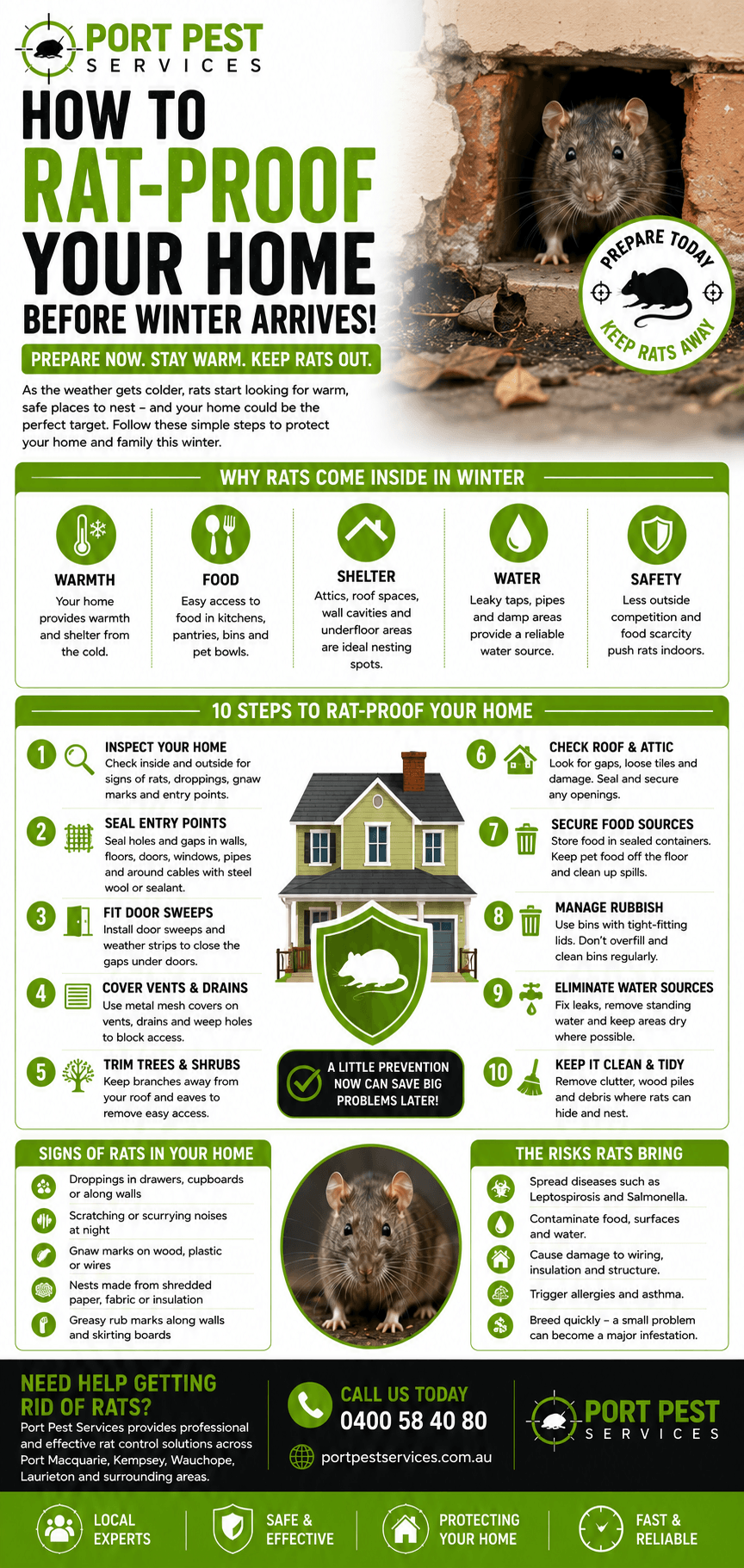
- Seal gaps around doors, pipes and vents.
- Repair damaged roof tiles and eaves.
- Clean gutters and downpipes.
- Keep wheelie bin lids securely closed.
- Store pet food and bird seed in airtight containers.
- Harvest fruit and vegetables promptly.
- Repair leaking outdoor taps.
- Remove standing water around the yard.
- Trim dense vegetation near the house.
- Organise sheds and reduce outdoor clutter.
- Store firewood away from the home.
- Arrange a professional inspection if you notice signs of rats.
Trusted Sources for Further Information
Following advice from trusted Australian organisations can help you prevent rodent problems safely and effectively. These resources offer reliable guidance for homeowners:
- NSW Health – Information on rodents, public health and safe cleaning practices.
- CSIRO – Research on rodent behaviour and integrated pest management.
- NSW Environment Protection Authority (EPA) – Advice on waste management and environmental maintenance.
- Your local Mid North Coast council for seasonal property maintenance and household waste information.
Rat-Proof Your Home Before Winter Starts
The best time to deal with a rat problem is before it starts — and that means before the cooler months set in. Seal up entry points, remove food and water sources, keep the garden maintained, and inspect the property regularly, and you’ll make it a lot harder for rats to settle in over winter.
In many homes we inspect ahead of winter, the same handful of issues keep turning up — a gap under a garage door, an overflowing gutter, an open bag of dog food in the shed. Small things, but together they’re often what makes the difference between a rat-free winter and one spent listening to scratching in the ceiling. If you’ve noticed signs of rats around the house or just want peace of mind before the cold sets in, Port Pest Services provides professional Rat Control and comprehensive Pest Control services throughout Port Macquarie, Kempsey, Wauchope, Laurieton and the wider Mid North Coast. Our team can inspect the property, identify entry points, and put together an effective long-term solution to keep your home rodent-free all year round.