Most homeowners don’t give their roof a second thought until there’s a leak or storm damage. But in our experience, a roof space can quietly become one of the most attractive spots on the whole property for rats — plenty of warmth, shelter and, if the access is there, an easy way in.
For homeowners in Port Macquarie, Kempsey, Wauchope, Laurieton and across the Mid North Coast, understanding how rats actually get into a roof space is a useful part of avoiding a costly infestation. This guide covers why roofs appeal to rodents, the warning signs to watch for, and the practical steps you can take to keep rats out of your home.
Why Do Rats Like Living in Roof Spaces?
A roof space gives rats almost everything they need to survive undisturbed. Once they’re in, they’ll often stay hidden for weeks, sometimes months, before a homeowner realises there’s a problem at all.
Roof Voids Provide Warm Shelter
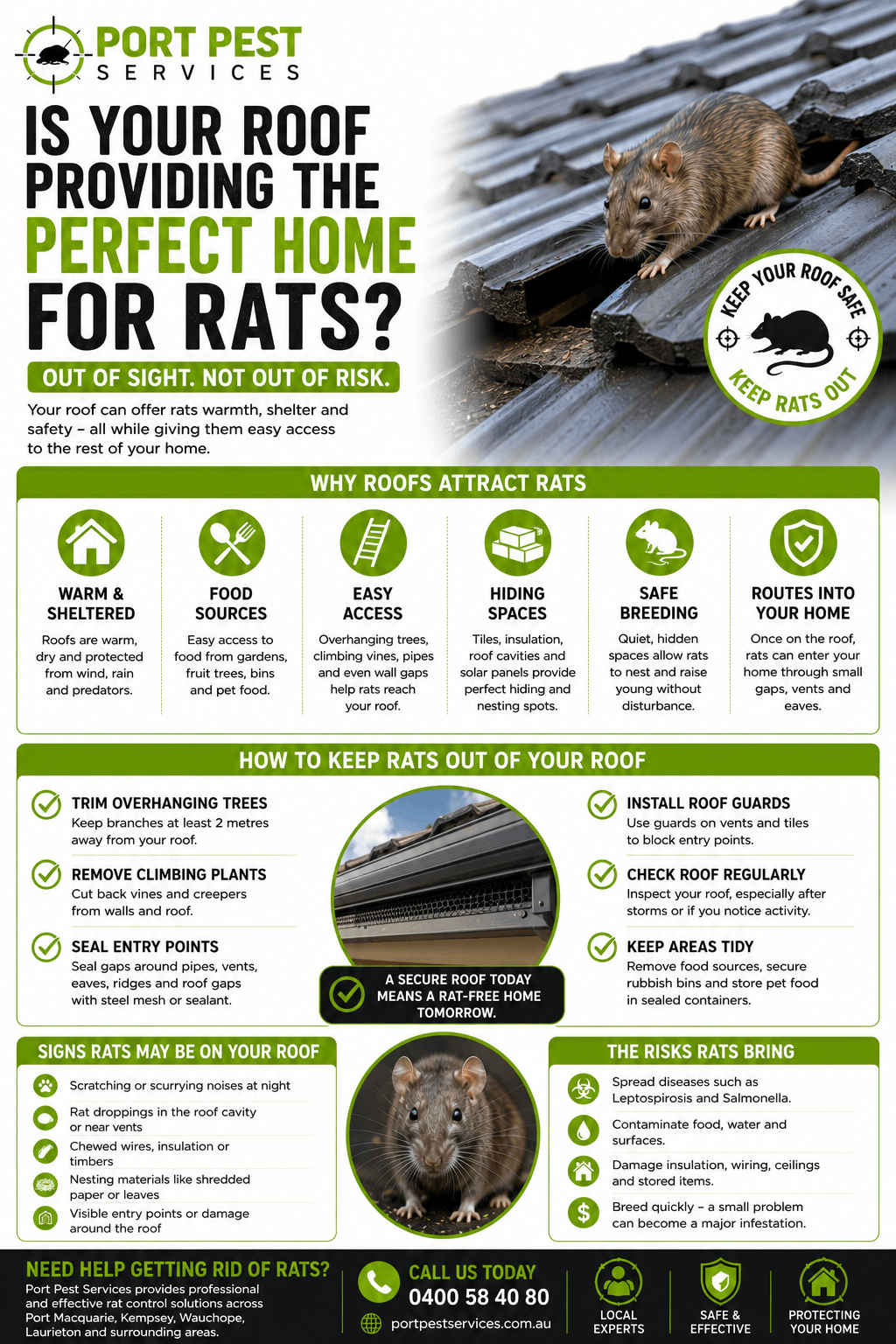
Rats naturally look for sheltered spots away from predators and changing weather. A roof cavity stays dry, reasonably warm and rarely disturbed — pretty much ideal conditions for a nest, year-round.
They Are Usually Quiet
Compared to the living areas of a house, roof spaces get very little daily activity. That quiet gives rats the freedom to move around, build nests and raise young without anyone downstairs noticing.
Nesting Materials Are Readily Available
Insulation, cardboard storage boxes, and other soft material stored up there are all fair game. Rats will shred these into comfortable nesting material without much effort.
Food and Water Are Usually Close By
Rats living in the roof still head out at night to feed and drink. If there’s a rubbish bin, pet food, a fruit tree or a leaking tap nearby, the roof becomes an even more attractive place to settle, since everything they need is within easy reach.
How Do Rats Get Onto Your Roof?
Rats are strong climbers and can get onto a roof far more easily than most homeowners assume. Once they’re up there, all they need is a small gap to get inside.
Tree Branches Touching the Roof
Overhanging branches work like a bridge for a climbing rat. Trees growing too close to the house are one of the easiest access points we see.
Downpipes and Gutters
Rats can climb rough brickwork, downpipes and even some wall surfaces without much trouble. Blocked gutters full of debris make it even easier for them to move along the roofline once they’re up there.
Related article: How Blocked Gutters Can Encourage Rats Around Your Home
Fences and Pergolas
Tall fences, pergolas and other nearby structures can act as stepping stones straight up to the roof. The closer these are to the house, the easier the climb.
Climbing Plants
Vines growing over walls or gutters create a natural pathway upward. Without regular pruning, they’ll help a rat reach the roof without much effort at all.
Where Do Rats Enter the Roof?
Once rats are up on the roof, they start hunting for a gap big enough to squeeze through. A lot of these entry points are small enough to go unnoticed during routine maintenance.
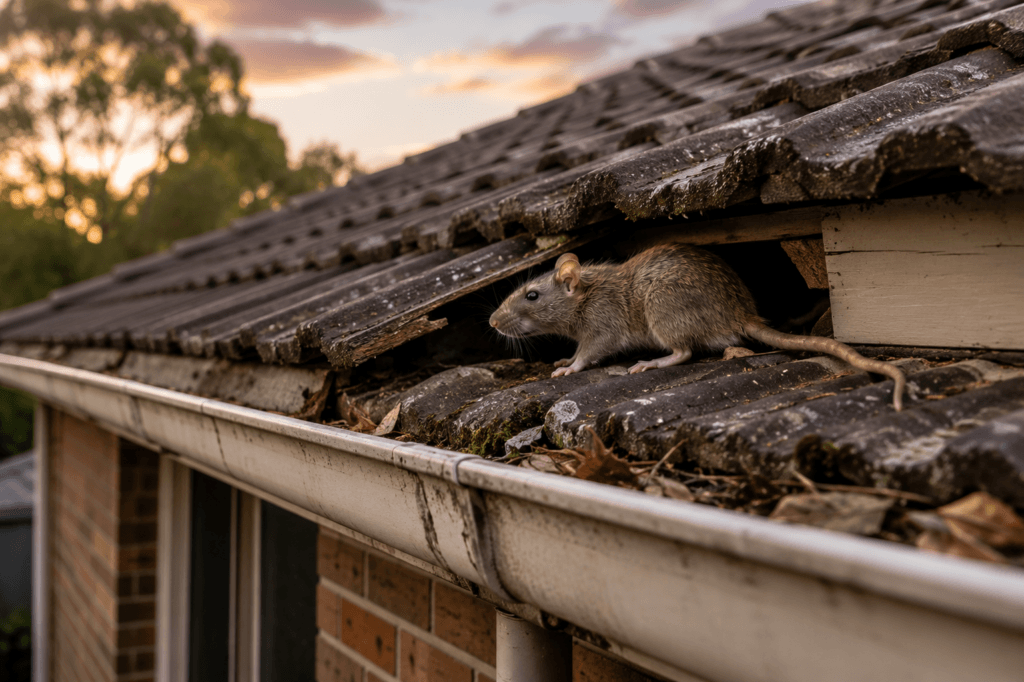
Gaps Under Roof Tiles
Broken or displaced tiles can open straight into the roof cavity. Even a small gap is often enough for a rat to get through.
Damaged Eaves
Weathered timber, loose panels or damaged eaves are another common way in. Regular inspection helps catch these before rats find them first.
Roof Vents
Vents that aren’t properly screened let air through, but they’ll let rats through just as easily if damaged or poorly fitted. Proper mesh over the opening helps prevent access.
Openings Around Pipes and Cables
Utility pipes, electrical cables, and air-conditioning lines can leave small gaps where they pass through the wall or roofing. These need sealing with proper rodent-resistant material.
What Are the Signs Rats May Be Living in Your Roof?
Most homeowners never actually see a rat in the roof. What they notice instead is the evidence left behind.
Scratching Noises at Night
Scratching or running sounds above the ceiling after dark is one of the most common signs we hear about. Since rats are nocturnal, activity tends to be most noticeable in the evening and early morning.
Droppings Around the Home
Droppings can turn up in ceiling spaces, garages, sheds or near entry points. Fresh droppings mean recent activity, not old history.
Unpleasant Odours
A strong musty smell in the roof can build up once rats have established a nest. This can get worse if nesting material becomes damp, or in the less pleasant case where a rat has died inside the cavity.
Chewed Wiring or Timber
Rats need to chew constantly to keep their teeth in check. Electrical wiring, timber framing, insulation and anything else stored in the roof space is fair game.
What Problems Can Rats Cause Inside Your Roof?
A roof infestation is a lot more than just noisy nights. Left untreated, rats can genuinely damage a home and create ongoing maintenance headaches.
Damage to Electrical Wiring
Chewed wiring pushes up repair costs and can create a real safety risk. Professional electrical repairs are often needed once this kind of damage occurs.
Damaged Insulation
Rats regularly tear insulation apart for nesting material, which reduces how well it performs and adds to the clean-up bill.
Contaminated Roof Spaces
Droppings and urine can contaminate insulation and anything else stored up there. Professional cleaning is often worth arranging after a significant infestation.
Breeding Can Increase the Problem Quickly
Once rats are established, they breed fast. A small problem can turn into a much bigger one if the underlying access and attraction issues aren’t sorted out.
How Can You Prevent Rats From Entering Your Roof?
Keeping rats out is a lot easier than removing them once they’re established. Routine home maintenance does a lot of the heavy lifting here.
Trim Tree Branches
Keep branches well clear of the roofline. A proper gap makes it much harder for rats to climb straight onto the house.
Maintain Your Roof
Check tiles, flashing, vents and eaves regularly. Fixing damage promptly closes off potential entry points before they become a problem.
Clean Gutters Regularly
Blocked gutters encourage moisture, vegetation and easier movement around the roofline. Keeping them clear removes one of the factors that supports rodent activity up top.
Related article: How Blocked Gutters Can Encourage Rats Around Your Home
Seal Entry Points
Check around pipes, vents and utility services for small gaps. Sealing these off helps stop rats getting into the roof cavity in the first place.
What Else Can You Do to Reduce Rat Activity?
Protecting the roof works best alongside cutting down food, water and shelter elsewhere on the property. The fewer resources on offer, the less attractive the whole place becomes to rodents.
Keep Rubbish Bins Secure
Household rubbish is one of the most reliable food sources going. Keep wheelie bin lids closed and wash bins out regularly.
Related article: Why Rats Are Attracted to Rubbish Bins (And How to Keep Them Away)
Repair Leaking Outdoor Taps
Water matters just as much as food. Fix leaking taps, irrigation systems and outdoor pipes to remove a reliable drinking source.
Related article: Can Leaking Garden Taps Attract Rats to Your Property?
Maintain Gardens Around the Home
Dense shrubs, palm trees and climbing plants all give rodents excellent cover. Regular pruning removes hiding places and limits how easily they can reach the roof.
Related article: Are Palm Trees and Dense Gardens Giving Rats a Place to Hide?
Store Pet Food Securely
Pet food needs to be in airtight containers, not left in open bags in the garage or shed.
Related article: Why Storing Pet Food in the Garage Can Lead to a Rat Problem
When Should You Contact a Professional Pest Controller?
Good maintenance helps prevent an infestation, but it won’t always remove rats that are already living in the roof. Professional treatment is usually the quickest, safest way to deal with it.
You Hear Noises Every Night
Persistent scratching or movement above the ceiling usually means rodents are active in the roof. A professional inspection can confirm exactly what’s going on and where.
You Continue Finding Fresh Droppings
Fresh droppings around the property suggest the infestation’s ongoing rather than a one-off. Professional treatment clears the problem and cuts the risk of it coming back.
Damage Is Becoming More Noticeable
Chewed wiring, damaged insulation or repeated sightings usually point to a well-established infestation. Getting onto it early prevents more damage and bigger repair bills down the line.
Practical Rat Prevention Checklist
Keeping rats out of the roof starts with regular property maintenance. Use this checklist to help reduce the risk of rodents getting in.
- Trim branches away from the roof.
- Repair broken roof tiles and damaged eaves.
- Clean gutters regularly.
- Install mesh over roof vents where appropriate.
- Seal gaps around pipes and cables.
- Keep rubbish bin lids securely closed.
- Repair leaking outdoor taps.
- Store pet food in airtight containers.
- Prune climbing plants and dense vegetation.
- Inspect your roof for signs of rodent activity.
- Arrange regular home maintenance.
- Contact a professional if rats continue returning.
Trusted Sources for Further Information
Reliable information helps homeowners make informed decisions about rodent prevention and property maintenance. These Australian organisations offer practical advice and guidance:
- NSW Health – Information on rodents, public health and safe cleaning practices.
- CSIRO – Research on rodent behaviour and integrated pest management.
- NSW Environment Protection Authority (EPA) – Advice on environmental and household maintenance.
- Your local Mid North Coast council for seasonal home maintenance and waste management information.
Protect Your Roof Before Rats Move In
Your roof should be protecting your home, not sheltering rodents. Keep it well maintained, trim back nearby vegetation, and remove food and water sources around the property, and you’ll significantly cut the chances of rats setting up in your roof space.
In many homes we inspect, the roof access point turns out to be something small and easily missed — a broken tile, a gap around a vent pipe, a branch just brushing the guttering. If you’ve heard scratching above the ceiling or noticed other signs of rodent activity, Port Pest Services provides professional Rat Control and comprehensive Pest Control services throughout Port Macquarie, Kempsey, Wauchope, Laurieton and the wider Mid North Coast. Our team can identify entry points, locate nesting areas and provide an effective long-term solution to keep your roof and home rodent-free.