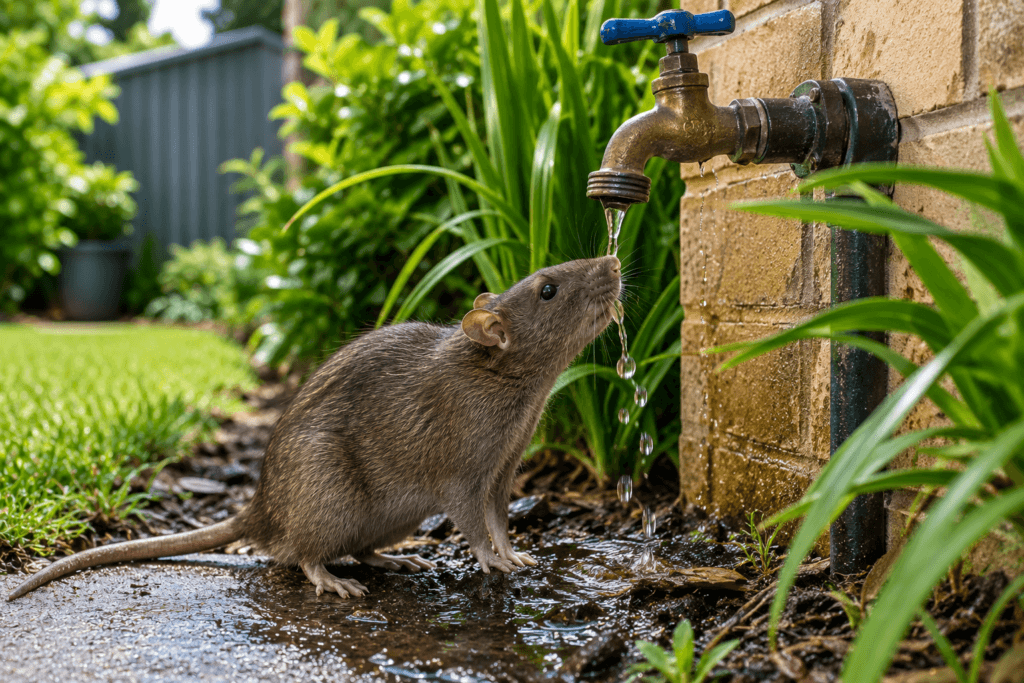
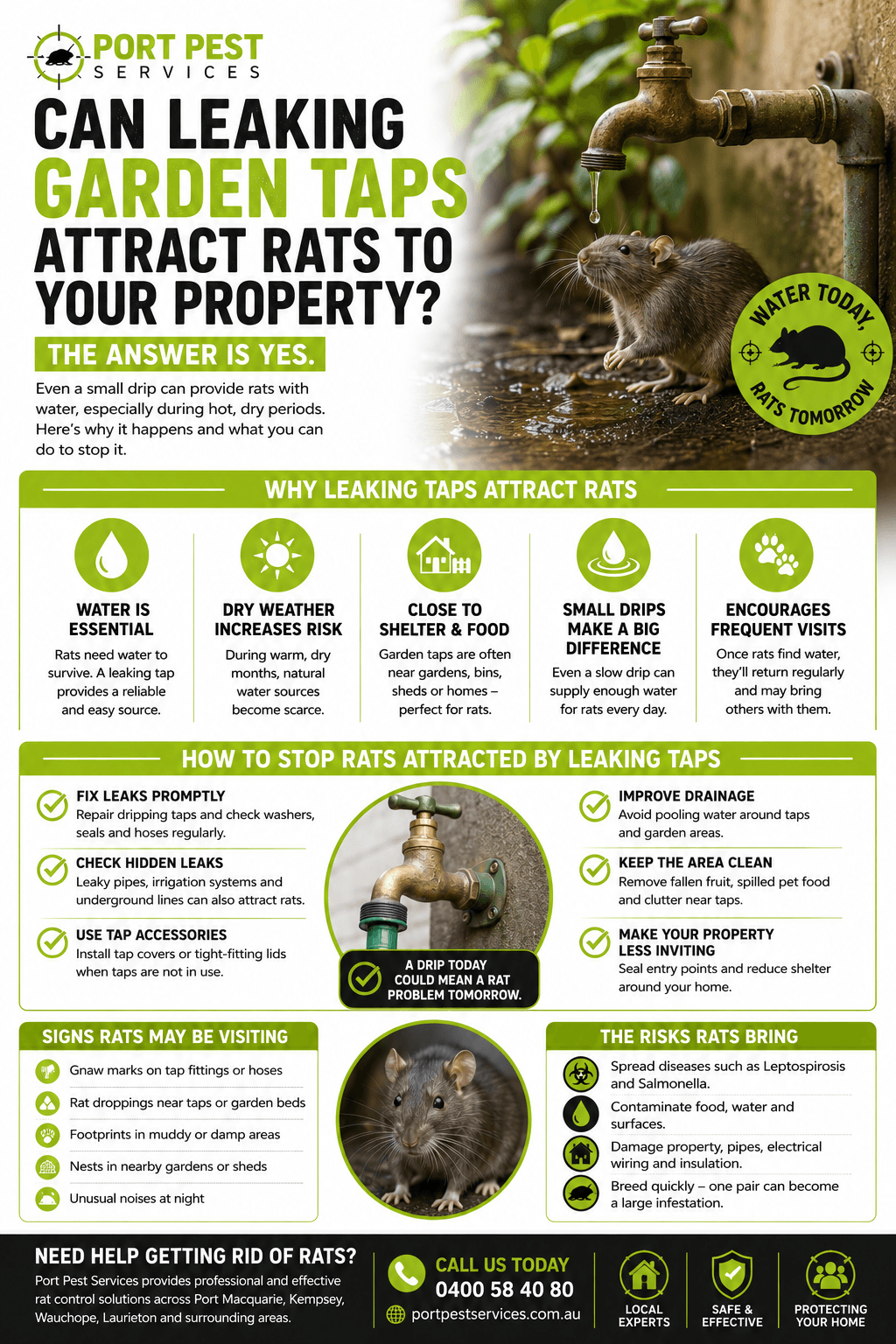
A leaking garden tap might seem like a minor maintenance job, but even a slow drip can bring unwanted visitors onto your property. Rats need water just as much as they need food, and a dependable water source close to the house can be enough to keep them hanging around.
For homeowners in Port Macquarie, Kempsey, Wauchope, Laurieton and across the Mid North Coast, fixing a leaking tap is a simple step that gets overlooked far more often than it should. This guide covers why rats are drawn to leaking taps, what other water sources are worth checking, and how to make your property less appealing to rodents.
Why Are Rats Attracted to Leaking Garden Taps?
Food tends to get all the attention, but water matters just as much for a rat’s survival. A leaking tap can offer a steady, dependable water source that brings rodents back to the same spot night after night.
Rats Need Water Every Day
Like any animal, rats need regular access to water. They get some moisture from their food, but they’ll still actively seek out a drinking source, particularly during warm weather.
A tap that drips continuously gives them an easy supply without having to travel far to get it.
A Small Leak Can Make a Big Difference
A lot of homeowners assume it’s only the big leaks worth worrying about. In our experience, even a slow, barely-noticeable drip is enough — it creates a damp patch or small puddle that’s more than adequate for a rat to drink from.
Because that water’s there every night, rats quickly work out the spot is reliable, and it becomes part of their regular routine.
Water and Food Often Go Together
Garden taps are often positioned near outdoor entertaining areas, vegetable patches or rubbish bins. When food and water are both available in the same corner of the yard, that part of the property becomes a lot more attractive to rodents than the homeowner might realise.
What Other Outdoor Water Sources Can Attract Rats?
A leaking tap is just one of several water sources that can encourage rats to stick around. Identifying and removing these can make a real difference to how attractive your property is.
Leaking Irrigation Systems
Damaged irrigation pipes and sprinklers often leave permanently damp patches in the garden.
These wet areas provide drinking water and, over time, also encourage the kind of thick vegetation growth that gives rats somewhere to shelter.
Pet Water Bowls
Outdoor water bowls are a convenient water source around the clock. If a bowl’s left out overnight, it can easily attract rats doing their rounds after dark.
Related article: Why Storing Pet Food in the Garage Can Lead to a Rat Problem
Bird Baths
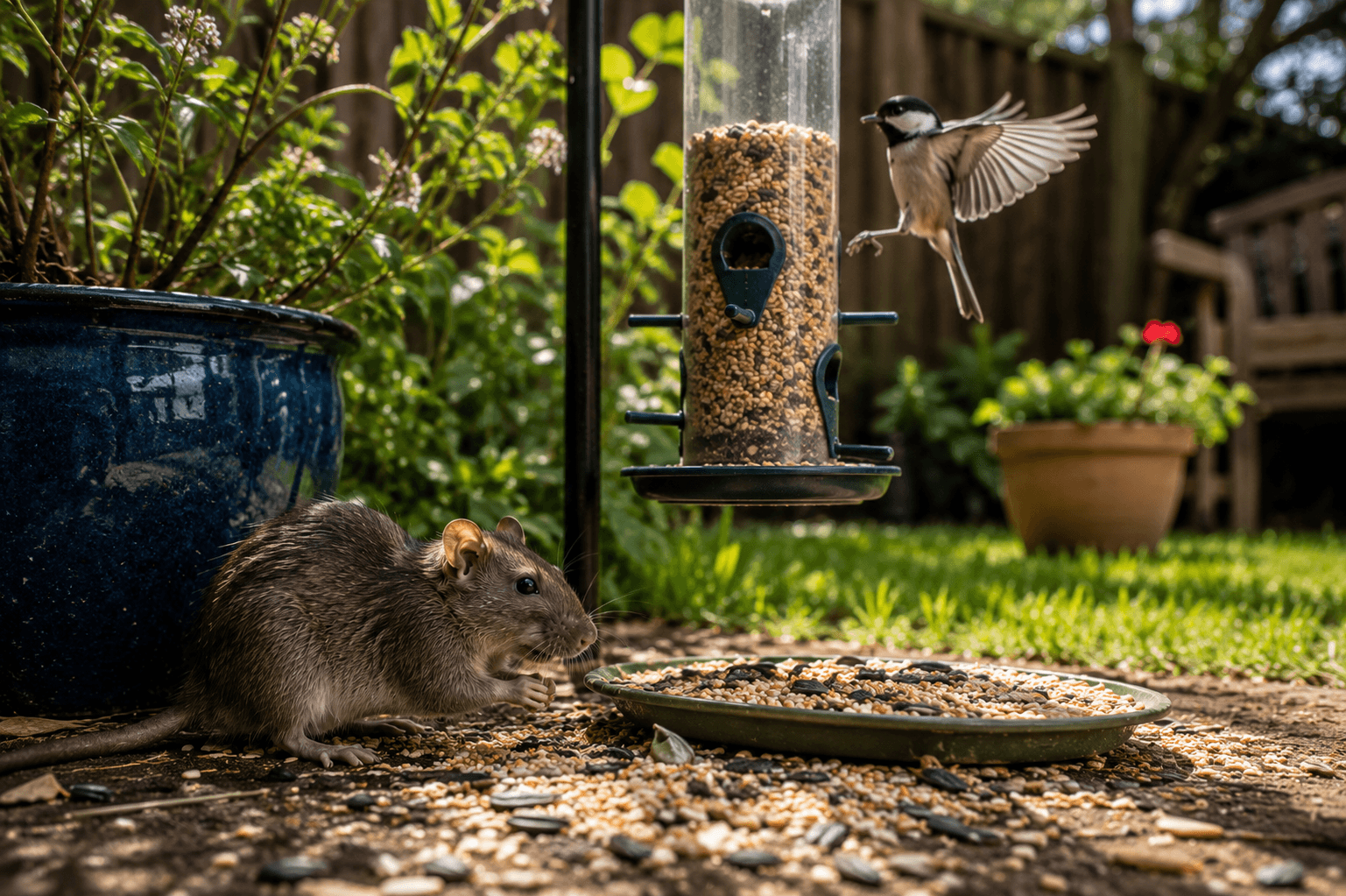
Bird baths are great for native wildlife, but they’ll happily supply drinking water to rodents too. Changing the water regularly and keeping the area around the bath tidy helps cut down on unwanted visitors.
Poorly Drained Areas
Low-lying sections of the yard where water pools after rain can stay damp for days at a time. Improving drainage in these spots removes what’s essentially a temporary water source for rats.
Why Does Water Encourage Rats to Stay?
Food might be what first draws a rat onto your property, but a reliable water source is often what convinces it to stick around long-term. Once its basic needs are being met in one spot, there’s less reason for it to move on.
Rats Prefer Reliable Resources
Rats gravitate toward locations where food and water are consistently on offer. A leaking tap gives them certainty, which means less time spent searching each night and more time settling into a routine.
They Establish Regular Travel Routes
Rats don’t wander aimlessly. Once they’ve found a reliable water source, they’ll set up a regular path between their nest and their feeding areas, usually running the same route every evening.
Water Supports Nearby Nesting
Where water sits close to shelter, rats are more likely to nest nearby. In many homes we inspect, that turns out to be roof spaces, sheds, retaining walls, dense garden beds or the space beneath a deck — often not far at all from the leaking tap that first drew them in.
What Are the Signs That Rats Are Using Your Garden?
Not every rat problem starts inside the house. Outdoor activity is usually the first sign, and it gives you a chance to deal with things before rats make their way indoors.
Droppings Near Outdoor Taps
Droppings around taps, irrigation lines or paved areas usually point to regular activity. Fresh droppings are typically dark, smooth and slightly shiny.
Well-Worn Paths Through Gardens
Rats running the same route night after night can wear narrow paths through mulch, grass or garden beds. These runways often link a water source straight to a nesting area.
Gnaw Marks
Rats need to chew constantly to keep their teeth in check. Keep an eye out for chewing on plastic irrigation fittings, timber edging or outdoor storage containers.
Night-Time Sightings
Spotting rats in the garden after dark usually means the area’s providing enough food, water or shelter to make it worthwhile. If sightings are becoming regular, it’s worth looking into further.
How Can You Prevent Rats Around Outdoor Water Sources?
Cutting off easy access to water is one of the simplest ways to make your property less appealing to rodents. Pair this with good general upkeep and you’re in a much stronger position.
Repair Leaking Garden Taps Promptly
Replace worn washers or repair damaged taps as soon as you notice a leak. Stopping even a slow drip removes a dependable drinking source.
Fix Irrigation Leaks
Check irrigation systems regularly for damaged pipes or fittings. Fixing leaks helps deter rodents and saves water in the process.
Empty Pet Water Bowls Overnight
Where it’s practical, bring pet water bowls inside overnight or tip them out before bed. Fresh water again in the morning is a simple habit that removes an easy overnight water source.
Improve Garden Drainage
Sort out any areas where water tends to pool after rain. Better drainage cuts down on the damp conditions that attract rodents and insects alike.
What Else Can You Do to Reduce the Risk of Rats?
Water’s only one piece of the puzzle. Combine good water management with a few other preventative habits and your property becomes a lot less inviting overall.
Secure Your Rubbish Bins
Household bins are an easy food source. Keep lids closed, wash bins regularly, and don’t leave rubbish bags sitting beside them.
Related article: Why Rats Are Attracted to Rubbish Bins (And How to Keep Them Away)
Store Pet Food Properly
Pet food needs to be kept in sealed containers, not left in open bags in the garage, shed or outdoors.
Related article: Why Storing Pet Food in the Garage Can Lead to a Rat Problem
Trim Dense Vegetation
Overgrown gardens give rodents excellent cover. Regular pruning removes hiding spots and makes rats feel a lot less secure moving through the yard. Around Port Macquarie and the Mid North Coast, we often see this play out in properties with mature, leafy gardens — great for privacy, but also great for rats if left unchecked.
Related article: Are Palm Trees and Dense Gardens Giving Rats a Place to Hide?
Keep Gutters Clean
Blocked gutters trap water and create damp conditions around the roofline. Regular gutter maintenance cuts down on moisture and removes another attraction point.
Related article: How Blocked Gutters Can Encourage Rats Around Your Home
When Should You Contact a Professional Pest Controller?
Sometimes fixing the tap is all it takes. Other times, rats have already made themselves at home on the property, and that needs a different approach.
Rats Continue Visiting After Repairs
If you’ve fixed the leaks but you’re still seeing droppings or the odd sighting, there’s a good chance a nest has already been established nearby. Professional treatment can track down exactly where that is.
Rats Have Entered Your Home
Scratching in the walls or ceiling generally means rats have moved past the garden and into the building itself. Getting onto it early keeps the damage — and the population — from growing further.
You Notice Increasing Activity
Frequent sightings, fresh droppings and gnaw marks all suggest the population is becoming more established. Professional help is usually the quickest way to bring things back under control.
Practical Rat Prevention Checklist
Preventing rats comes down to removing the things they depend on. Run through this checklist to help lower the risk around your property.
- Repair leaking garden taps promptly.
- Fix damaged irrigation systems.
- Improve drainage in wet areas.
- Empty outdoor pet water bowls overnight where possible.
- Clean bird baths regularly.
- Keep rubbish bin lids securely closed.
- Store pet food in sealed containers.
- Trim dense vegetation around the yard.
- Clean gutters regularly.
- Inspect your property for signs of rat activity.
- Seal potential entry points around the home.
- Arrange professional assistance if activity continues.
Trusted Sources for Further Information
For further guidance on rodent prevention and property maintenance, these Australian resources are worth checking:
- NSW Health – Information on rodents and public health.
- CSIRO – Research into rodent behaviour and pest management.
- NSW Environment Protection Authority (EPA) – Advice on environmental management around the home.
- Your local Mid North Coast council for water conservation and household maintenance advice.
Stop Small Leaks Before They Lead to Bigger Problems
A leaking garden tap might seem like a small thing, but it can supply exactly the reliable water source rats need to settle in. Fixing leaks, cutting off other water sources and keeping on top of general maintenance all go a long way toward keeping rodents away from your home.
One of the most common problems we see is homeowners who’ve fixed the tap but are still finding droppings weeks later — usually because a nest is already established somewhere close by. If that’s the situation you’re in, Port Pest Services provides professional Rat Control and comprehensive Pest Control services throughout Port Macquarie, Kempsey, Wauchope, Laurieton and the wider Mid North Coast. Our team can locate the nest, work out how they’re getting in, and put together a long-term solution to keep your home rodent-free.