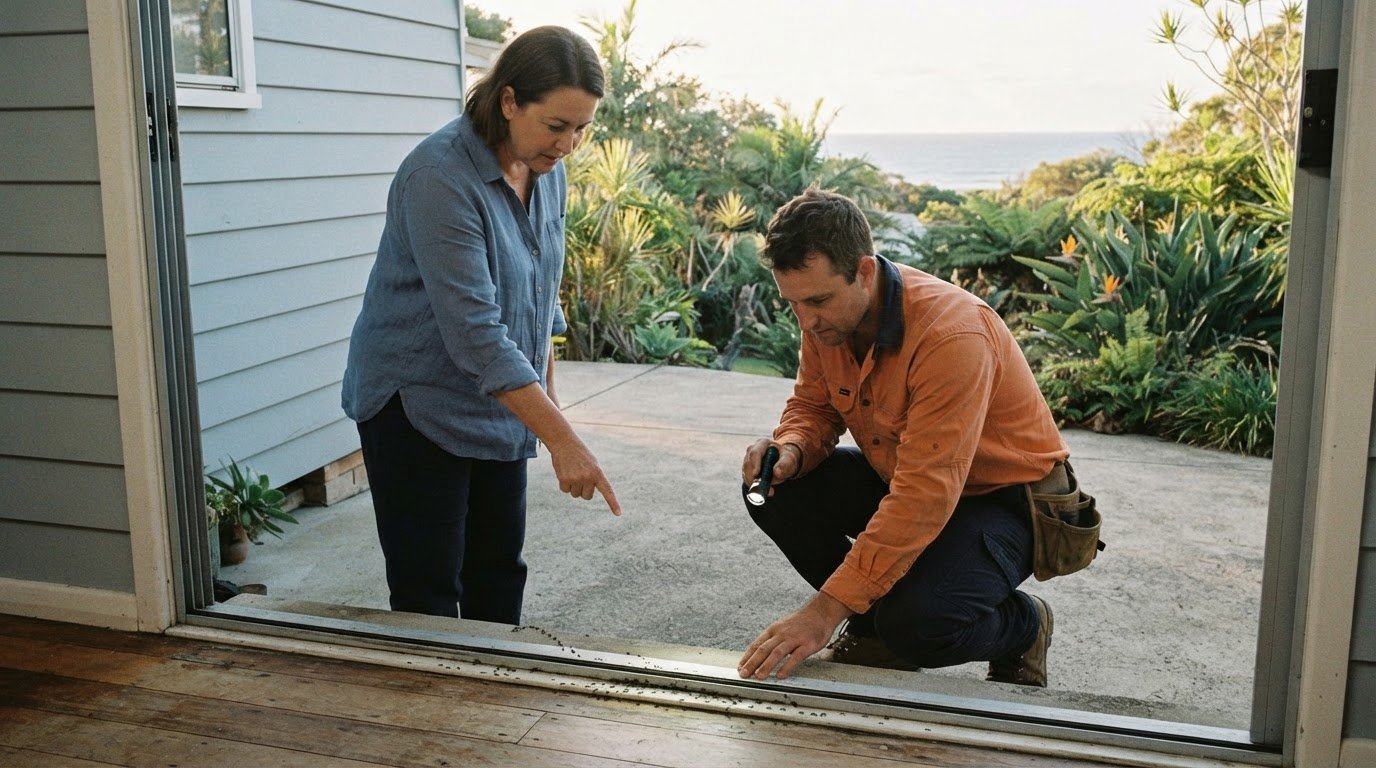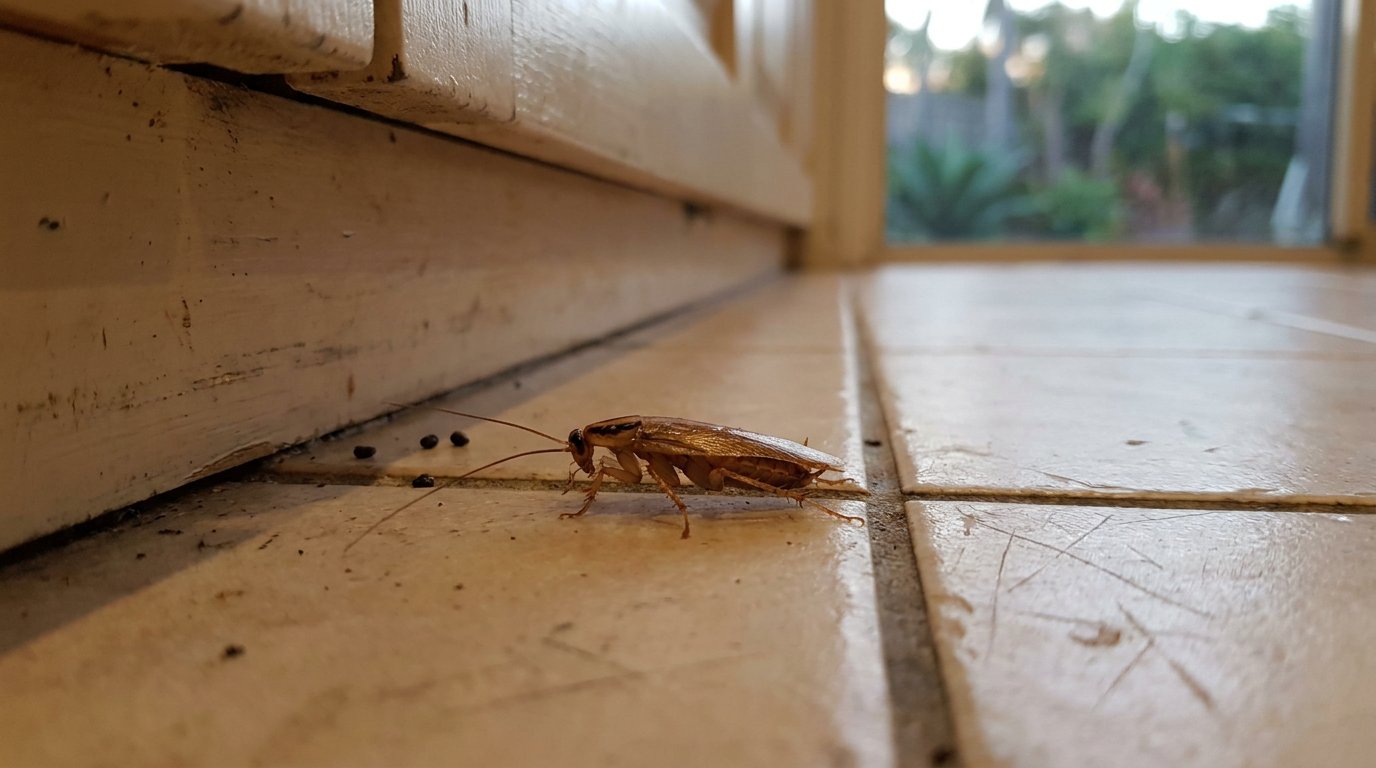
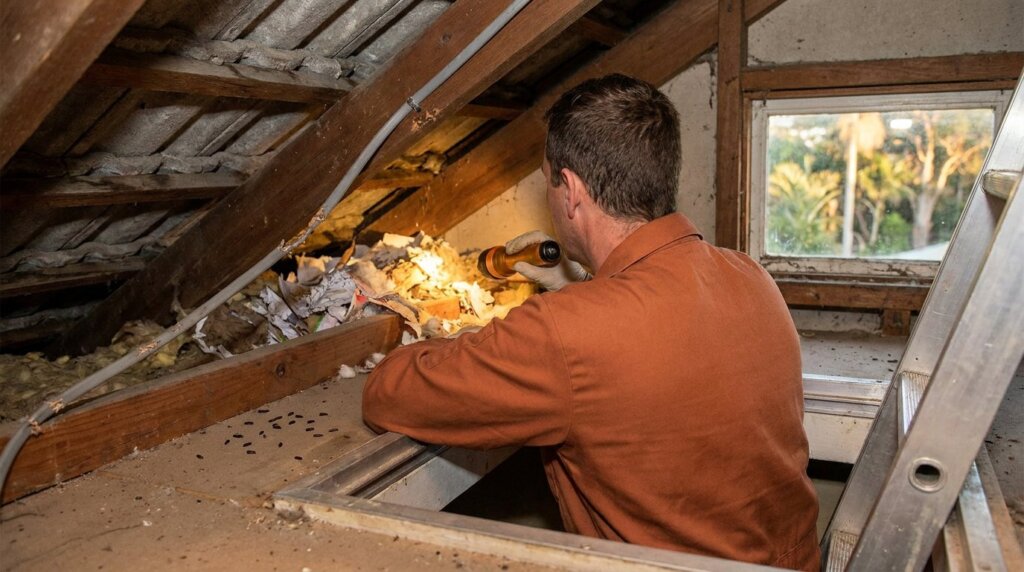
Mice can enter roof spaces through small gaps around eaves, vents, pipes and wall cavities. Night-time scratching, droppings, gnaw marks and shredded nesting material can help you tell if mice are in your roof, even when you can’t see above the ceiling.
This guide explains how mice get in, where they nest and what they may damage. It also covers why sealing entry points too soon can cause problems and when a professional inspection can help.
Key Takeaways
- Compare the size and shape of droppings with other signs to help distinguish mice from rats.
- Look for small gaps around roof edges, vents and pipes, but avoid sealing suspected entry points before considering whether rodents may be inside.
- Shredded paper, fabric or insulation can point to nesting in ceiling spaces or wall cavities.
- Ongoing roof noises, signs of gnawing or possible damage to wiring are reasons to consider a professional inspection.
Can winter rodents cause structural damage to my property?
Yes. Mice and rats can gnaw electrical wiring, timber, roof insulation, plastic and stored belongings while seeking shelter in roof spaces. Damaged wiring can be a safety concern, while torn insulation may work less effectively. Chewed food packaging in a pantry or a damaged cable near a ceiling cavity are examples of the harm rodents can cause. Gnaw marks and droppings point to rodent activity, not termite damage.
Mouse and rat droppings can contaminate food and food-preparation surfaces. Rodent waste may carry bacteria, so don’t touch droppings with bare hands or sweep contaminated material without suitable protection. Urine can leave a musty, acrid smell in a roof space or wall cavity. Keep food away from affected areas and take care around surfaces where droppings or urine may have settled.
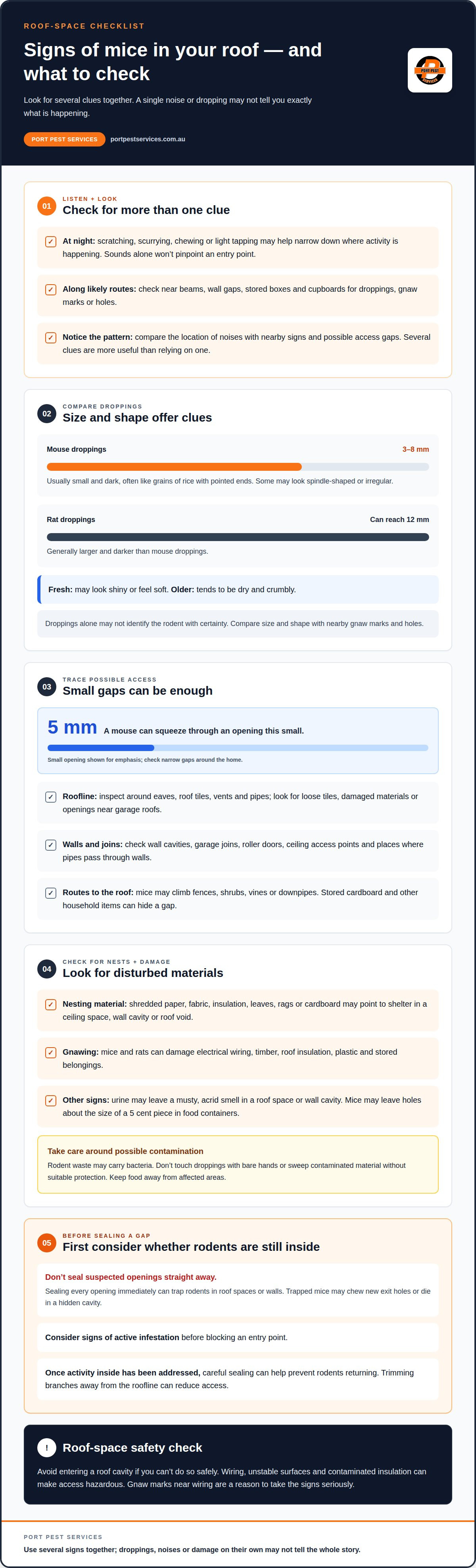
Mouse droppings in Australian homes are usually three to eight millimetres long. They are small, dark and often shaped like grains of rice, with pointed ends; some may look spindle-shaped or irregular. Rat droppings are generally larger and darker, and can reach twelve millimetres. Size and shape offer useful clues, but droppings alone may not identify the rodent with certainty.
To tell if mice are in your roof, compare droppings with nearby gnaw marks and holes. Look for droppings along likely travel or feeding routes, such as near beams, wall gaps, stored boxes and cupboards. Fresh droppings may look shiny or soft, while older ones tend to be dry and crumbly. Different sizes may suggest more than one type of rodent.
If you’re working out how to tell if mice are in your roof, check for several signs rather than relying on one clue. Mice may leave holes about the size of a 5 cent piece in food containers. Avoid entering a roof cavity if you can’t do so safely, as wiring, unstable surfaces and contaminated insulation can make access hazardous. The location and pattern of signs can help distinguish ongoing rodent activity from isolated damage.
Should I block rodent entry points straight away?
Don’t seal suspected openings until you’ve considered whether rodents are still inside. Roof noises and possible access gaps, considered together, can help you decide what needs attention.
Common Roof Entry Points
Roofline entry points include gaps around eaves, roof tiles, vents and pipes. Mice may climb fences, shrubs, vines or downpipes to reach the roof, then slip through an opening beneath a tile or along an eave. These routes matter because the gap you see outside may lead into a hidden ceiling space.
From the ground, check the roof edge for loose tiles, damaged materials or openings near garage roofs. Scratching, scurrying, chewing or light tapping at night can help narrow down where activity is happening, though sounds alone won’t identify an exact entry point. To tell if mice are in your roof, consider noises alongside possible access routes.
Entry Gaps Around Australian Homes
Rodents can enter through gaps around wall cavities, garage joins, roller doors and ceiling access points. A mouse can squeeze through an opening as small as 5 mm, so narrow spaces around pipes or damaged building materials can provide access. Stored cardboard or other household items may hide a gap from view.
Look for possible entry points outside your home, especially where pipes pass through walls or materials have deteriorated. A small gap can be enough; a large hole isn’t required. Compare where you hear night-time scratching with nearby gaps or roofline openings, rather than relying on sound alone to tell if mice are in your roof.
Sealing every opening immediately can trap rodents inside roof spaces or walls. Trapped mice may chew new exit holes or die in a hidden cavity. Consider whether signs of active infestation remain before blocking an entry point. Trimming branches away from the roofline can reduce access, while careful sealing can help prevent rodents returning once activity inside has been addressed.
Rodent nesting locations in ceilings and walls
Roof spaces and wall cavities provide rats and mice with quiet shelter and nesting material. Where they nest can explain where you hear movement and why signs appear in different parts of your home.
Nesting Sites Inside Homes
Mice may nest in ceiling spaces, wall cavities and other sheltered parts of a home. These enclosed areas offer protection and access to materials such as insulation, paper, fabric and cardboard. A nest made from shredded household items suggests rodents may be living and breeding inside, rather than simply passing through.
Mice can make pathways through ceilings and wall cavities before their noises become easy to notice. If scratching starts in one ceiling area and later seems to move along a wall, rodents may be travelling between hidden spaces. Nesting material near an opening or stored items can help explain their route.
Roof Rat Nests in Roof Voids
Roof rats can nest in roof voids, under eaves, inside wall spaces and in dense outdoor vegetation. They build nests from shredded materials, including paper, insulation and fabric. A roof void can provide shelter, while nearby vegetation may offer another place to hide.
Look for signs in more than one location. Shredded insulation in a roof space and disturbed fabric near an eave, for example, may point to movement between sheltered areas. Nests can remain hidden above ceilings, so household noises or scattered nesting material may be the first clues.
Rats and mice may also use leaves, rags or cardboard to build nests. These materials in a ceiling cavity are different from loose insulation alone; their arrangement and signs of disturbance may suggest rodents have gathered material for shelter.
During colder weather, rodents may move indoors to find shelter and nesting areas. A nest in a roof void may be out of sight, but repeated noises or material gathered near ceiling access points can indicate where activity is concentrated.
Inspection and professional pest control
A careful inspection can locate rodent activity, damage and possible access routes before control measures begin. Take signs in ceilings seriously, especially gnaw marks near wiring.
Inspecting for Rodents
An inspection checks likely travel areas for droppings, gnaw marks, holes, smears and nesting material. In roof spaces, it must account for electrical hazards, unstable surfaces and contaminated insulation. Avoid entering a roof cavity without proper safety measures. Signs in wall cavities or near pipes can help show how rodents move through the home and where activity is concentrated.
Checks from accessible areas can help you record what you notice. Note whether scratching continues across several nights and where you find fresh signs. Don’t touch droppings with bare hands or sweep contaminated material without protection.
When to Seek Professional Rodent Control
Arrange professional pest control if roof noises continue for several nights, or you find repeated droppings, nesting material or fresh gnaw marks. An inspection can help distinguish mice from roof rats and identify activity beyond the area you can see. This matters when signs appear in both ceilings and cupboards, or when rodents keep returning after household control measures.
Chewed wiring, a burning smell or power problems near a roof cavity need prompt attention. Don’t touch damaged wires or investigate the cavity yourself. Contact a licensed electrician about electrical hazards, then arrange rodent control to address signs of activity.
Responding to Mice in the Roof
If you find mice in the roof, keep people and pets away from droppings and don’t enter the cavity. Record where and when you hear noises, and note visible damage from a safe position. This information can help an inspection focus on the right areas.
A single trap or bait may not address hidden nesting sites or the access route that let mice inside. Sealing openings before checking for active rodents can leave them trapped in walls or ceilings. A sound control plan considers both current activity and how mice are getting into the home.
For continued roof activity, arrange rodent pest control to assess the signs and guide the next steps.
Port Pest Services: Mice Pest Control
Port Pest Services provides mice pest control for homeowners dealing with roof noises, droppings or signs of gnawing. If activity continues or you’re unsure whether mice are nesting in the roof, professional rodent control can help address the problem and likely access points.
Share what you’ve noticed, such as scratching at night, damaged insulation or droppings near ceiling access points. These details help explain the issue and guide the next steps. Avoid sealing suspected entry holes while rodents may still be inside, as they could become trapped in roof spaces or walls.
If you hear movement overhead or find fresh signs around your home, contact Port Pest Services to discuss mice pest control.
Take the next step towards a quieter roof
Knowing how to tell whether mice are in your roof can help you decide when to act, but you don’t need to locate every hidden gap before asking for help. Keep a brief note of what you’ve noticed, such as where sounds occur or which rooms show signs of activity. This gives the team useful context for discussing a practical next step.
Port Pest Services provides mice, rat and rodent pest control. Its team can help address rodent activity in your home methodically, rather than relying on guesswork or sealing openings while mice may still be inside. If you’re still hearing movement or seeing fresh signs, get in touch to talk through your situation.
Contact Port Pest Services to discuss rodent activity in your roof space and take a clear next step for your home.
Frequently Asked Questions
How do mice get into roof spaces?
Mice reach roof spaces by following sheltered routes from outdoor areas into a building. To understand how activity began, note where you first noticed signs inside and which nearby exterior areas offer cover. This record can help an inspection trace a likely route without you entering the ceiling cavity or disturbing hidden areas.
What are some signs you have rodents in your home?
Look for patterns across rooms rather than treating one clue as proof. Note where you find disturbed food packaging, unusual smells or other signs of activity, and whether they appear near the same cupboard or storage area. A simple record of locations and when you noticed changes can make the problem easier to describe.
Can rodents damage electrical wiring?
Yes. Rodent gnawing can damage wiring, but visible signs don’t show how much a cable has been affected. Don’t inspect or repair wiring yourself. If you notice a burning smell or power problems, tell a licensed electrician what you observed and where. This helps direct attention to the relevant part of the home without disturbing the roof cavity.
What are the common signs of mice in a roof space?
Clues can include recurring activity in one area, disturbed materials or signs near ceiling access points. Keep a brief log of the time, room and location of each observation. A record can help distinguish a recurring pattern from an isolated incident and give an inspector useful context, especially if activity shifts between parts of the house.
How can you identify mouse droppings, urine stains and gnaw marks?
Use a phone camera to record the location and appearance of suspected signs without touching or moving them. Include a nearby fixed object for scale, then take another image later from the same position to show any change. Keep people and pets away from affected areas until they can be assessed, and don’t disturb material in a ceiling cavity.
How can you tell mice apart from rats, possums and bats in the roof?
Sound alone can’t reliably identify an animal. Compare the overall evidence, including the size of waste, any damage and where signs appear, rather than relying on one clue. If you suspect an animal other than a rodent, don’t approach or handle it. A careful assessment can help establish what is present before any control decision is made.