Understanding the Lifespan of Termite Barriers
Termite barriers are designed to protect homes from termite entry. In Port Macquarie, they play an important role because termite activity is common throughout the region. Warm weather and coastal moisture allow termites to remain active for most of the year.
Many homeowners want to know how long termite protection will last. The lifespan of a termite barrier depends on several factors. These include the type of barrier used, soil conditions, and how the property is maintained.
How Long Do Chemical Termite Barriers Last?
Chemical termite barriers are one of the most common systems used around existing homes. A professional termiticide is applied to the soil around the building to create a treated zone.
Most modern termite barriers are designed to remain effective for up to seven years when installed correctly. However, the exact lifespan can vary depending on soil type, rainfall, and environmental conditions around the property.
Why Are Annual Inspections Still Required?
Even when a termite barrier is installed, regular inspections are still essential. Termites are persistent insects that constantly search for food sources and possible entry points.
Australian Standards recommend professional inspections at least once every 12 months in termite-prone areas. These inspections help confirm the barrier is still working correctly and allow early detection of any termite activity.
What Factors Can Affect the Lifespan of a Barrier?
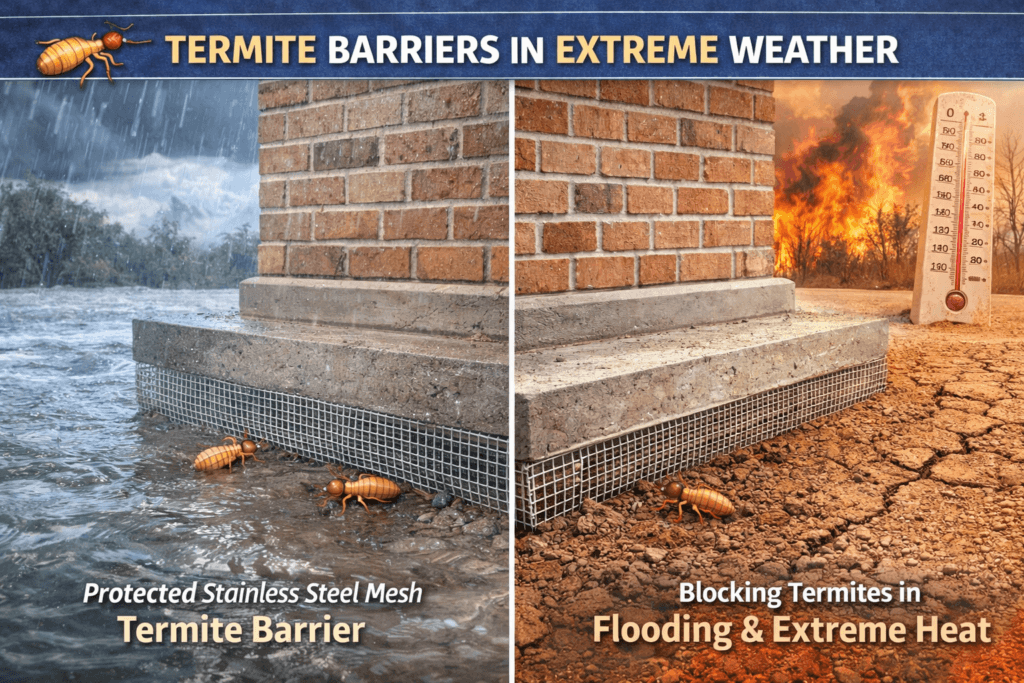
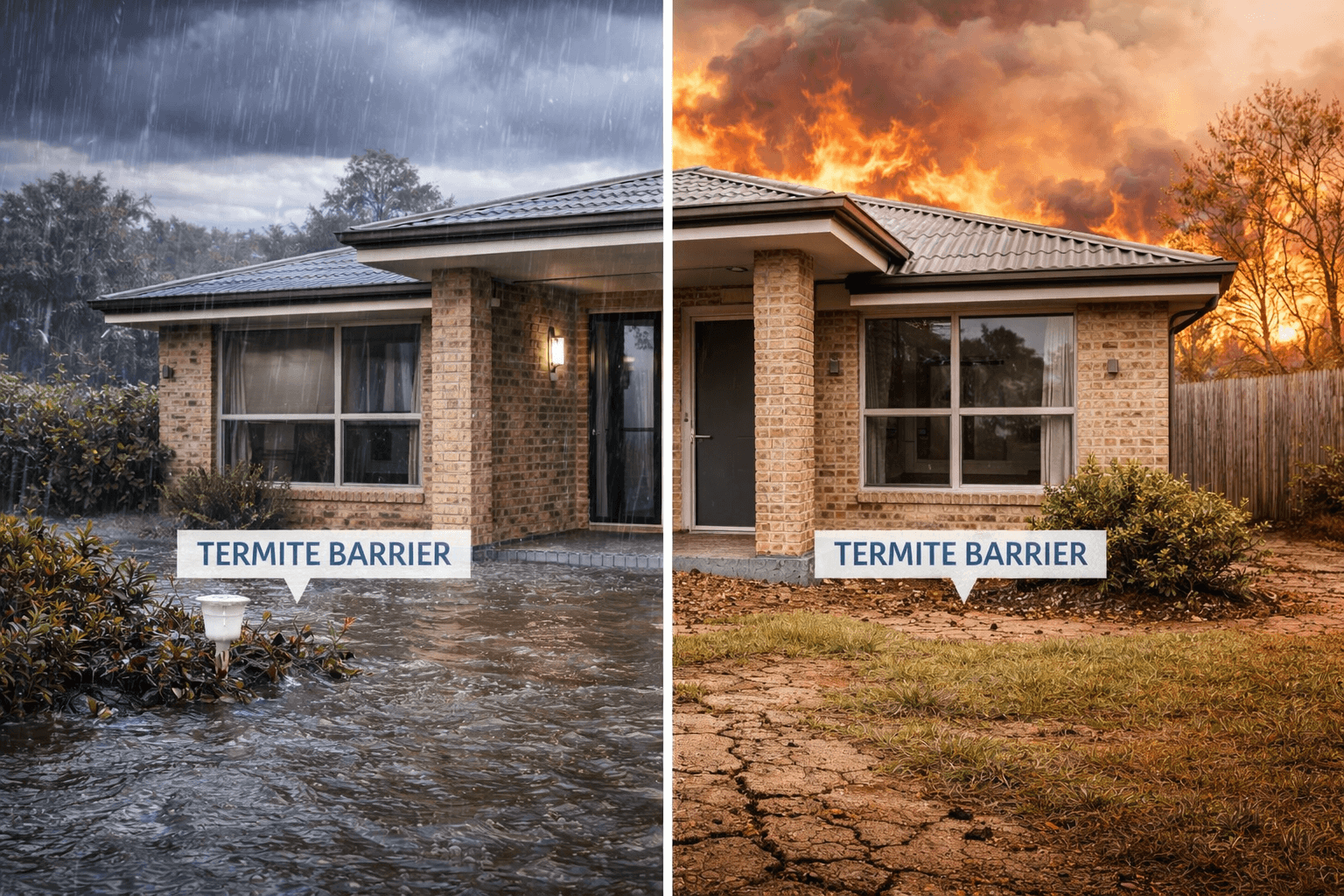
Several conditions can influence how long a termite barrier lasts. Heavy rainfall, soil movement, and landscaping changes can affect the treated zone around the building.
Construction work, new garden beds, or drainage changes may also disturb the soil. These changes can sometimes create gaps in the barrier, allowing termites to bypass the treated area.
Do Physical Barriers Last Longer?
Physical termite barriers are usually installed during construction. These systems use materials such as stainless steel mesh or specially graded stone to block termite entry.
Because they form part of the building structure, physical barriers can last for the life of the building. However, they still require monitoring to ensure termites cannot find alternative entry points.
Can a Termite Barrier Be Re-Treated?
Yes. Chemical termite barriers can often be renewed if needed. This may involve applying additional treatment around the building to restore the protective zone.
Re-treatment may be recommended if soil disturbance occurs or if inspections show that protection has weakened.
How Can Homeowners Help Maintain Termite Protection?
Property maintenance plays an important role in termite prevention. Reducing timber contact with soil and managing moisture around the home can lower termite risk.
Keeping garden beds, mulch, and timber structures away from external walls can also help maintain the barrier zone. These simple steps support professional termite management and help protect the property long-term.
If you need advice about termite barriers or termite protection, contact Port Pest Services. We provide professional termite inspections, termite control, and termite protection services across Port Macquarie and surrounding areas between Forster and Kempsey.
Frequently Asked Questions
How long does a termite barrier usually last?
Many modern chemical termite barriers are designed to last for up to seven years when installed correctly. However, annual inspections are still recommended to ensure the barrier remains effective.
Can weather affect termite barriers?
Yes. Heavy rainfall, soil movement, and landscaping changes can affect the treated zone around the building. Regular inspections help identify these issues early.
Do termite barriers need maintenance?
Yes. Barriers should be checked during routine termite inspections. If the protection zone is disturbed, additional treatment may be required.
Are termite barriers permanent?
Physical barriers can last for the life of the building when installed during construction. Chemical barriers may need to be renewed over time depending on soil conditions and environmental factors.