
Here’s something most homeowners don’t realise: by the time termites become visible, they’ve usually been active for months — sometimes considerably longer.
Termites don’t announce themselves. They work from the inside out, consuming structural timber while leaving the outer surface looking completely normal. In Port Macquarie’s warm, humid climate, where termite colonies can remain active year-round, the window between early activity and serious damage is shorter than most people expect.
Knowing what to look for is your first line of defence. This checklist covers the seven warning signs that Port Macquarie homeowners most commonly encounter — what they look like, where to find them, and what to do if you spot one.
Why Spotting Termites Early Makes Such a Difference
The earlier termite activity is detected, the more straightforward treatment becomes — and the less damage there is to repair.
A colony caught in its early stages, before it has established deep into your home’s structural timber, can often be treated with a targeted baiting or barrier system at a manageable cost. A colony that has been active for one to three years undetected is a very different proposition — one that can involve significant structural repairs running well into the tens of thousands of dollars.
In Port Macquarie, where the species most commonly responsible for structural damage — including Coptotermes acinaciformis — can cause serious harm in a matter of months, early detection isn’t just useful. It’s the difference between a manageable problem and a devastating one.
The 7 Warning Signs to Check For Right Now
Work through this list methodically. Check each area carefully — good lighting and a torch will help, especially in subfloor spaces and roof voids.
Sign 1 — Mud Tubes on Walls, Stumps or Pipes
What they are: Thin, pencil-width tunnels made from soil, saliva and termite waste. Subterranean termites build these tubes to travel between their underground nest and a food source — your home’s timber — while staying protected from light and open air.
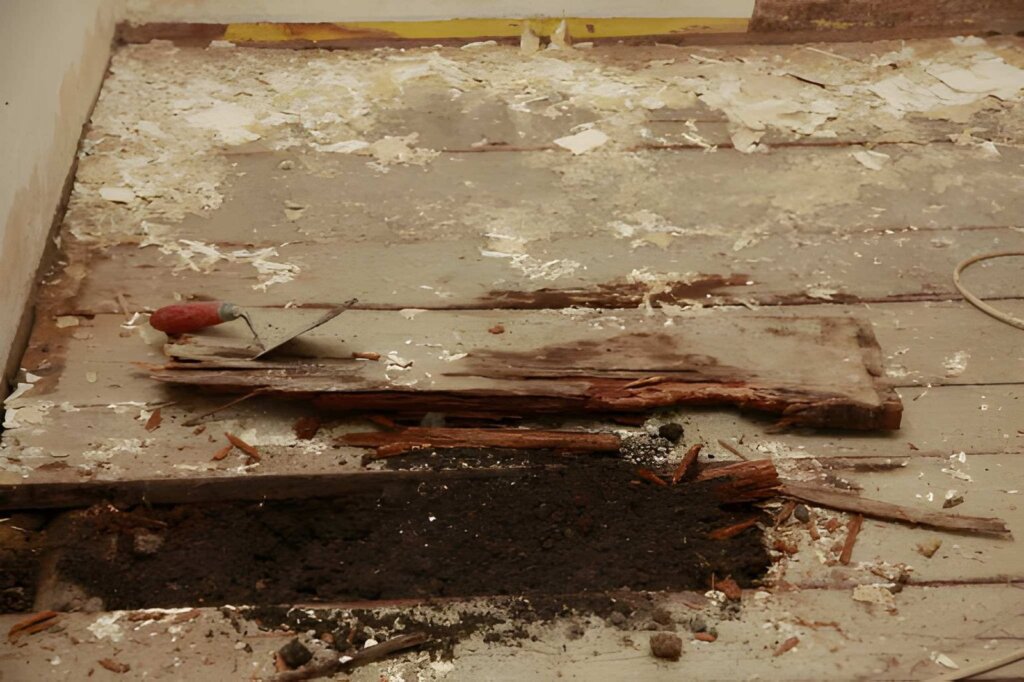
Where to look: Exterior foundation walls, brick piers, plumbing pipes entering the building, fence posts, timber stumps, and the outer walls of your subfloor area.
What it means: An active or recently active mud tube is one of the clearest indicators of subterranean termite presence. Even a dry, old-looking tube warrants a professional inspection — old tubes can be reactivated if conditions change.
Quick check: Lightly press the tube with your finger. If it’s soft and crumbles to reveal live insects, the colony is currently active. If it’s dry and hollow, the tube may have been abandoned — but don’t assume the problem has gone away.
Sign 2 — Hollow-Sounding Timber
What it is: Termites consume timber from the inside, leaving a thin outer shell. Timber that has been partially consumed will produce a distinctive hollow or papery sound when tapped.
Where to look: Knock on wall frames, door frames, skirting boards, floor joists (if you can access the subfloor), windowsills, and any exposed structural timber. Use your knuckles or a small screwdriver handle and listen for the difference between solid timber and hollow timber.
What it means: Hollow-sounding timber doesn’t always mean active termites — it could indicate past damage, rot, or construction variation. But it should always be investigated professionally, particularly in a high-risk area like Port Macquarie.
Sign 3 — Tight or Warped Doors and Windows
What it is: As termites consume timber and produce moisture and heat within wall cavities and door frames, the surrounding timber can swell and warp. Doors and windows that previously opened and closed smoothly may start sticking, binding or sitting unevenly in their frames.
Where to look: Any timber door or window frame throughout the house — particularly ground floor doors, external doors, and windows near the floor line where termite entry is more likely.
What it means: Warped frames are easy to dismiss as humidity swelling — and sometimes that’s exactly what it is. But in Port Macquarie homes, where humidity is consistently elevated, a sudden change in how a door or window fits is worth paying closer attention to. If there’s no obvious weather-related explanation, it warrants investigation.
Sign 4 — Frass (Termite Droppings)
What it is: Frass is the waste material produced by drywood termites — small, elongated pellets that look like fine sawdust, sand, or coffee grounds. It’s typically found in small piles near the base of door frames, skirting boards, windowsills, or timber furniture.
Where to look: Check along the base of interior walls, behind furniture against walls, beneath windowsills, and in ceiling corners where roof timbers are present.
What it means: Finding frass is a strong indicator of drywood termite activity — a species that nests within the timber itself rather than in the soil. Unlike subterranean species, drywood termites can infest roof framing, furniture, and other above-ground timber without any ground contact.
Don’t confuse it with: Regular sawdust (which is coarser and irregular), plaster dust, or fine soil particles. Termite frass pellets are typically uniform in size and have a distinctive six-sided shape under magnification.
Sign 5 — Blistered or Bubbling Paint
What it is: When termites are active within a wall cavity, they generate heat and moisture. This can cause paint on the interior surface to bubble, blister, or peel — even in areas that have no water leak or obvious moisture source.
Where to look: Interior walls near floor level, areas adjacent to external walls, and surfaces near door and window frames. Also check ceiling surfaces if your roof void is accessible to termites.
What it means: Blistered paint is often attributed to water damage or poor paint adhesion — and frequently that’s the cause. But when blistering appears in a dry area of the house with no plumbing nearby and no history of leaks, it should be treated as a potential termite indicator until ruled out professionally.
Sign 6 — Discarded Wings Near Doors or Windows
What they are: During warmer months — typically from spring through early autumn in Port Macquarie — reproductive termites (alates) swarm from established colonies to start new ones. After their brief flight, they shed their wings. These wings are small, uniform in size, and typically found in small piles near light sources, windowsills, or exterior doorways.
Where to look: Window ledges, external doorsteps, light fittings, and any area where flying insects might gather near a light source in the evening.
What it means: Discarded wings don’t necessarily mean a colony is active inside your home — the swarm may have originated from a nest elsewhere on your property or nearby. But it does mean a reproductive swarm has taken place in the vicinity, and the timing warrants an inspection to rule out an established colony in or around your building.
Don’t confuse them with: Flying ant wings, which are longer and unequal in size. Termite wings are roughly equal in length and tear away cleanly at a single point near the body.
Sign 7 — Visible Damage to Timber Structures
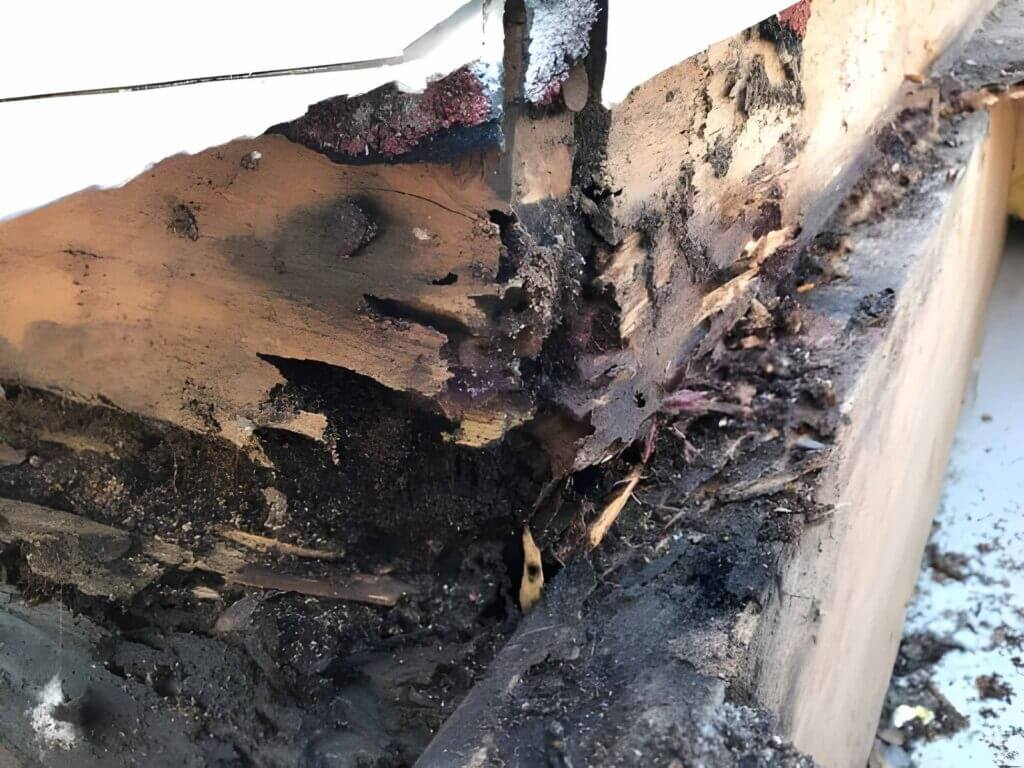
What it is: In more advanced infestations, damage becomes directly visible — timber that looks sunken, crushed, or structurally compromised; skirting boards that crumble when pressed; flooring that sags or feels soft underfoot; or exposed framing timbers that appear grooved, layered, or hollowed.
Where to look: Subfloor timber bearers and joists (if accessible), ground-level skirting boards, timber steps, decking, window sills, and any exposed structural timber in the roof void.
What it means: Visible structural damage indicates an infestation that has been active for a significant period. If you’re seeing this level of damage, the priority is an immediate professional inspection — followed by a rapid treatment and repair assessment. The longer a colony remains active beyond this point, the more extensive the remediation required.
Signs That Are Commonly Mistaken for Termite Activity
Not every concerning-looking thing around your home is termites. A few common false alarms:
- Ant activity — black ants, in particular, are sometimes confused with termites. Ants have a distinct waist, bent antennae, and two pairs of wings of different sizes. Termites have a straight body, straight antennae, and equal-length wings.
- Wood rot — timber decay from moisture exposure can look similar to termite damage but has a distinctly different texture. Rotted timber tends to be soft and crumbly throughout, while termite-damaged timber often retains surface integrity while being hollow inside.
- Fly or beetle frass — other boring insects produce waste that can resemble termite frass. If you’re unsure, don’t try to identify it yourself — get a professional opinion.
What to Do Immediately If You Spot Any of These Signs
The single most important rule: do not disturb the area.
It’s tempting to knock open a wall, dig into a suspected mud tube, or spray the area with insecticide. Resist that urge. Disturbing an active colony can cause it to scatter — splitting into satellite colonies and relocating deeper into your home’s structure. This makes the infestation significantly harder to treat and can push the cost of eradication much higher.
What you should do:
- Note the location carefully — photograph it if possible
- Keep the area undisturbed
- Book a professional termite inspection as soon as possible
- Tell the inspector exactly what you found and where
Speed matters here. Every week an active colony continues undetected is another week of damage accumulating.
Why a Homeowner Check Is Not Enough on Its Own
This checklist is a useful starting point — but it has real limits.
Termites are most active in areas that aren’t visible during a standard walkthrough: inside wall cavities, beneath concrete slabs, within roof framing, and in subfloor spaces with low clearance. Licensed inspectors use thermal imaging cameras and moisture meters to detect activity in these hidden areas, identifying heat signatures and elevated moisture levels that indicate termite presence long before visible signs appear.
A homeowner who walks their property and finds nothing concerning has ruled out the most obvious surface-level signs — not confirmed their property is termite-free. Only a professional inspection to Australian Standard AS 3660.2 can do that.
If you’ve worked through this checklist and want certainty, the next step is booking a pest inspection in Port Macquarie with a licensed local inspector.
A Quick Room-by-Room Walkthrough Guide
Use this as a practical companion to the seven signs above.
Kitchen and laundry: Check under sinks and around plumbing penetrations. Look at skirting boards and cabinet bases for frass or blistering.
Bathrooms: Inspect skirting boards and the wall behind the toilet for moisture staining or bubbling paint.
Living areas and bedrooms: Tap skirting boards and door frames. Check that all doors open and close smoothly. Look at window frames for tight fits or warping.
Garage and utility areas: Check any exposed timber framing, stored timber, and the exterior wall at floor level for mud tubes.
Exterior perimeter: Walk the full perimeter and look at the foundation, brick piers, any timber-to-soil contact points, stumps, and fence posts.
Subfloor (if accessible): Use a torch to check bearers and joists for mud leads, damage, or active tubes. This is the highest-risk area in many Port Macquarie homes.
If You’ve Found Something — Don’t Wait
If you’ve spotted one or more of the signs in this checklist, the right move is prompt professional assessment — not a wait-and-see approach.
Port Pest Services provides thorough termite inspections for homeowners across Port Macquarie and the Hastings Valley. Our inspectors use thermal imaging and moisture detection equipment as standard, and every inspection is carried out to AS 3660.2 — so you get a report you can actually rely on.
For peace of mind, or to get an answer on something you’ve found, book your termite inspection in Port Macquarie today.
To understand more about why these inspections matter for Port Macquarie homeowners, or to learn about what attracts termites to properties in the first place, those guides are worth reading alongside this one.
Frequently Asked Questions
What do termite mud tubes look like?
Mud tubes are narrow tunnels — roughly the width of a pencil — made from soil, termite saliva and waste material. They run along surfaces termites need to cross to reach timber, typically appearing on exterior walls, brick piers, plumbing pipes, or subfloor structures. They’re usually the same colour as the surrounding soil and can be mistaken for dried dirt or paint runs at a quick glance. Look closely at your foundation and subfloor walls at ground level.
Can termites be present without any visible signs?
Yes — and this is one of the most important things Port Macquarie homeowners need to understand. Termites can be active within wall cavities, subfloor timbers, and roof framing for months or years without producing any surface-level signs. The absence of visible indicators does not mean a property is termite-free. Only a professional inspection using thermal imaging and moisture detection equipment can reliably identify hidden activity.
Are discarded wings always a sign of termites?
Not necessarily. Discarded wings near your home mean a reproductive swarm has taken place in the vicinity — but the source colony could be on your property, in a neighbouring property, or in nearby bushland. What it does indicate is that termite activity is occurring close enough to your home to warrant a professional inspection to confirm there’s no established colony in your building.
How quickly should I act if I find signs of termites?
As quickly as possible — ideally within days, not weeks. Do not disturb the area or attempt any DIY treatment. Contact a licensed pest inspector and describe what you’ve found. Every week an active colony continues undetected increases the damage and the cost of both treatment and repairs.
What’s the difference between termite frass and sawdust?
Regular sawdust is coarse, irregular in shape, and varies in colour depending on the timber. Termite frass pellets are small, uniform in size, and have a distinctive elongated shape — often described as resembling fine coffee grounds or tiny seeds. Under magnification they typically show six-sided facets. If you find a small pile of material near timber and you’re not sure what it is, photograph it and have a pest professional assess it rather than assuming it’s benign.