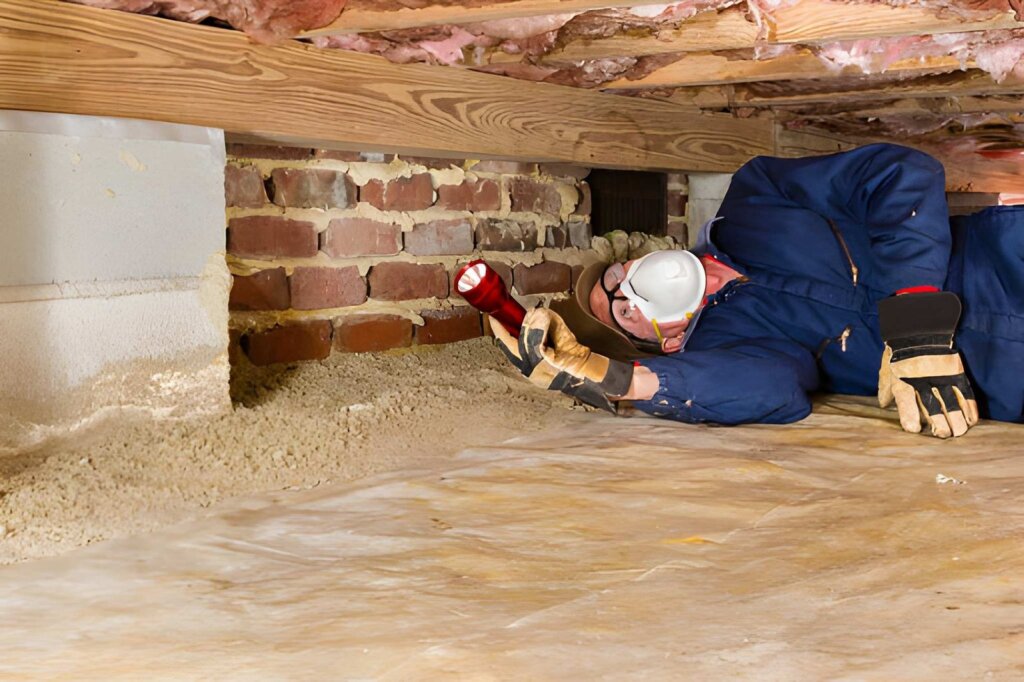
Most homeowners in Port Macquarie either don’t know the answer to this question — or know they’re overdue and have been putting it off.
The short answer: at least once every twelve months, and more frequently for many properties in this region.
But “at least once a year” deserves more context than that. Port Macquarie isn’t an average-risk area. The conditions here — climate, vegetation, soil moisture — mean that the national standard recommendation is genuinely a minimum, not a comfortable upper limit. For some properties, it isn’t enough on its own.
This guide explains exactly how often you should be getting your property inspected, what factors change that frequency, and how to set up a routine that gives your home real protection.
What the Australian Standard Actually Says
Before getting into Port Macquarie specifics, it helps to understand where the once-a-year recommendation comes from.
AS 3660.2 — The Baseline Recommendation
Australian Standard AS 3660.2 — the national standard for termite management in existing buildings — recommends that all properties receive a professional termite inspection at minimum once every twelve months. This applies across Australia, regardless of location.
The standard exists because termite colonies can cause significant structural damage within a twelve-month window under the right conditions. Annual inspections are designed to catch activity before it reaches that point.
What “High Risk” Classification Means in Practice
AS 3660.2 also acknowledges that not all properties carry the same risk. The standard identifies factors that elevate risk — and for properties where multiple risk factors apply, it recommends inspections more frequently than annually.
In high-risk areas, inspections every six months are considered best practice by most pest management professionals. Port Macquarie meets the criteria for high-risk classification on multiple fronts.
Why Port Macquarie Is Not an Average-Risk Area
The national standard sets the floor. Local conditions determine where your property actually sits.
Climate and Year-Round Termite Activity
Subterranean termites — the species responsible for structural damage to homes — are most active in warm, humid conditions. They slow down in cold, dry climates. Port Macquarie offers neither.
The mid-north coast sits in a subtropical-influenced climate zone with warm summers, mild winters, consistently elevated humidity, and rainfall that keeps soil moisture levels high throughout much of the year. Termite colonies in this region don’t experience the seasonal slowdown that occurs further inland or south. They forage and consume year-round.
That’s a critical distinction. In a cooler climate, a twelve-month gap between inspections might represent eight or nine months of meaningful termite activity. In Port Macquarie, it represents twelve.
Local Species and Their Activity Patterns
The termite species most commonly responsible for structural damage in the Port Macquarie area — particularly Coptotermes acinaciformis and Schedorhinotermes spp. — are aggressive, high-colony-size species that can cause significant damage in a relatively short timeframe.
Coptotermes acinaciformis colonies can number in the hundreds of thousands and are capable of causing serious structural damage in three to six months under favourable conditions. Annual inspections catch most infestations in time — but only if they’re actually carried out annually.
How Often Should You Inspect? A Property-by-Property Guide
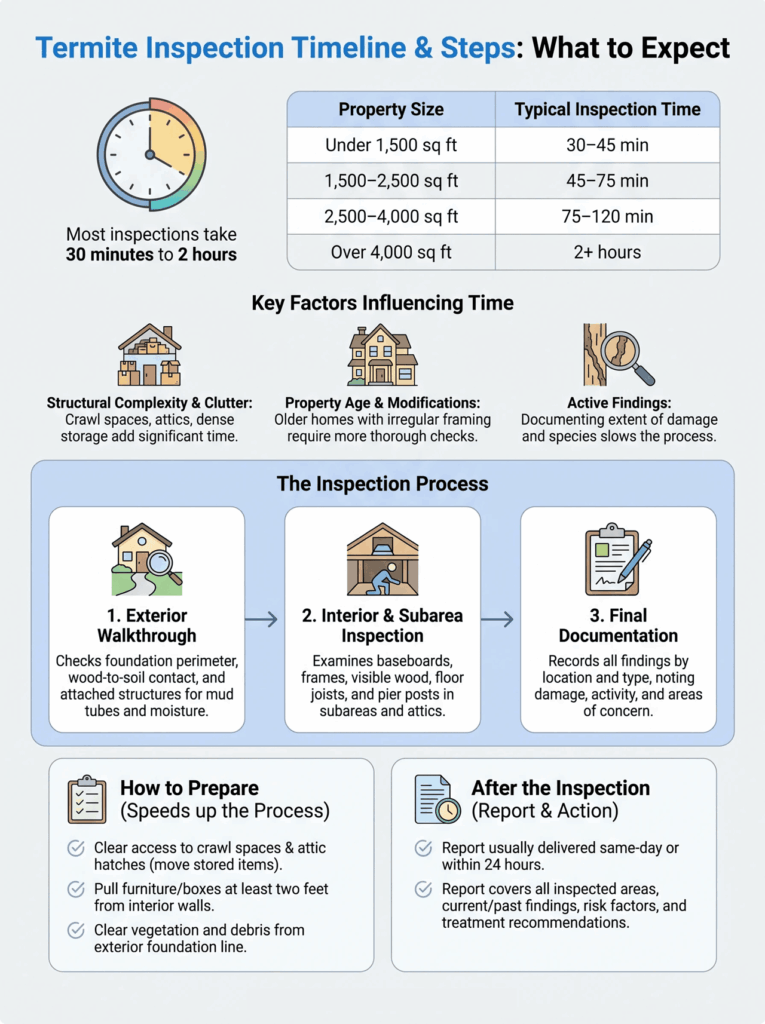
The right inspection frequency depends on your specific property. Here’s a practical guide based on the most common property types across Port Macquarie and the Hastings Valley.
Standard Residential Properties
For a typical brick veneer or clad home in an established Port Macquarie suburb with no history of termite activity and no significant risk factors — once every twelve months is the minimum acceptable frequency.
Don’t stretch this to eighteen months. Don’t skip a year because the last inspection came back clear. A clean report tells you there were no termites at the time of the inspection — not that your property is permanently protected.
Older Homes and Timber Construction
Properties built before the 1980s — particularly weatherboard homes, pole homes, and older Queenslander-style construction — carry a higher risk profile due to construction methods, material age, and the likelihood of existing moisture issues.
For these properties, every six months is a sensible target. Older timber is often more accessible to termites, and the construction style of many older Port Macquarie homes creates more entry points and harbourage areas than modern builds.
Properties With Previous Termite Activity
If your property has had a termite infestation in the past — even if it was fully treated — six-monthly inspections are strongly recommended, often indefinitely.
Previous activity indicates that the property has conditions attractive to termites. Treatment eliminates the colony but doesn’t eliminate those conditions. Without ongoing monitoring, re-infestation is a genuine risk.
Homes Near Bush, Trees or Water
Properties backing onto bushland, near the Hastings River or its tributaries, or with large established trees and stumps on or adjacent to the block face a persistently elevated foraging pressure.
Native forest provides a near-endless food source and nesting habitat for termite colonies. The shorter the distance between that habitat and your home, the higher the risk — and the more frequently you should be inspecting. Six-monthly inspections are advisable for these properties.
Rental and Investment Properties
Landlords managing rental properties in Port Macquarie have a particular reason to stay on schedule. Tenants don’t always notice — or report — early warning signs of termite activity. Inspection frequency should match the property’s risk profile, with annual inspections as a strict minimum and six-monthly checks for higher-risk properties.
Regular inspections also form part of responsible property maintenance documentation, which matters in the event of any insurance or legal questions down the line.
What Affects Your Recommended Inspection Frequency?
Beyond property type, a few other factors influence how often you should be booking.
Active Termite Monitoring Systems
If your property has a professionally installed termite monitoring and baiting system — such as in-ground bait stations around the perimeter — these systems are typically serviced and checked every three to six months by your pest manager.
Those service visits include a visual assessment of the monitoring stations, but they are not a substitute for a full AS 3660.2 compliant inspection. Annual inspections should continue alongside any monitoring program.
Chemical Barriers and Their Lifespan
Chemical soil barriers (termiticides applied to the soil around and under your home) typically carry a manufacturer-stated lifespan of eight to ten years. However, their effectiveness can be reduced by soil disturbance, heavy rain, landscaping work, or plumbing repairs that break the treated zone.
Even with a barrier in place, annual inspections remain essential. The barrier needs to be assessed for continuity, and any potential breaches need to be identified and addressed promptly.
Conducive Conditions on Your Property
Certain conditions make a property more attractive to termites and should prompt more frequent inspections:
- Wood-to-soil contact (fence posts, garden sleepers, timber steps)
- High subfloor moisture or poor ventilation
- Dense garden beds against the house perimeter
- Stored timber, firewood, or mulch close to the building
- Blocked or broken stormwater drainage
If your property has several of these conditions, increasing your inspection frequency is a sensible precaution while you work to address them.
What Should Happen Between Inspections?
Professional inspections are your primary defence — but there are things you can do between visits to reduce risk and catch early warning signs.
Walk around your property’s exterior every few months and look for mud tubes running up walls, stumps, or pipes. Check that subfloor ventilation points are clear and unobstructed. Keep an eye on any timber elements that contact the ground. Make sure gutters and downpipes are directing water away from the building rather than pooling near the foundations.
None of this replaces a professional inspection, but it means you’re not completely blind to what’s happening in between. If you notice anything unusual — hollow-sounding timber, tight-fitting doors, unexplained moisture staining — book an inspection immediately rather than waiting for your next scheduled one.
For a full list of what to watch for, our article on signs of termite activity to look for around your home covers the key indicators in detail.
The Real Cost of Inspecting Too Infrequently
Stretching inspection intervals might feel like a sensible cost-saving measure. It isn’t.
A professional termite inspection in Port Macquarie typically costs between $250 and $450 for a standard residential property. That’s the cost of catching a problem early — when treatment options are straightforward and damage is limited.
The cost of not catching it early is a different kind of number. Minor termite damage repairs start around $2,000 to $5,000. Moderate structural damage can run $10,000 to $30,000. Extensive infestations involving roof framing, subfloor structures or multiple wall lines can exceed $50,000 in repair costs — and that’s before treatment.
For a full breakdown of what inspections cost versus what damage costs, our termite inspection cost guide has the numbers laid out clearly.
And if you’d like more context on what’s actually at stake, our article on why termite inspections matter for Port Macquarie homeowners explains the risk picture in full.
How to Set Up a Reliable Inspection Routine in Port Macquarie

The most effective thing you can do is treat your termite inspection like any other annual home maintenance task — put it in the calendar and keep it there.
A few practical tips:
- Book at the same time each year — many homeowners tie it to a seasonal event or another annual task so it doesn’t get forgotten
- Keep your inspection reports — they form a useful history of your property’s termite risk profile over time
- Ask your inspector to note conducive conditions — a good report doesn’t just say “no termites found.” It tells you what risk factors exist and what to watch for
- Act on recommendations promptly — if your inspector flags a conducive condition or recommends follow-up, address it before the next inspection rather than waiting
- Don’t switch inspectors unnecessarily — continuity matters. An inspector who has seen your property before will notice changes faster than one starting from scratch
Book Your Next Inspection Before You Forget
If you’re not sure when your last termite inspection was — or if you know it’s been longer than twelve months — now is the right time to act.
Port Pest Services carries out thorough, AS 3660.2 compliant pest inspections across Port Macquarie and the wider Hastings Valley. We know the local termite species, the property types most at risk in this region, and what a genuinely useful inspection report looks like.
Don’t wait until there’s a reason to worry. Book your inspection and take it off the list.
Frequently Asked Questions
Is once a year really enough for Port Macquarie?
For a standard residential property with no particular risk factors, annual inspections meet the AS 3660.2 minimum standard and are considered appropriate. However, for properties with previous termite history, older timber construction, proximity to bushland or water, or multiple conducive conditions, six-monthly inspections are strongly advisable. When in doubt, ask your inspector to assess your property’s specific risk level.
What if my property has a termite barrier installed?
A chemical barrier or baiting system provides an important layer of protection, but it does not replace annual inspections. Barriers can be breached by soil disturbance or degraded over time. Monitoring stations need regular servicing. Annual inspections ensure the full protection system is intact and functioning — and catch anything that may have slipped through.
When should I book outside my usual schedule?
Book an unscheduled inspection if you notice any of the following: mud tubes on walls or stumps, hollow-sounding timber, unexplained moisture staining, tight-fitting doors or windows that weren’t previously a problem, frass near skirting boards, or discarded insect wings near doors or windows. These are potential indicators of termite activity and should be investigated promptly rather than left until the next scheduled visit.
Can I do my own check between professional inspections?
A basic visual check around the exterior of your property is a useful habit — look for mud tubes, check subfloor vents are clear, and tap accessible timber elements for a hollow sound. But a homeowner walk-around is not a substitute for a professional inspection. Licensed inspectors use thermal cameras, moisture meters, and trained pattern recognition to detect activity that isn’t visible to the untrained eye.
How do I find a qualified termite inspector in Port Macquarie?
Look for a licensed pest manager with a current NSW licence, public liability insurance, and a clear commitment to carrying out inspections to AS 3660.2. Ask whether their report will comply with the standard and what equipment they use. A good inspector will answer these questions readily and confidently — and won’t rush the job.