Right now, there’s a reasonable chance termites are active somewhere in your street. Possibly closer than that.
That’s not meant to alarm you — it’s just the reality of living in Port Macquarie. This region sits in one of the highest termite-risk zones in Australia, and the conditions here are close to ideal for the species that cause the most structural damage to homes.
The frustrating part? Most homeowners don’t find out until the damage is already done.
This article explains why termite inspections aren’t optional in Port Macquarie, what happens when they get skipped, and what you can do right now to protect your home.
Port Macquarie Has a Serious Termite Problem
This isn’t a generalisation. The mid-north coast of NSW — including the greater Port Macquarie and Hastings Valley area — consistently appears in high-risk termite mapping data for Australia. The combination of climate, soil type and vegetation makes this one of the more challenging regions in the country when it comes to termite management.
The Climate That Termites Love
Subterranean termites thrive in warm, humid environments with access to moisture and timber. Port Macquarie delivers all three. Average summer temperatures sit in the high 20s, humidity is consistently elevated thanks to coastal and riverine influence, and the area’s established native vegetation provides abundant food sources close to residential properties.
Unlike cooler parts of Australia where termite activity slows in winter, Port Macquarie’s mild winters mean colonies can remain active and foraging year-round. There’s no “safe season” here.
The Species You Need to Know About
The two species that cause the most significant structural damage in the Port Macquarie region are Coptotermes acinaciformis and Schedorhinotermes spp. Both are subterranean — meaning they nest underground and travel up through the soil into your home’s timber elements, often entering through areas you’d never think to check.
Coptotermes acinaciformis in particular is widely regarded as the most destructive termite species in Australia. Colonies can contain hundreds of thousands of workers and can cause serious structural damage in as little as three to six months under ideal conditions.
The Problem With Termites Is That You Can’t See Them
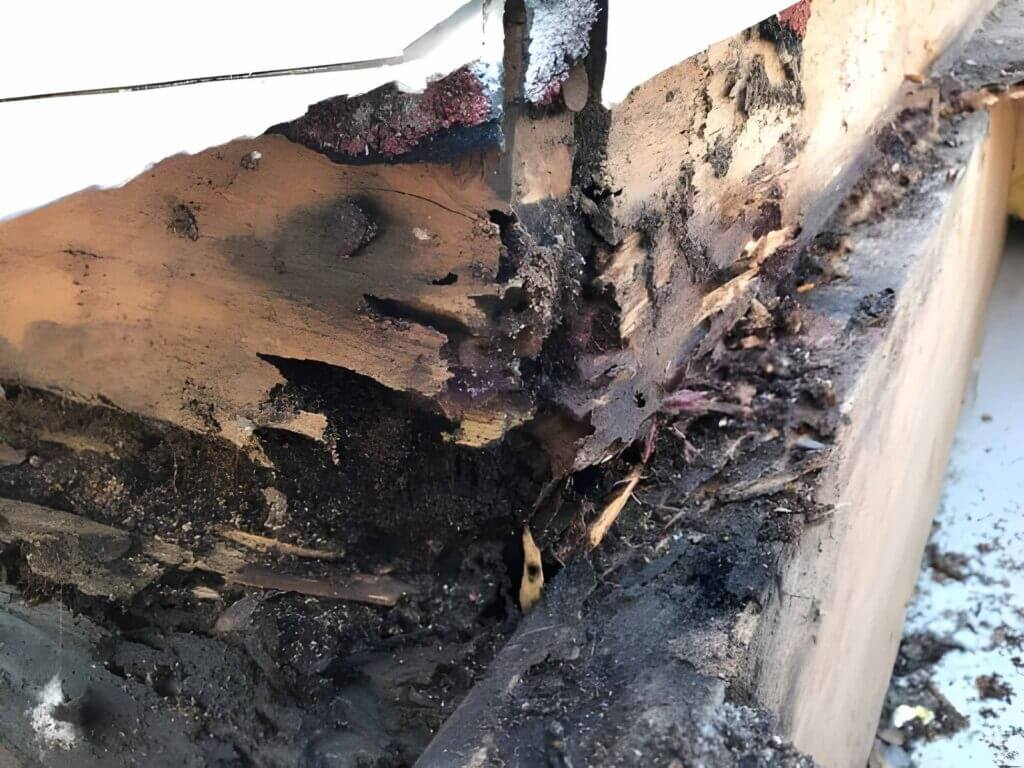
This is what makes termites so uniquely damaging as a pest. They don’t announce themselves. They don’t leave obvious traces on the surfaces you look at every day. They work from the inside out — consuming the structural core of timber while leaving the outer layer intact, sometimes paper-thin.
How Long Can They Go Undetected?
In many cases, termite infestations go undetected for one to three years. Some of the most severe cases discovered by inspectors in the Port Macquarie area have involved colonies that had been active for considerably longer.
A homeowner can walk past an infested wall stud, door frame or floor joist every single day and have no idea. The timber looks fine. It sounds hollow when tapped — but most people don’t tap their walls.
What They’re Actually Doing Inside Your Walls
While you’re going about your day, a termite colony is methodically consuming the cellulose in your home’s timber framing, flooring, roofing timbers, window and door frames, skirting boards, and cabinetry. They don’t stop for weekends or public holidays.
In a structurally significant infestation, load-bearing wall studs and roof framing timbers can be hollowed to a shell. The structural integrity of the building can be compromised to the point where repair costs dwarf the original value of the timber work involved.
What Does Termite Damage Actually Cost to Fix?
This is where the numbers become very uncomfortable very quickly.
Minor termite damage — limited to non-structural elements like skirting boards, door frames, or a small section of flooring — might be repaired for $2,000 to $5,000. That’s the good end of the scale.
Moderate structural damage involving wall framing or subfloor timbers typically runs $10,000 to $30,000, depending on the extent and accessibility of the affected areas.
Severe infestations involving roof framing, multiple wall lines, or significant floor structure? Costs of $50,000 to $100,000+ are not unheard of. In extreme cases, partial demolition and reconstruction is required.
Repair Costs by Damage Type
| Damage Type | Typical Repair Cost |
|---|---|
| Skirting boards, door frames | $1,500 – $4,000 |
| Non-structural flooring | $3,000 – $8,000 |
| Subfloor bearers and joists | $8,000 – $25,000 |
| Wall framing (partial) | $10,000 – $35,000 |
| Roof framing (partial) | $15,000 – $50,000+ |
| Extensive / whole-house damage | $50,000 – $100,000+ |
Compare any of those figures to the termite inspection cost for a standard Port Macquarie home — typically $250 to $450 — and the maths becomes very clear, very fast.
Why Standard Home Insurance Won’t Save You
This is something many homeowners don’t discover until it’s too late. In Australia, standard home and contents insurance policies almost universally exclude termite damage. Insurers classify termite infestation as a preventable maintenance issue — meaning it’s your responsibility, not theirs.
No inspection. No early detection. No insurance payout. Just a very large repair bill.
Real Consequences of Skipping an Inspection
The Pre-Purchase Mistake
One of the most financially damaging scenarios we see in Port Macquarie is buyers who skip the building and pest inspection to save a few hundred dollars during a competitive property purchase — and then discover significant termite damage after settlement.
Once you own the property, the damage is your problem. There’s no recourse to the vendor unless fraud or deliberate concealment can be proven — and that’s a costly, uncertain legal process.
A professional pest inspection before purchase gives you either the confidence to proceed or the leverage to renegotiate. Either way, it’s worth every cent.
The “We’ll Get Around to It” Trap
The other pattern we see regularly is homeowners who know they should be getting annual inspections but keep putting it off. A year becomes two. Two becomes four. And termites don’t wait.
The longer an active colony goes undetected, the more damage accumulates — and the more expensive treatment and remediation becomes. The inspection you delayed by three years might have been $300. The repair bill that follows could be $30,000.
What a Professional Termite Inspection Actually Involves
A quality termite inspection in Port Macquarie isn’t just a quick walk around the house. Carried out to Australian Standard AS 3660.2, it’s a systematic assessment of every accessible area of the property.
Visual Inspection
The inspector examines all interior rooms, wet areas, built-in joinery, the full exterior perimeter, any outbuildings, fencing, retaining walls, and garden areas including trees and stumps. They’re looking for live termite activity, past damage, mud leads, frass, moisture staining, and any conditions that are conducive to infestation.
Thermal and Moisture Detection
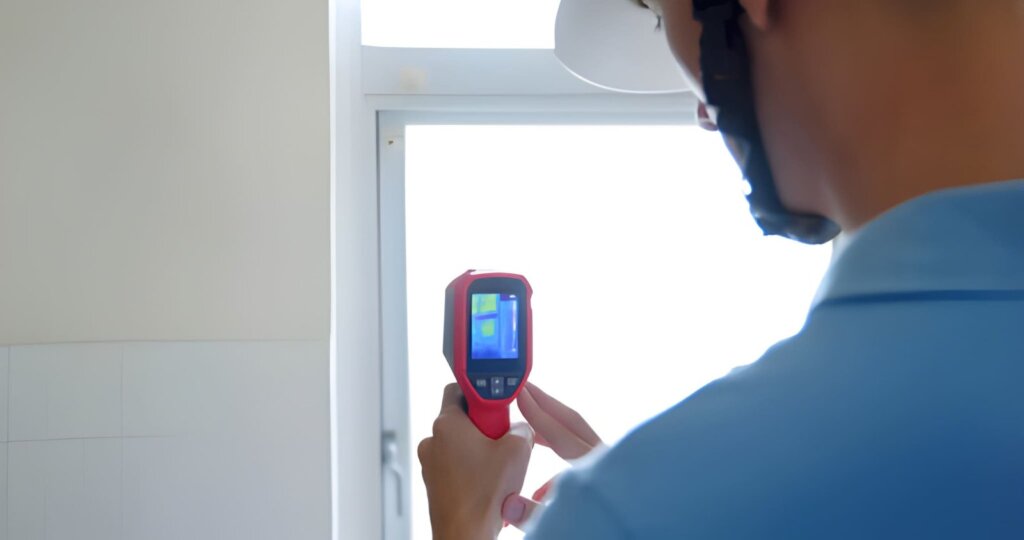
Many experienced inspectors in Port Macquarie now use thermal imaging cameras and moisture meters as part of their standard process. These tools detect heat signatures and elevated moisture levels inside wall cavities and under floors — areas a visual inspection simply can’t reach.
Given the age and construction style of many homes in the Port Macquarie area, this technology genuinely catches things that would otherwise go undetected.
The Report and What Happens Next
At the end of the inspection you receive a written report — complete with photos, findings, a risk rating, and specific recommendations. If no termites are found, the report will still note any conducive conditions and guide you on prevention. If termites are detected, your inspector will outline your treatment options and next steps clearly.
How Often Should You Be Getting Inspected in Port Macquarie?
The Australian standard recommends a minimum of one termite inspection per year for properties in moderate to high-risk areas. Port Macquarie falls squarely in the high-risk category.
For properties with a history of previous termite activity, significant moisture issues, large established trees nearby, or older timber construction, inspections every six months are often recommended.
Annual inspections might feel like an added expense. But in a region like Port Macquarie, they’re simply part of responsible homeownership — the same way you’d service your hot water system or check your smoke alarms.
For a full breakdown of recommended inspection frequency by property type and risk level, see our guide on how often you should get a termite inspection.
Signs You Shouldn’t Wait Any Longer
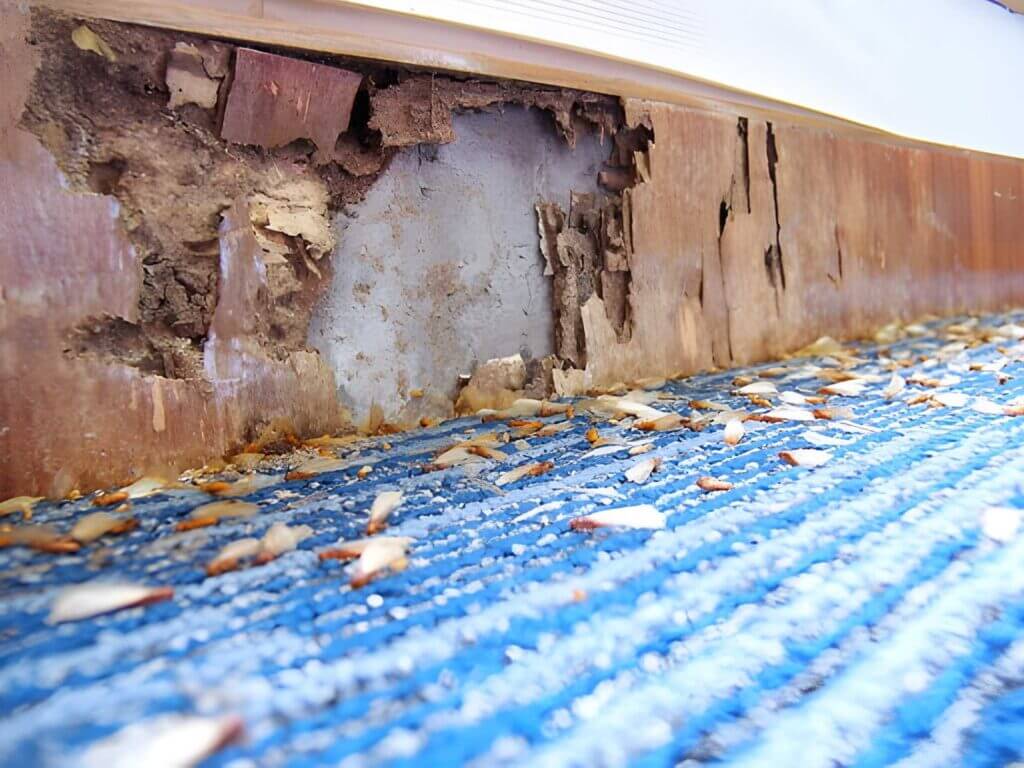
While a professional inspection is the only reliable way to detect termite activity, there are some warning signs that should push you to book immediately rather than waiting for your next scheduled check:
- Hollow-sounding timber when you tap walls, floors or door frames
- Tight-fitting doors or windows that have changed recently — termite activity generates moisture and heat that can warp surrounding timber
- Mud tubes — thin, pencil-width tunnels of dirt running up exterior walls, stumps or pipes
- Frass — small piles of what looks like fine sawdust or sand near skirting boards or door frames
- Blistered or bubbling paint on interior walls or ceilings, particularly near floor level
- Sagging floors or soft spots underfoot
- Discarded wings near windows, doors or light sources — a sign that a reproductive swarm has recently occurred nearby
If you’ve noticed any of these, don’t wait. The sooner an inspection is carried out, the more treatment options are available and the less damage accumulates.
To understand more about these warning signals in detail, our article on signs of termite activity in your home is worth reading before you book.
Don’t Let a $300 Inspection Become a $30,000 Problem
The cost of a termite inspection in Port Macquarie is genuinely small compared to what it protects. For a few hundred dollars once a year, you get a clear picture of your property’s termite risk — and the ability to act early if something is found.
The cost of not inspecting? That’s potentially measured in tens of thousands of dollars, months of disruption, and the stress of dealing with significant structural repairs.
Port Pest Services provides thorough, AS 3660.2 compliant termite inspections across Port Macquarie and the surrounding Hastings Valley. Our inspectors know this region, its specific termite species, and the local building styles that are most vulnerable.
Book your inspection today — before termites turn a small problem into a very large one.
Frequently Asked Questions
Are termites really that common in Port Macquarie?
Yes — genuinely so. The mid-north coast of NSW is classified as a high-risk termite zone nationally. Port Macquarie’s warm, humid climate and proximity to native bushland and river systems creates ideal conditions for subterranean termite species year-round. This isn’t marketing language — it’s reflected in the Australian Standard risk mapping used by pest professionals.
How much does a termite inspection cost in Port Macquarie?
A standard visual inspection for a residential property typically costs between $250 and $350. Inspections that include thermal imaging or moisture detection usually range from $350 to $500+, depending on property size. For a full breakdown, visit our pest control prices Port Macquarie page.
What if termites are found during the inspection?
Your inspector will outline all available treatment options — typically a chemical soil barrier, a baiting system, or a combination of both. The key thing is not to disturb the area before treatment, as this can cause the colony to scatter and relocate, making eradication significantly harder. Treatment costs depend on the extent and location of the infestation.
Can I check for termites myself?
You can look for some surface-level signs — mud tubes, frass, hollow-sounding timber — but a DIY check is no substitute for a professional inspection. Termites are often active in areas that aren’t visible or accessible without the right equipment. Licensed inspectors also use thermal cameras and moisture meters that identify activity inside walls and under floors, well before it becomes visible.
How long does a termite inspection take?
For a standard 3–4 bedroom home in Port Macquarie, expect 60 to 90 minutes. Larger properties, difficult site access, or the addition of thermal imaging can extend this to around 2 hours. You’ll typically receive your written report on the same day or within 24 hours.