If you’re working out how to get rid of fleas at home, professional control needs to address where fleas develop, including indoor areas, the garden and pet bedding; in Australia, activity commonly peaks in spring and early summer, but fleas can remain in the home for months without a host.
It’s understandable to focus on your pet when you notice scratching or bites. But a practical plan for how to get rid of fleas at home also considers the surrounding environment, where flea life stages may persist and contribute to a return of activity.
This guide explains when fleas are active, what professional treatment considers across your home and garden, and how to coordinate household treatment with your vet’s advice for your pet.
Key Takeaways
- Understand why flea eggs, larvae, pupae and adults need to be considered when planning control.
- Coordinate treatment of indoor and outdoor areas with your vet’s advice for pets.
- Learn how to handle pet bedding and other washable items as part of the control plan.
- Know what signs to look for on pets and when professional flea control may help.
Flea lifecycle and environmental infestation
Plan treatment around flea activity in the home and garden, not just adult fleas on an animal. A thorough approach to how to get rid of fleas at home considers hidden life stages, relevant areas and suitable treatment timing.
-
Understand the flea life cycle
Account for all four flea forms: egg, larva, pupa and adult. After feeding, an adult female usually lays 4 to 8 eggs in a cluster. Flea eggs and larvae can persist where animals rest, so treating visible adult fleas alone may leave other stages to develop. Foggers may miss fleas in concealed areas and can expose people or pets to airborne product. Don’t treat them as a substitute for targeted control.
-
Manage fleas in gardens and outdoors
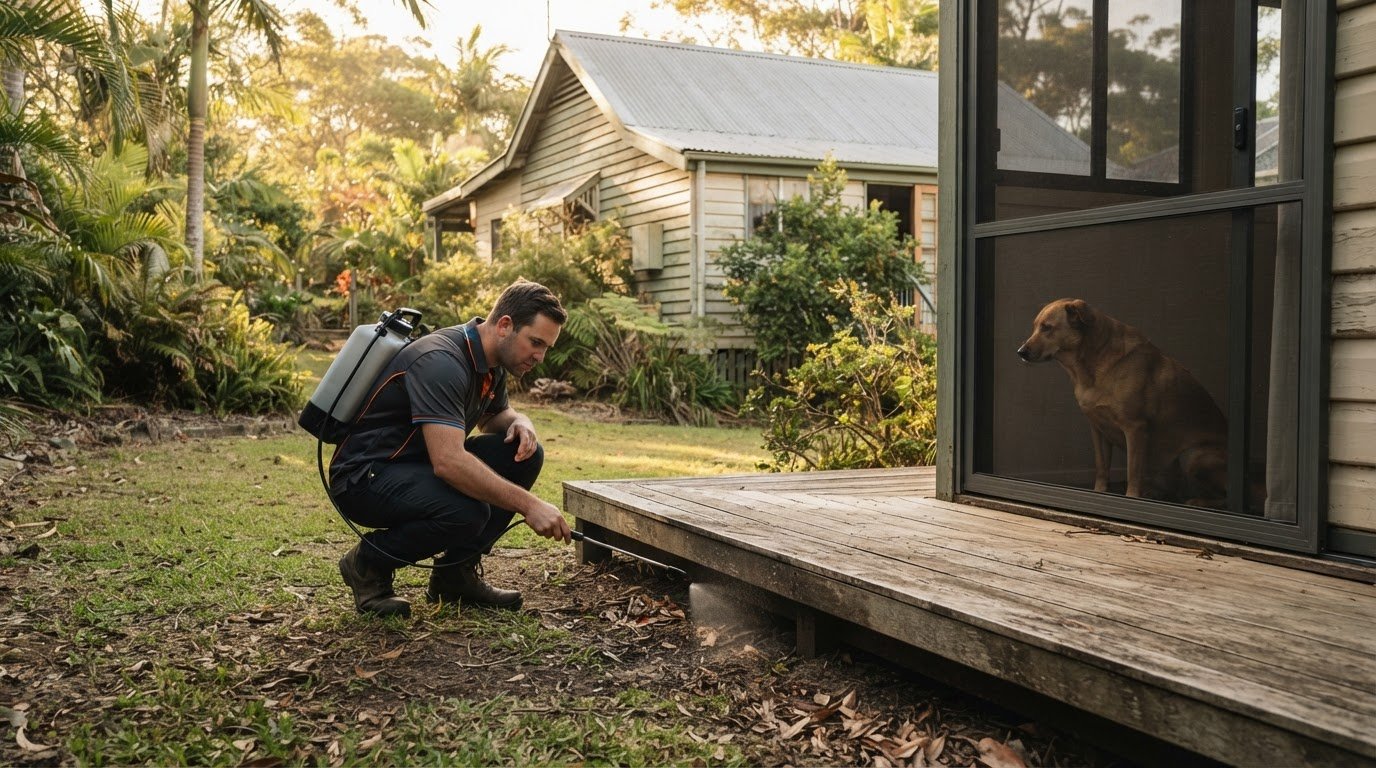
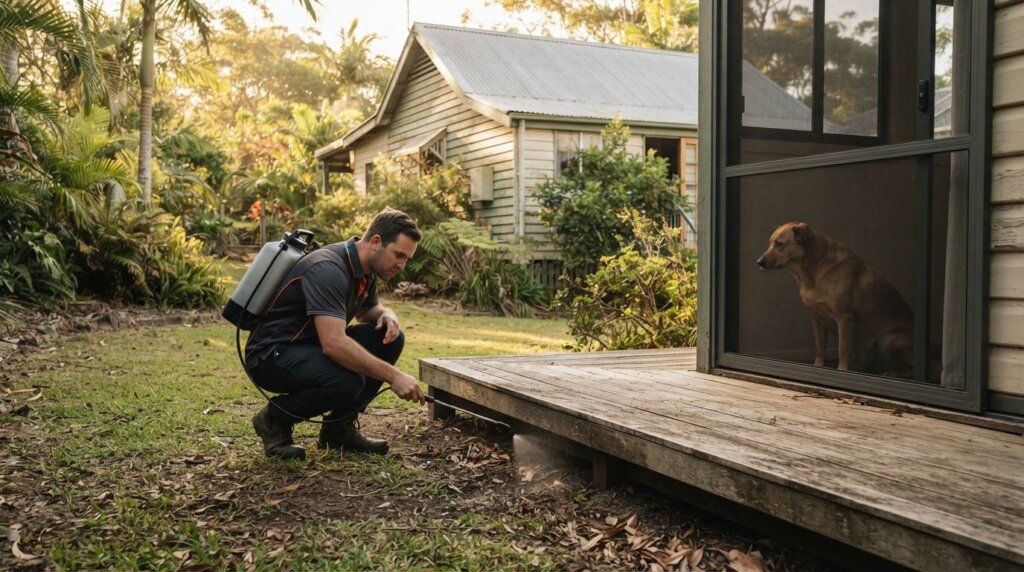
Include shaded garden spots where pets or other animals rest or pass through. Flea larvae can develop in soil in shaded areas, so outdoor control should consider these places alongside indoor resting areas. Spring and early summer are peak flea season in Australia, making outdoor conditions worth including in the plan. A professional can assess relevant areas and choose treatment suited to the site, rather than applying products across the garden without regard to where fleas may develop.
-
Plan repeat treatment and assess timing
Allow time for hidden stages to emerge: breaking the environmental flea lifecycle can take up to 3 months. The treatment protocol may need repeating within a few weeks to address eggs that hatch and larvae that later emerge as adults. When planning how to get rid of fleas at home, also consider product choice. Pet treatments should suit the animal’s species and follow your vet’s advice, because some dog flea products containing permethrin are highly toxic to cats. Follow professional instructions for environmental products, including precautions for people and pets.
Treating fleas indoors and outdoors at the same time
A professional plan coordinates pet care with indoor and outdoor treatment. Contact a pest controller when flea activity persists or returns, and your vet for advice about your pet.
-
Coordinate pet treatment with veterinary-approved products
Tell the pest professional which animals live in your home and share your vet’s advice. Explain which product each pet receives and when it was last applied. This helps coordinate household treatment with veterinary care, rather than treating rooms without accounting for pets. Never substitute a dog product for a cat product: some dog flea treatments containing permethrin are highly toxic to cats.
-
Treat indoor flea harbourage
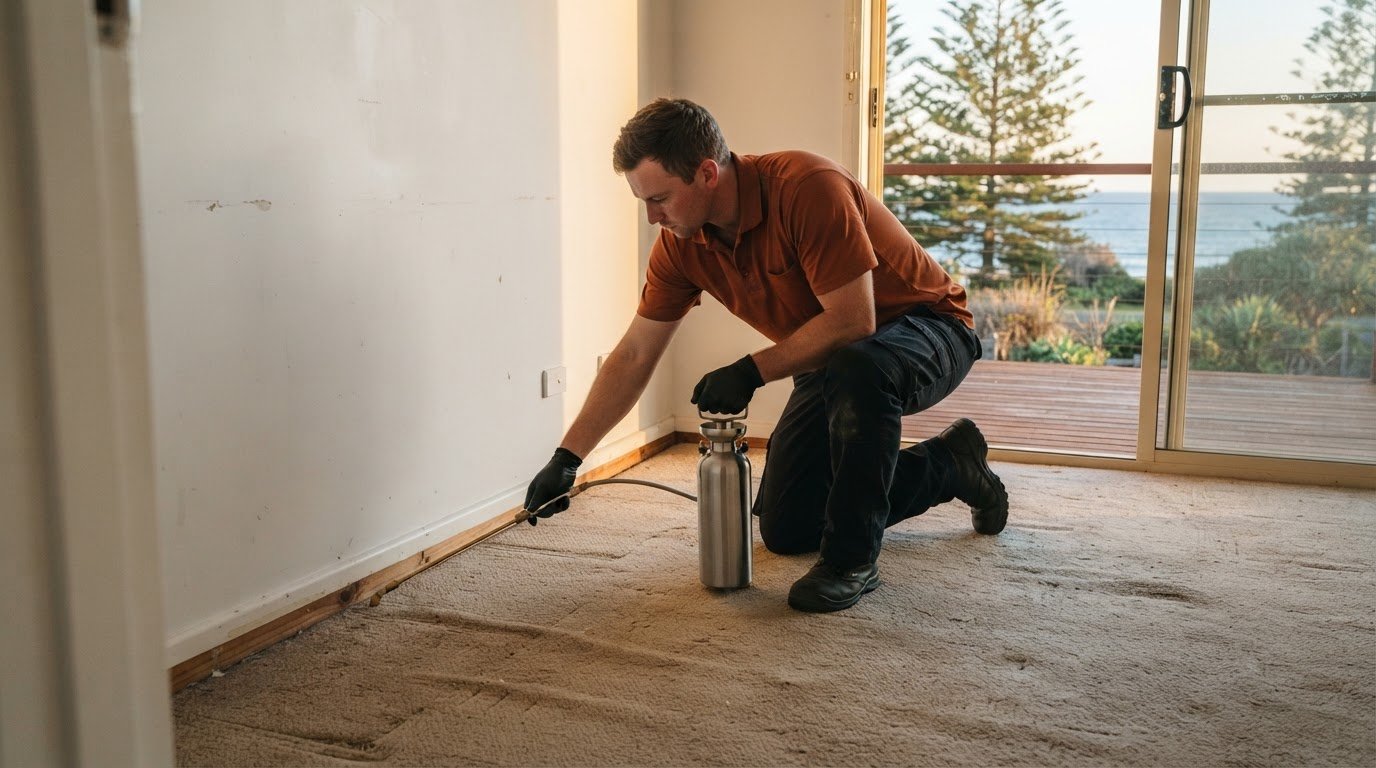
Have the pest professional assess rooms where you’ve noticed activity, including pet resting spots and areas where fleas appear after cleaning. Describe which rooms are affected and whether signs return in the same place. This helps focus treatment on relevant indoor locations. Follow the preparation instructions, including guidance on keeping people and animals away from treated areas until it’s safe to return.
-
Apply professional garden and perimeter treatments
Ask the pest professional to assess outdoor areas linked to flea activity, such as routes pets use between the house and yard. They can consider the home’s perimeter alongside indoor findings, rather than treating outdoor spaces in isolation. Mention any rats or mice on the property, as rodent activity may also need attention. Effective household flea control considers pets, indoor areas and outdoor spots together. Follow your vet’s advice for treating animals, and use a pest controller for household infestations or recurring fleas.
Washing infested items and pet bedding
Include washable items and regular cleaning in the plan. Bedding, floors and furniture may all need attention.
-
Have infested household items cleaned safely
Identify washable throws, removable covers and other items your pet uses, then follow their care labels. Keep them separate from clean laundry until they’ve been washed. Vacuum furniture, floors and skirting boards to remove flea eggs and larvae from places where debris collects. Seal vacuumed material in a plastic bag before putting it in the rubbish. If your vacuum has a dust bag, discard it after each use.
-
Arrange washing and treatment of pet bedding
Wash pet bedding regularly as part of the household treatment plan. The recommended wash is on the hottest cycle the bedding can safely tolerate, at least 60°C, for more than 10 minutes. Check the care label first so the fabric can withstand the cycle. Include removable covers and blankets your pet rests on, rather than washing only the main bed. Clean bedding helps remove flea life stages from a place your pet uses often.
- Coordinate cleaning with professional treatment. Ask which rooms and items need attention before treated areas can be used again, and follow the product instructions. Vacuuming furniture, floors and skirting boards can remove eggs and may encourage fleas to emerge from cocoons. Dispose of vacuum contents promptly: seal loose material in a plastic bag and put it in the rubbish, or discard the dust bag after use. Keep clean bedding separate from items awaiting a wash, and return it once the treatment instructions allow.
The vacuum cleaner dust bag should be thrown away after each use to prevent flea eggs and larvae from developing. Check the treatment instructions before allowing pets to swim, bathe or visit a groomer.

Checking pets for fleas
Check your pet for live fleas and flea dirt, then share what you find with your vet. This can help connect signs on the animal with activity around its resting places.
- Part your pet’s coat and inspect the skin, especially around the neck, belly and base of the tail. Look for adult fleas moving through the fur or small dark specks near the skin. A flea comb can help bring debris to the surface. Check over a light-coloured towel, where dark specks are easier to spot.
- Test suspected flea dirt by placing a few drops of water on a damp tissue with the specks. If they turn reddish brown, your pet very likely has fleas. This can help distinguish flea droppings from ordinary dirt, but it doesn’t show how many fleas are present or where they’re developing in the home.
- Record where you found signs and whether your pet is scratching. Note the animal’s resting spots, such as a bed or favourite chair, so the household treatment plan can account for them. Fleas can be hard to see, so finding no adult fleas during a check doesn’t rule out activity elsewhere.
- Share your findings with your vet before choosing or changing a pet treatment. Describe visible fleas, reddish-brown marks, scratching and any signs of illness. A flea check alone can’t diagnose disease. Use only products recommended for your pet’s species, and follow your vet’s advice alongside professional treatment of the home environment.
Treat the water check as one part of the inspection, not a way to count fleas. Add a few drops of water to suspected flea droppings; if they turn reddish brown, your pet very likely has fleas. Note this alongside any visible signs or scratching, then share it with your vet when discussing suitable treatment.
Port Pest Services: Flea Pest Control
Port Pest Services provides flea pest control for homes where fleas persist, return or spread beyond a pet’s bedding. Professional treatment can address flea activity in the home environment alongside your vet’s advice for treating pets. If rodents are also present, the business offers rodent, rat and mice pest control.
Explain where you’ve noticed flea activity, such as a particular room or a pet’s resting place. Mention whether fleas have returned after cleaning and whether you’ve seen signs of mice or rats. These details help clarify which pest concerns need attention. Household flea treatment and veterinary care address different parts of the problem, so keep your pet’s treatment aligned with your vet’s advice.
For homes in Port Macquarie and surrounding areas between Kempsey and Forster, flea pest control can help when signs keep reappearing or activity affects several parts of the home. Rodent control may also be relevant if mice or rats are present. Port Pest Services provides pest control for listed pests, including rats and mice, and offers free quotes. The appropriate service depends on the pests and areas involved.
Before discussing treatment, describe the rooms or outdoor areas where you’ve noticed fleas, any signs on pets, and what cleaning you’ve already done. Mention other pest activity too. This gives Port Pest Services useful context to discuss the relevant service and next steps for your home.
Contact Port Pest Services to discuss flea control for your home.
Frequently Asked Questions
When is flea season in the UK?
Flea season in the UK usually runs from April to November. Australian conditions differ, with flea activity commonly peaking in spring and early summer. In Port Macquarie, focus on local conditions and your pet’s signs rather than using the UK calendar to plan treatment. Fleas may remain in a home environment outside the seasonal peak.
How can a pest controller coordinate flea treatment safely with veterinary-approved products for pets in Australia?
A pest controller can coordinate household treatment with your vet’s advice and the flea product used for each pet. Share the product name, when it was applied and which animals live in the home. Treatments must suit the animal’s species: some dog flea products containing permethrin are highly toxic to cats. Don’t combine or change pet products without veterinary guidance.
How often should you vacuum and wash bedding during professional flea treatment?
Follow the cleaning schedule given for your treatment, as the right frequency depends on the treatment instructions and areas involved. Vacuum floors, furniture and skirting boards regularly during the plan, and discard the vacuum dust bag after each use. Wash pet bedding on the hottest cycle it can safely tolerate, at least 60°C, for more than 10 minutes.
Which flea sprays and powders are suitable for professional indoor use in Australia?
Use only a product intended for indoor use on the relevant surface and for flea control, following its label and professional instructions. Sprays and powders aren’t interchangeable: a product suited to one surface may not suit another. A professional treatment plan should account for household pets and the areas being treated. Don’t apply extra products or mix treatments unless the instructions specifically direct you to.
How should a professional treat carpets, rugs, furniture and cracks for fleas?
A professional should assess where pets rest and where flea activity has been noticed, then select treatment for suitable surfaces and harbourage. Carpets, rugs and upholstered furniture need attention according to the product’s directions; cracks and edges may require a different application approach. Before treatment, explain which items can be moved or cleaned, and follow instructions for room access and re-entry.
What Australian regulations and safety precautions apply to professional household flea treatments?
Follow the product label and the professional’s safety instructions for preparation, application and re-entry. Ask for clear guidance about people and pets, treated surfaces, and when rooms can be used again. For the pesticide-treatment procedure described, occupants should leave the premises for at least 4-6 hours. Port Pest Services describes its treatments as pet and kid safe, while safety guidance still applies.