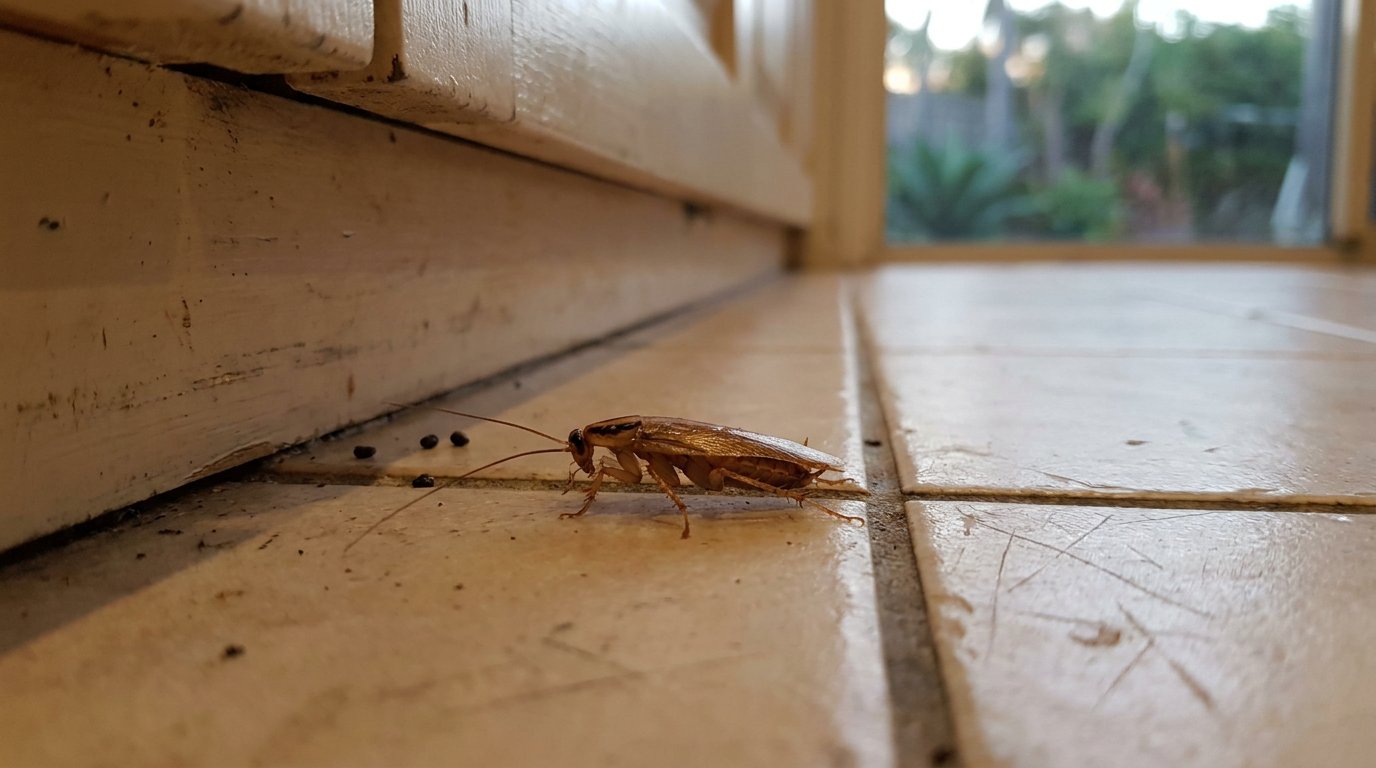
German cockroaches are usually 13-16 mm long, with a light-brown body and two dark stripes behind the head, so how to identify German cockroaches comes down to checking their markings as well as their size. If you’ve spotted a small cockroach indoors, this guide explains the signs and habits that can help you understand what you’re seeing.
Learn how to recognise adult and young cockroaches, and what droppings, egg cases and shed skins can reveal about activity in your home.
You’ll also learn how German cockroaches differ from brown-banded cockroaches, so you can assess the clues without relying on size alone.
Key Takeaways
- Look beyond a live sighting: pepper-like droppings, dark smears, shed skins and egg cases can all help reveal cockroach activity.
- Warm, humid hiding spots around kitchens and bathrooms are useful places to understand where German cockroaches may be sheltering.
- Egg cases and younger cockroaches can offer clues about activity that you might miss by looking only for adults.
- When distinguishing German cockroaches from brown-banded cockroaches, consider markings and other signs as well as size.
What is a German Cockroach?
German cockroaches are small, indoor pests identified by a light-brown body and two dark stripes. Their size, markings and life stage can help distinguish them from larger cockroaches in homes, including in Port Macquarie.
Adult Colour and Identifying Stripes
An adult German cockroach has a light-brown body and two dark, parallel stripes on its thorax, the section behind its head. It has six legs and wings that extend past its abdomen, though it does not appear to fly. Look for the stripes alongside its body colour rather than relying on a brief glimpse of its wings or legs. These markings are a useful clue when identifying a cockroach indoors.
Body Size Across Life Stages
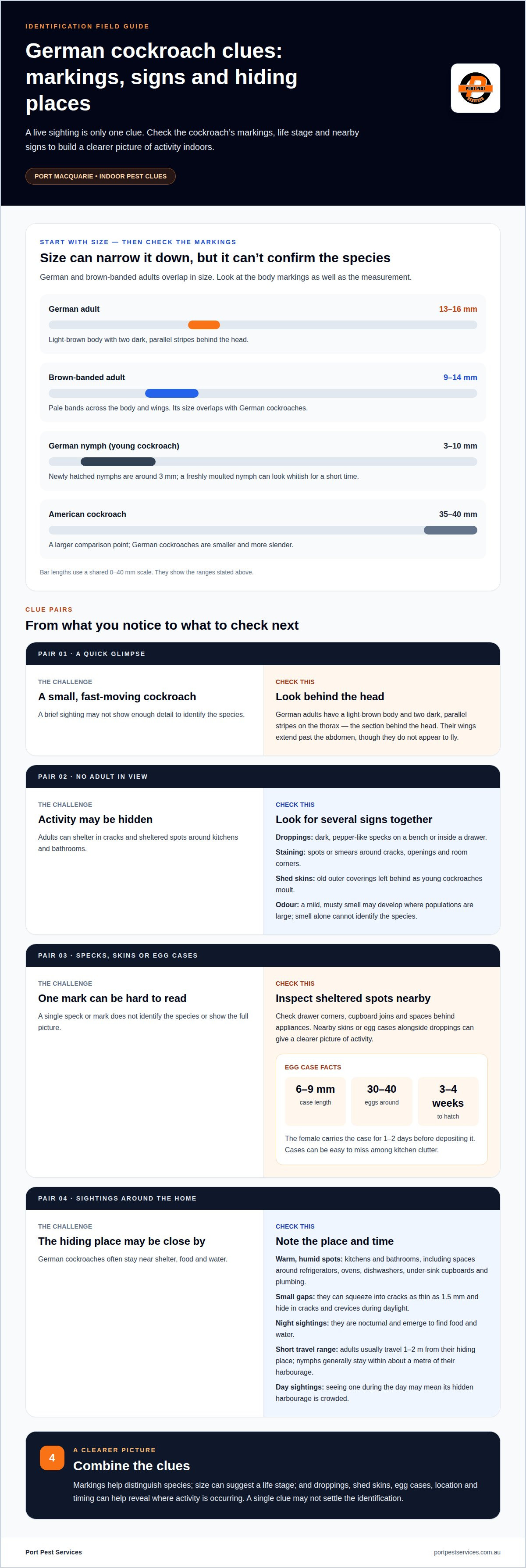
Adult German cockroaches measure 13-16 mm long. Their nymphs, or young cockroaches, range from 3-10 mm depending on their stage of development. Newly hatched nymphs are around three millimetres long, while a freshly moulted nymph can look whitish for a short time. Comparing size and appearance can help you recognise different life stages, though a small sighting alone doesn’t confirm the species.
German cockroaches are smaller and more slender than many other cockroach species. For comparison, an American cockroach measures about 35 to 40 millimetres long. German cockroaches favour indoor environments, including warm areas near appliances, moisture and cracks. These features can help Port Macquarie residents assess a sighting without mistaking an indoor cockroach for one more commonly found outdoors.
German cockroaches can bite, but bites are not the main health concern. The Department of Health – Environmental Health Unit notes that cockroaches may carry bacteria such as salmonella, staphylococcus and streptococcus, and can harbour viruses such as polio. Their movement across indoor surfaces is one reason to take signs of cockroach activity seriously.
Droppings, egg cases, odour and shed skins
German cockroaches can leave clues even when adults stay hidden. Look for droppings, shed skins and egg cases in indoor areas where they shelter. In the kitchen, inspect drawer corners, cupboard joins and spaces behind appliances. Dark specks or smears on nearby surfaces may be droppings, especially when they appear alongside other evidence.
Droppings may look like dark, pepper-like specks on a bench or inside a drawer. Faecal staining can also appear as spots or smears around cracks, openings and room corners. One mark alone cannot identify the species, so note where it appears and look for nearby skins or egg cases. Together, these clues can help distinguish repeated activity from an isolated speck of dirt.
A German cockroach egg case is about 6-9 mm long and contains around 30 to 40 eggs. The female carries the case for 1 to 2 days before depositing it. Female German cockroaches can produce egg cases during their lives. The cases can be easy to miss among kitchen clutter, so check sheltered spots rather than only open surfaces.
Egg cases hatch within 3-4 weeks, allowing young cockroaches to emerge indoors while adults remain hidden nearby. Shed skins add another clue: young cockroaches moult as they grow, leaving their old outer covering behind. A mild, musty odour may develop where populations are large, but smell alone can’t identify the species. Several signs together, such as droppings, skins and egg cases, give you a clearer picture of activity and its spread through a room.
If these signs keep appearing, cockroach pest control can help address activity in the home.
German cockroach habitats and behaviour
German cockroaches favour warm, humid indoor spaces with food and water nearby. Their habits can help explain why activity appears in particular parts of a home.
Preferred Warm Locations
Kitchens and bathrooms offer the warmth, moisture and shelter German cockroaches favour. In kitchens, refrigerators, ovens and dishwashers provide warm, sheltered spaces, while under-sink cupboards can be damp. Plumbing fixtures and cabinets in bathrooms may also offer hiding places. Nearby signs of activity may point to a hidden harbourage, rather than a cockroach travelling throughout the home.
German cockroaches often gather in warm, undisturbed areas, including around water heaters. They hide during daylight in cracks and crevices, then emerge to find food and water. A narrow gap can provide shelter: they can squeeze into cracks as thin as 1.5 mm. In multi-unit buildings, shared plumbing and pipes can also let cockroaches move between units, spreading activity beyond one kitchen.
Nocturnal Activity
German cockroaches are nocturnal, so you’re more likely to see them moving around at night. They leave their hiding places to search for food and water, often staying near shelter. Adults usually travel only 1-2 m from their hiding place. This short range helps explain why repeated sightings near one cupboard or appliance can indicate a nearby harbourage.
Seeing a cockroach during the day may mean its hidden harbourage is crowded, as cockroaches are usually active after dark. Nymphs tend to stay near where they hatched, generally within about a metre of their harbourage. If you spot young cockroaches near a kitchen crack or appliance, the shelter may be close by. An egg case may also be near the area where the young emerge.
These patterns help explain where activity is occurring. A cockroach near a bathroom cabinet may be close to moisture, while one beside a refrigerator may have warm shelter nearby. Sightings in a bedroom can indicate activity beyond the kitchen and bathroom. The location and time of each sighting, along with nearby hiding places, help build a clearer picture of where German cockroaches are sheltering.
Differences between German and brown-banded cockroaches
German and brown-banded cockroaches can look similar at a quick glance, and their adult sizes overlap. German adults measure 13-16 mm long, while brown-banded adults measure 9-14 mm. Size alone may not settle which cockroach species you’re seeing. Check the markings, body shape and where you find it before drawing a conclusion.
German cockroaches have two dark, parallel stripes on the section behind the head. Brown-banded cockroaches have pale bands across their bodies and wings instead. This contrast can help identify a stationary adult, but a fast-moving cockroach is harder to inspect. Look for more than one visible feature if possible.
Location can provide context. German cockroaches are commonly associated with kitchens, bathrooms and other warm, humid indoor spaces. Brown-banded cockroaches tend to favour drier, warmer places, including higher spots such as cupboards and shelves. A kitchen sighting does not prove a cockroach is German, but activity near moisture and appliances fits its usual habits.
Life stage can make identification harder. German cockroach nymphs are darker than adults and can appear almost black; newly hatched nymphs are around three millimetres long. Brown-banded cockroaches also have young stages, so size alone is not enough to identify them. Check nearby surfaces, drawers and sheltered spaces for droppings or shed skins, and note whether sightings recur in the same area.
The practical distinction is the combination of markings and habitat: paired dark stripes and activity around humid kitchen spaces point towards German cockroaches; pale bands and activity in drier, higher places point towards brown-banded cockroaches. Neither clue is conclusive on its own. If infestations persist or identification remains unclear, arrange cockroach pest control for a closer assessment.
Port Pest Services: Cockroach Pest Control
Port Pest Services provides Cockroach Pest Control when you’re seeing recurring cockroach activity or finding signs in several parts of your home. If the markings are unclear, or sightings continue around kitchens and other sheltered spaces, professional pest control can help address the problem rather than relying on appearance alone.
Keep a record of where you’ve seen cockroaches and any signs, such as droppings, shed skins or egg cases. These details can help clarify the activity and its likely location. Port Pest Services also provides pest control for household concerns such as rodents.
Contact Port Pest Services to discuss cockroach activity in your home.
Choose a practical next step for your home
If you’re unsure how to identify German cockroaches or sightings continue, a clear account of what you’ve noticed can help guide the next step. Note which rooms show activity and whether it appears at particular times. This information gives the pest-control team useful context when discussing the issue with you.
Port Pest Services provides Cockroach Pest Control for household cockroach concerns. Services for other pests include Mice Pest Control, Rat Pest Control and Rodent Pest Control. The team can discuss your pest issue and practical options for your home, with pet and kid safe services and safety guidance for families and pets.
You don’t need to sort it out alone. Contact Port Pest Services to discuss the cockroach activity and take a considered next step.
Frequently Asked Questions
How long does it take to get rid of them?
Clearing a German cockroach infestation can take several weeks, and pest control professionals may need 2-3 visits. The time depends on how widely cockroaches are hiding, whether egg cases hatch after treatment, and whether activity continues in connected spaces. If you keep seeing live cockroaches after treatment, note where they appear. That information can help guide follow-up work.
What attracts them?
German cockroaches are attracted to food, water, warmth and sheltered hiding places. Crumbs beneath a toaster, an open cereal packet or moisture around a leaking sink can provide what they need. They eat a wide range of foods but prefer starchy options such as potatoes, rice and cereal. Food left accessible overnight can encourage activity near kitchen benches, cupboards and appliances.
What do German cockroaches look like?
Adults have a slender, light-brown body with two dark, parallel stripes behind the head. Their wings extend past the abdomen, although they do not appear to fly. Young cockroaches look different: nymphs are darker, often almost black, and have no wings. To identify German cockroaches, compare the markings and body shape rather than judging from a quick glimpse.
How can you identify German cockroach egg cases (oothecae)?
A German cockroach egg case, also called an ootheca, is a small, ridged capsule roughly 6-9 mm long. It is usually light brown and holds about 30 to 40 eggs. You may find a case tucked into a sheltered crack or cupboard corner. A female carries it briefly before depositing it, so inspect concealed areas near recurring cockroach activity.
How can you distinguish German cockroaches from other cockroach species in Australia?
Start with the markings, then consider size and location together. German cockroaches have two dark stripes behind the head; brown-banded cockroaches have pale bands across their bodies. American cockroaches are much larger, measuring about 35 to 40 millimetres. A cockroach’s location can offer another clue, but appearance and surrounding signs are more useful than location alone.
Where do German cockroaches hide in Australian homes?
In Australian homes, German cockroaches often shelter near warmth, moisture and food. Check concealed spaces beneath sinks, inside cupboard hinges, behind refrigerators and around dishwasher motors. They can also fit into narrow cracks beside pipes or cabinetry. In apartments, shared plumbing may provide a route between units, so activity near a service opening may have started elsewhere.